THE ADVENTURE COLLECTIVE® · Independent discovery and booking for outdoor travel

Rise with the burners and float over Pamukkale’s white travertines and the ruins of Hierapolis. This early-morning balloon experience blends geology, Roman history, and panoramic light with a practical, weather-dependent operation.
Rise with the burners and float over Pamukkale’s white travertines and the ruins of Hierapolis. This early-morning balloon experience blends geology, Roman history, and panoramic light with a practical, weather-dependent operation.
Dawn breaks over calcium-white terraces and the balloon burners answer the morning like a contained thunder. From the basket, you rise slowly above Pamukkale’s bright travertines and the Roman ruins of Hierapolis, the warm columns of air nudging you along a route that changes with the wind. The terraces unfurl beneath like frozen waves, and the ruins give scale to the landscape—an archaeological city that once drew Romans for its healing springs.
Verified experiences and guided adventures in the surrounding area.
Operated by Sight Trip · Pamukkale, Denizli
Dawn breaks over calcium-white terraces and the balloon burners answer the morning like a contained thunder. From the basket, you rise slowly above Pamukkale’s bright travertines and the Roman ruins of Hierapolis, the warm columns of air nudging you along a route that changes with the wind. The terraces unfurl beneath like frozen waves, and the ruins give scale to the landscape—an archaeological city that once drew Romans for its healing springs.
Geology drives the view: mineral-rich thermal water deposits travertine pools that build stepped limestone formations over millennia. Hierapolis, founded in the Hellenistic period and expanded under Rome, adds human history—a spa town that sits where geology and culture intersect. Local life still orbits the springs: small towns, thermal baths at Karahayıt, and the agricultural patchwork of Denizli province.
Practically, expect a pre-dawn pickup, a 45–60 minute flight depending on conditions, and a post-flight toast with sparkling wine plus a flight certificate. Balloons used at Pamukkale carry 20–32 people, so shared baskets are common. Weather drives operations; flights can be canceled for safety with a full refund if that happens. Wear layered clothing—it’s colder aloft—and secure cameras to capture low-angle light over the white terraces. Plan extra time at the site: the best light for photographs is just after sunrise, and combining the flight with a ground visit to Hierapolis or Karahayıt’s red springs makes a full morning of it.
Flights typically last 45–60 minutes in the air, with the whole excursion (pickup, briefing, flight, return) around 2 hours.
Operators cancel unsafe flights; you’ll receive a full refund if the flight is canceled due to weather or receive a rebooking option depending on availability.
Children commonly fly but operators may have age or seat restrictions; pregnancy is not recommended—check with the operator before booking.
Most tours include hotel pickup and drop-off by minibus from Denizli and nearby towns—confirm your pickup point at booking.
Sight Trip operates guided outdoor trips and adventures with an emphasis on safety, stewardship, and memorable experiences.
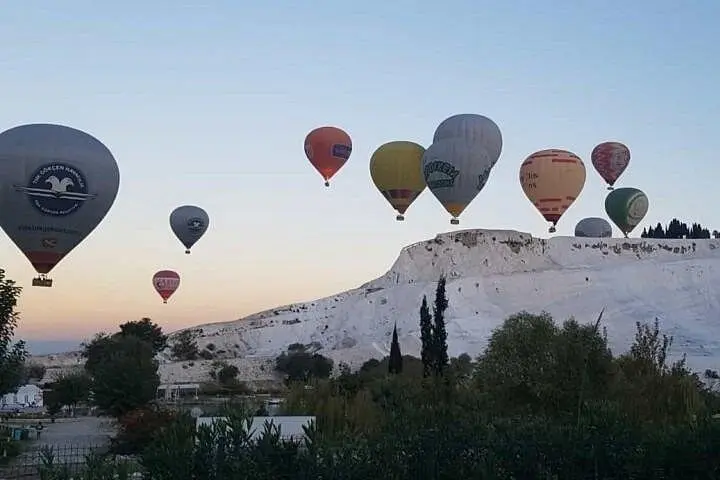
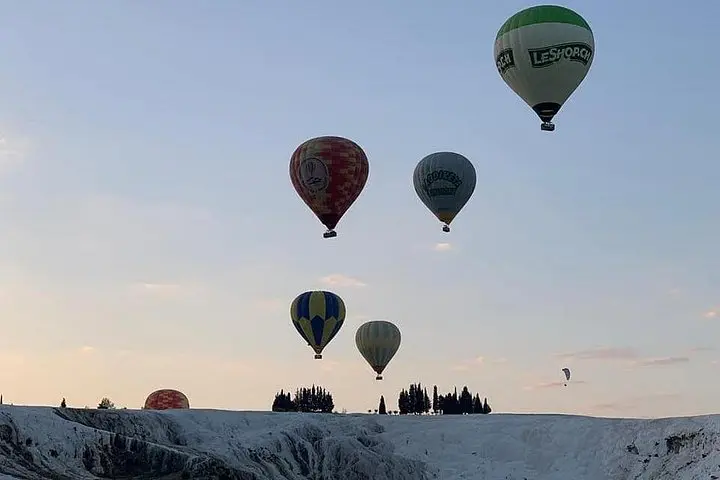
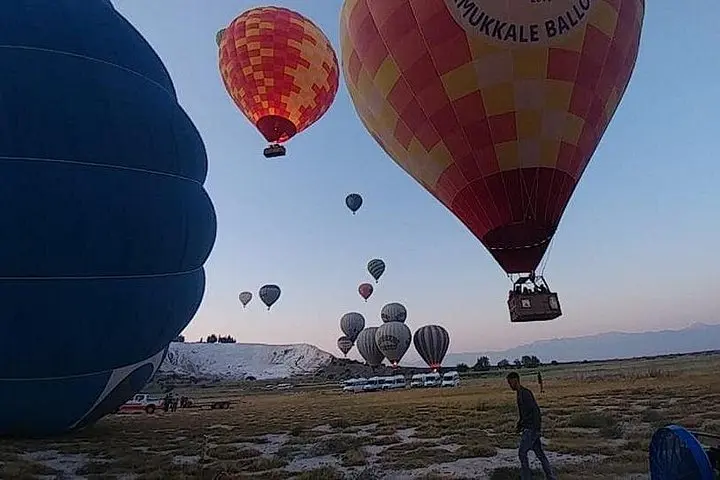
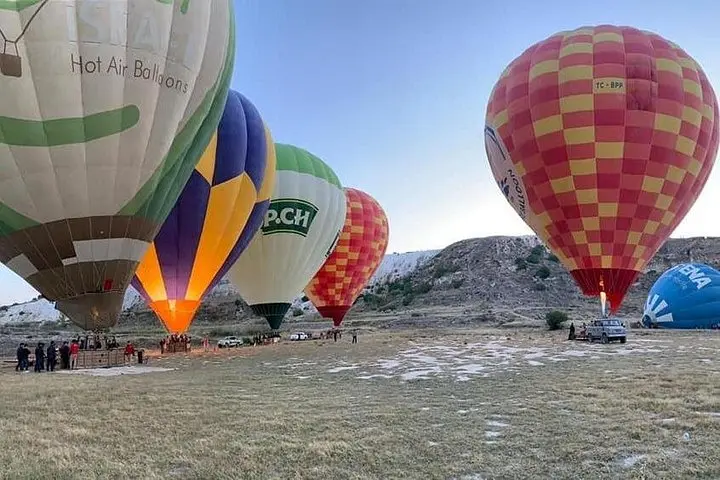
Dawn breaks over calcium-white terraces and the balloon burners answer the morning like a contained thunder. From the basket, you rise slowly above Pamukkale’s bright travertines and the Roman ruins of Hierapolis, the warm columns of air nudging you along a route that changes with the wind. The terraces unfurl beneath like frozen waves, and the ruins give scale to the landscape—an archaeological city that once drew Romans for its healing springs.
Dawn breaks over calcium-white terraces and the balloon burners answer the morning like a contained thunder. From the basket, you rise slowly above Pamukkale’s bright travertines and the Roman ruins of Hierapolis, the warm columns of air nudging you along a route that changes with the wind. The terraces unfurl beneath like frozen waves, and the ruins give scale to the landscape—an archaeological city that once drew Romans for its healing springs.
Geology drives the view: mineral-rich thermal water deposits travertine pools that build stepped limestone formations over millennia. Hierapolis, founded in the Hellenistic period and expanded under Rome, adds human history—a spa town that sits where geology and culture intersect. Local life still orbits the springs: small towns, thermal baths at Karahayıt, and the agricultural patchwork of Denizli province.
Practically, expect a pre-dawn pickup, a 45–60 minute flight depending on conditions, and a post-flight toast with sparkling wine plus a flight certificate. Balloons used at Pamukkale carry 20–32 people, so shared baskets are common. Weather drives operations; flights can be canceled for safety with a full refund if that happens. Wear layered clothing—it’s colder aloft—and secure cameras to capture low-angle light over the white terraces. Plan extra time at the site: the best light for photographs is just after sunrise, and combining the flight with a ground visit to Hierapolis or Karahayıt’s red springs makes a full morning of it.