THE ADVENTURE COLLECTIVE® · Independent discovery and booking for outdoor travel

A guided 3–4 hour walk across Sobieszewo Island’s forest paths, lakeside hides and beach platforms offering close views of migratory birds and coastal scenery. Ideal for beginners and experienced birders wanting a compact taste of the Baltic flyway.
A guided 3–4 hour walk across Sobieszewo Island’s forest paths, lakeside hides and beach platforms offering close views of migratory birds and coastal scenery. Ideal for beginners and experienced birders wanting a compact taste of the Baltic flyway.
You step off the ferry—or the bus—into a quiet that feels deliberate: pine needles underfoot, the Baltic wind nudging the reeds, and the guide lifting a pair of binoculars like an invitation. The trail drops through mixed forest toward Jezioro Karaś, where a single wooden hide frames a scene of dabbling ducks and reed-warblers. Later, a two-story platform at Jezioro Ptasi Raj opens out to the bay of Gdańsk and a parade of terns, cormorants and, on lucky days, white-tailed eagles cruising the thermals.
Verified experiences and guided adventures in the surrounding area.
Operated by Ladybird Tours · Gdańsk, Pomeranian Voivodeship
You step off the ferry—or the bus—into a quiet that feels deliberate: pine needles underfoot, the Baltic wind nudging the reeds, and the guide lifting a pair of binoculars like an invitation. The trail drops through mixed forest toward Jezioro Karaś, where a single wooden hide frames a scene of dabbling ducks and reed-warblers. Later, a two-story platform at Jezioro Ptasi Raj opens out to the bay of Gdańsk and a parade of terns, cormorants and, on lucky days, white-tailed eagles cruising the thermals.
Sobieszewo Island sits at the Vistula River’s shifting mouth, a landscape shaped by sediment and storms. Sandbars, dunes and freshwater lagoons mark a recent geological history—channels that move over decades—and a culture tied to fishing and coastal stewardship from nearby Gdańsk. The reserve’s hides and boardwalks reflect decades of conservation work to protect migratory stopovers along the Baltic flyway.
Practically: the walk runs about 3–4 hours on compact forest paths, short boardwalks and a stretch of open beach; terrain is easy but can be windy and muddy after rain. Guides provide binoculars and local identification tips; early morning or late afternoon maximizes sightings and soft light. Wear sturdy, water-resistant footwear, dress in layers for coastal winds, and move quietly in hides—birdwatching rewards patience. Public transport reaches Sobieszewo Island from Gdańsk, and the operator allows free cancellation up to 24 hours before departure. Respect seasonal breeding signs and leave no trace—the island’s wildlife depends on low disturbance.
The tour lasts about 3–4 hours and covers roughly 2–4 kilometres on easy forest paths, boardwalks and a beach section.
Yes—guides provide binoculars for participants, but bringing your own pair can be more convenient.
The route is rated easy and suitable for most ages, but it’s not recommended for people with serious back problems or limited mobility due to some uneven surfaces and platform steps.
Regular public buses connect Gdańsk to Sobieszewo Island; meeting details are provided at booking. Many visitors also reach the island by car or taxi.
Ladybird Tours operates guided outdoor trips and adventures with an emphasis on safety, stewardship, and memorable experiences.
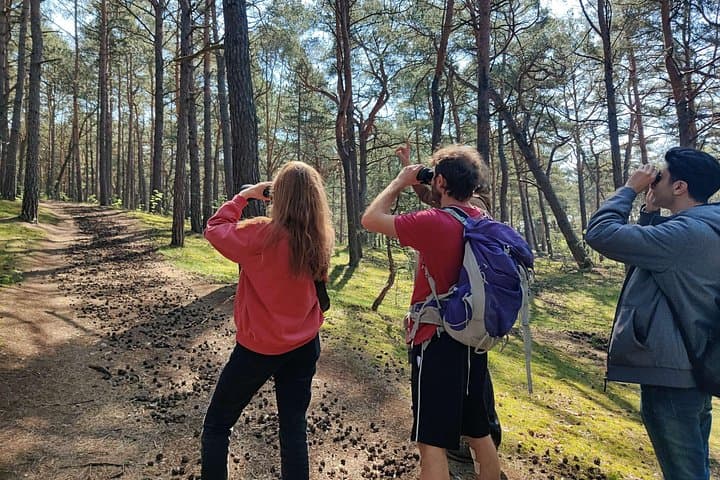
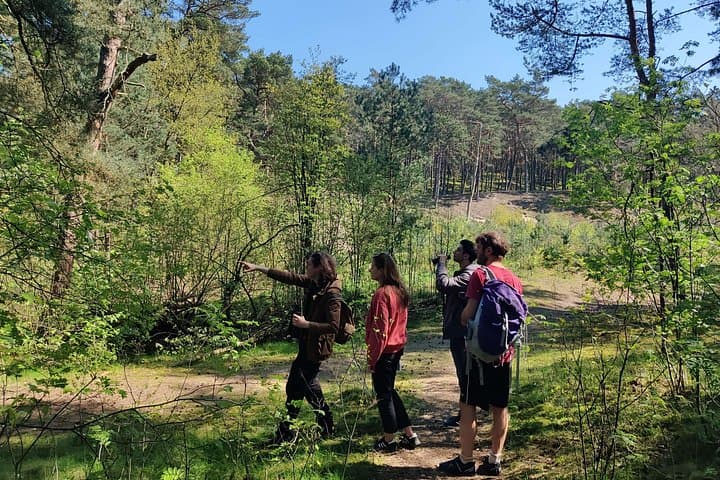
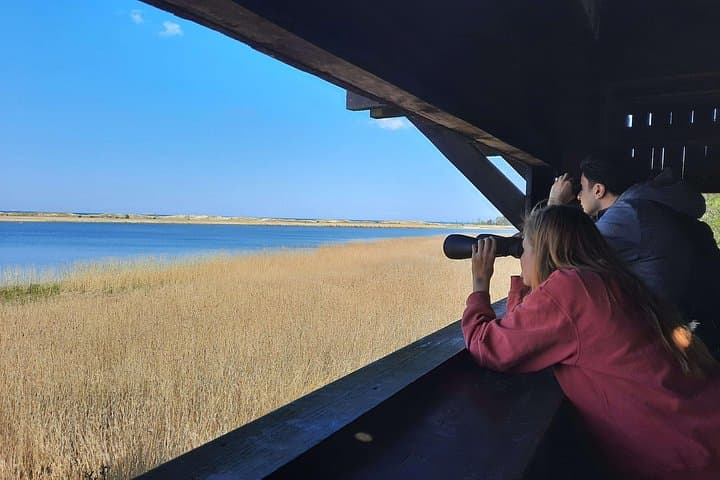
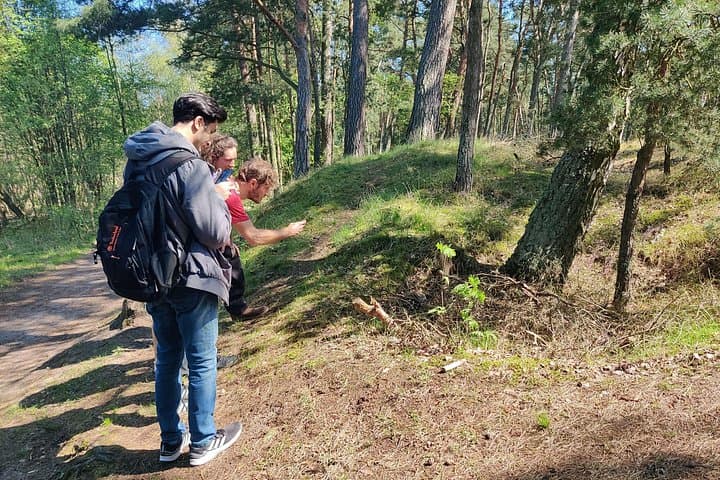
You step off the ferry—or the bus—into a quiet that feels deliberate: pine needles underfoot, the Baltic wind nudging the reeds, and the guide lifting a pair of binoculars like an invitation. The trail drops through mixed forest toward Jezioro Karaś, where a single wooden hide frames a scene of dabbling ducks and reed-warblers. Later, a two-story platform at Jezioro Ptasi Raj opens out to the bay of Gdańsk and a parade of terns, cormorants and, on lucky days, white-tailed eagles cruising the thermals.
You step off the ferry—or the bus—into a quiet that feels deliberate: pine needles underfoot, the Baltic wind nudging the reeds, and the guide lifting a pair of binoculars like an invitation. The trail drops through mixed forest toward Jezioro Karaś, where a single wooden hide frames a scene of dabbling ducks and reed-warblers. Later, a two-story platform at Jezioro Ptasi Raj opens out to the bay of Gdańsk and a parade of terns, cormorants and, on lucky days, white-tailed eagles cruising the thermals.
Sobieszewo Island sits at the Vistula River’s shifting mouth, a landscape shaped by sediment and storms. Sandbars, dunes and freshwater lagoons mark a recent geological history—channels that move over decades—and a culture tied to fishing and coastal stewardship from nearby Gdańsk. The reserve’s hides and boardwalks reflect decades of conservation work to protect migratory stopovers along the Baltic flyway.
Practically: the walk runs about 3–4 hours on compact forest paths, short boardwalks and a stretch of open beach; terrain is easy but can be windy and muddy after rain. Guides provide binoculars and local identification tips; early morning or late afternoon maximizes sightings and soft light. Wear sturdy, water-resistant footwear, dress in layers for coastal winds, and move quietly in hides—birdwatching rewards patience. Public transport reaches Sobieszewo Island from Gdańsk, and the operator allows free cancellation up to 24 hours before departure. Respect seasonal breeding signs and leave no trace—the island’s wildlife depends on low disturbance.