THE ADVENTURE COLLECTIVE® · Independent discovery and booking for outdoor travel

A focused two‑hour walking tour that threads SoHo’s famous murals, community gardens and cast‑iron architecture. Ideal for photographers and culture seekers who want context, history and clear routes to explore more on their own.
A focused two‑hour walking tour that threads SoHo’s famous murals, community gardens and cast‑iron architecture. Ideal for photographers and culture seekers who want context, history and clear routes to explore more on their own.
You step off the subway into Houston Street’s constant motion; taxi horns and conversation form a loose percussion as painted walls and wrought-iron facades come into view. The corner of Crosby and Houston is where the walk begins — a compact, two‑hour circuit that stitches together SoHo’s bold murals, hidden gardens and the cast‑iron bones that made the neighborhood a canvas.
Verified experiences and guided adventures in the surrounding area.
Operated by Chelsea Gallery Tour · New York, NY
You step off the subway into Houston Street’s constant motion; taxi horns and conversation form a loose percussion as painted walls and wrought-iron facades come into view. The corner of Crosby and Houston is where the walk begins — a compact, two‑hour circuit that stitches together SoHo’s bold murals, hidden gardens and the cast‑iron bones that made the neighborhood a canvas.
Once an industrial district of warehouses and metal workshops, SoHo’s 19th‑century cast‑iron buildings and cobbled alleys became affordable studios for artists in the 1960s and 70s. Street art here reads like a running conversation: political paste‑ups, minimalist wall pieces like Forrest Myers’ 1973 installation, and rotating commissions on the Bowery that reflect the neighborhood’s shifting tastes.
Beyond walls, the tour pauses at community gardens and small galleries where local culture still resists complete gentrification. You’ll hear how murals function as public argument — provocation, celebration, and sometimes, gentle preservation — and how property, protest and public art intersect in Manhattan.
Practical guidance: bring a charged phone and a compact camera for close‑up detail, wear shoes suited for sidewalk walking, and aim for morning or late afternoon light for the best photos. Public transit drops you at the start; most of the route is flat and accessible, but expect standing and short bursts of walking. Respect private property and mural etiquette — ask before photographing artists at work. With quick cultural context and clear directions for independent follow‑up, this tour gives you a focused, sensory introduction to SoHo’s outspoken streetscape.
Yes — the route is primarily on paved sidewalks with curb cuts; organizers note wheelchair accessibility but confirm specifics when you book.
Yes — photography is encouraged, but ask permission before photographing artists at work and respect private property or restrictions noted by the guide.
This listing is offered as a private tour; group size is arranged at booking — check with the operator for maximum participants and any custom requests.
You can receive a full refund if you cancel at least 24 hours before the scheduled start; weather or low‑bookings may also trigger cancellations per provider policy.
Chelsea Gallery Tour operates guided outdoor trips and adventures with an emphasis on safety, stewardship, and memorable experiences.


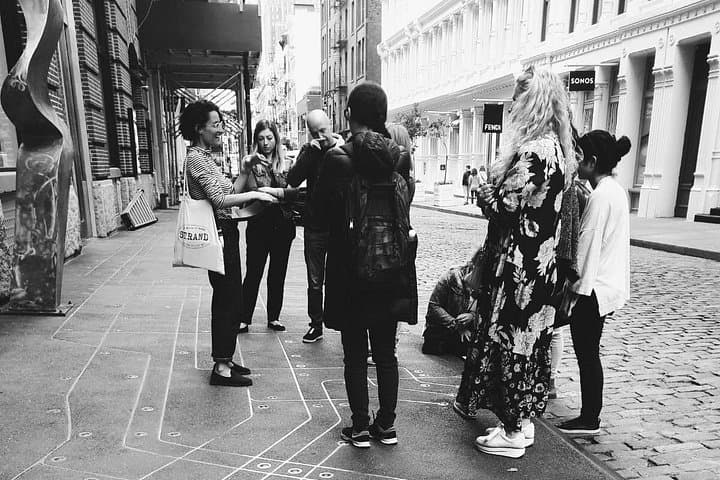
You step off the subway into Houston Street’s constant motion; taxi horns and conversation form a loose percussion as painted walls and wrought-iron facades come into view. The corner of Crosby and Houston is where the walk begins — a compact, two‑hour circuit that stitches together SoHo’s bold murals, hidden gardens and the cast‑iron bones that made the neighborhood a canvas.
You step off the subway into Houston Street’s constant motion; taxi horns and conversation form a loose percussion as painted walls and wrought-iron facades come into view. The corner of Crosby and Houston is where the walk begins — a compact, two‑hour circuit that stitches together SoHo’s bold murals, hidden gardens and the cast‑iron bones that made the neighborhood a canvas.
Once an industrial district of warehouses and metal workshops, SoHo’s 19th‑century cast‑iron buildings and cobbled alleys became affordable studios for artists in the 1960s and 70s. Street art here reads like a running conversation: political paste‑ups, minimalist wall pieces like Forrest Myers’ 1973 installation, and rotating commissions on the Bowery that reflect the neighborhood’s shifting tastes.
Beyond walls, the tour pauses at community gardens and small galleries where local culture still resists complete gentrification. You’ll hear how murals function as public argument — provocation, celebration, and sometimes, gentle preservation — and how property, protest and public art intersect in Manhattan.
Practical guidance: bring a charged phone and a compact camera for close‑up detail, wear shoes suited for sidewalk walking, and aim for morning or late afternoon light for the best photos. Public transit drops you at the start; most of the route is flat and accessible, but expect standing and short bursts of walking. Respect private property and mural etiquette — ask before photographing artists at work. With quick cultural context and clear directions for independent follow‑up, this tour gives you a focused, sensory introduction to SoHo’s outspoken streetscape.