THE ADVENTURE COLLECTIVE® · Independent discovery and booking for outdoor travel

Explore one of the world’s few solar heliocomplexes and a pocket of protected steppe on a 6-hour day trip from Tashkent. Expect mirror fields, a climbable concentrator tower, valley views, and a local lunch stop.
Explore one of the world’s few solar heliocomplexes and a pocket of protected steppe on a 6-hour day trip from Tashkent. Expect mirror fields, a climbable concentrator tower, valley views, and a local lunch stop.
You step out of the van into a low, metallic hum — not machinery so much as the sun itself, concentrated into light. The heliostat field stretches in neat, mirror-lined rows, each panel tilting and tracking the bright disk above. Behind them the Parkent Valley opens toward the Tien Shan ridgeline; wind moves through tall grasses and the scent of grilled shashlik drifts from a nearby café.
Verified experiences and guided adventures in the surrounding area.
Operated by Tashkent tour guide with car · Parkent, Tashkent Region
You step out of the van into a low, metallic hum — not machinery so much as the sun itself, concentrated into light. The heliostat field stretches in neat, mirror-lined rows, each panel tilting and tracking the bright disk above. Behind them the Parkent Valley opens toward the Tien Shan ridgeline; wind moves through tall grasses and the scent of grilled shashlik drifts from a nearby café.
The Solar Furnace and Heliocomplex were built during the Soviet era as experimental centers for concentrated solar research; today the site reads like science museum and open-air laboratory. Geology here is regional alluvium and foothill scree, with terraces cut by seasonal streams; the valley’s microclimates let some rare grasses persist — species listed in Uzbekistan’s Red Book — and they grow in pockets beneath scattered oaks.
Culturally you’ll hear Uzbek hospitality: tea offered at the café, stories from guide-drivers who grew up in the valley, and practical local knowledge about climbing the concentrator tower for the best views. If the elevator is down, expect a stair climb and a worthwhile panorama of Parkent farmland and distant snowy peaks.
Practical guidance: arrive with sun protection and at least 1.5–2 liters of water, wear sturdy shoes for uneven paths, and plan for a 6-hour round trip when leaving from Tashkent. Photography is allowed in most outdoor areas but check before entering any restricted zones. The route mixes short walks on dirt trails, periods beside technical installations, and a relaxed lunch stop; bring a light layer for changing wind off the mountains.
Most tours include pickup from Tashkent; private drivers take about 1–1.5 hours depending on traffic and route via Parkent district roads.
Outdoor areas of the heliocomplex are publicly visible, but access to technical buildings may be restricted — check with your guide before entering.
Yes — a nearby café offers traditional Uzbek soups and shashlik; carry cash as small vendors may not accept cards.
Not recommended for travelers with significant mobility limitations due to stairs and uneven terrain; children should be supervised around technical installations.
Tashkent tour guide with car operates guided outdoor trips and adventures with an emphasis on safety, stewardship, and memorable experiences.
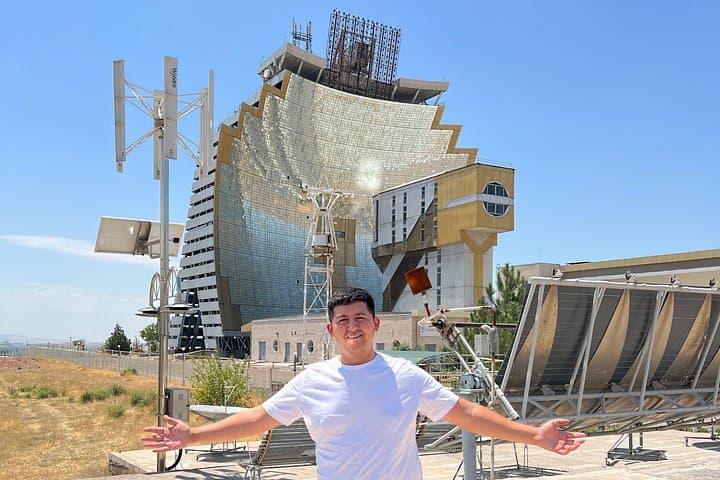


You step out of the van into a low, metallic hum — not machinery so much as the sun itself, concentrated into light. The heliostat field stretches in neat, mirror-lined rows, each panel tilting and tracking the bright disk above. Behind them the Parkent Valley opens toward the Tien Shan ridgeline; wind moves through tall grasses and the scent of grilled shashlik drifts from a nearby café.
You step out of the van into a low, metallic hum — not machinery so much as the sun itself, concentrated into light. The heliostat field stretches in neat, mirror-lined rows, each panel tilting and tracking the bright disk above. Behind them the Parkent Valley opens toward the Tien Shan ridgeline; wind moves through tall grasses and the scent of grilled shashlik drifts from a nearby café.
The Solar Furnace and Heliocomplex were built during the Soviet era as experimental centers for concentrated solar research; today the site reads like science museum and open-air laboratory. Geology here is regional alluvium and foothill scree, with terraces cut by seasonal streams; the valley’s microclimates let some rare grasses persist — species listed in Uzbekistan’s Red Book — and they grow in pockets beneath scattered oaks.
Culturally you’ll hear Uzbek hospitality: tea offered at the café, stories from guide-drivers who grew up in the valley, and practical local knowledge about climbing the concentrator tower for the best views. If the elevator is down, expect a stair climb and a worthwhile panorama of Parkent farmland and distant snowy peaks.
Practical guidance: arrive with sun protection and at least 1.5–2 liters of water, wear sturdy shoes for uneven paths, and plan for a 6-hour round trip when leaving from Tashkent. Photography is allowed in most outdoor areas but check before entering any restricted zones. The route mixes short walks on dirt trails, periods beside technical installations, and a relaxed lunch stop; bring a light layer for changing wind off the mountains.