THE ADVENTURE COLLECTIVE® · Independent discovery and booking for outdoor travel

Glide silently through Ria Formosa aboard a solar-powered boat to watch spoonbills, storks and egrets in their tidal marshes. This small-group, guide-led tour pairs quiet cruising with expert natural history commentary for an easy, conservation-minded wildlife outing from Faro.
Glide silently through Ria Formosa aboard a solar-powered boat to watch spoonbills, storks and egrets in their tidal marshes. This small-group, guide-led tour pairs quiet cruising with expert natural history commentary for an easy, conservation-minded wildlife outing from Faro.
The boat slips away from Faro Marina with little more than a whisper—solar panels humming, hull cutting cleanly through the lagoon. Salt-sweet air and the distant croak of wading birds set the rhythm as your small-group guide, often a trained biologist, points out rails, spoonbills and white storks wheeling above the marshes.
Verified experiences and guided adventures in the surrounding area.
Operated by Lands - Turismo na Natureza · Faro, Algarve
The boat slips away from Faro Marina with little more than a whisper—solar panels humming, hull cutting cleanly through the lagoon. Salt-sweet air and the distant croak of wading birds set the rhythm as your small-group guide, often a trained biologist, points out rails, spoonbills and white storks wheeling above the marshes.
Ria Formosa is a barrier-lagoon system sculpted by currents and sandbanks over millennia; today it’s protected as Ria Formosa Natural Park (since 1987) and supports shellfish beds, salt pans and migratory stopovers. The landscape alternates shallow channels, reed-fringed marsh and islands where tidal flats stretch like breath on the horizon. Local communities still harvest oysters and clams, and guides often explain how those activities shape bird concentrations.
Practically: tours depart from Faro Marina—check in 10 minutes early—and run about two hours in a quiet solar-electric vessel with a maximum group of 14. Operators supply binoculars, life vests and live commentary; a minimum of two adults is required and children must be accompanied. Expect easy, mostly seated viewing with short standing periods for photography. Bring sun protection, a reusable water bottle and light layers for wind off the water. Photography benefits from a telephoto lens but even a phone with a steady hand will capture herons and shorebirds.
Respectful viewing keeps the park healthy: stay on board unless the guide invites you to disembark, avoid loud noises, and opt for eco-operators—your booking helps fund conservation.
The scheduled duration is approximately two hours; check the operator’s confirmation for exact departure and return times.
Most departures leave from Faro Marina (Passeio Abu Sào Ibn Harune); arrive 10 minutes early to check in.
Yes—operators supply binoculars and life vests, plus live commentary from a guide, often a trained biologist.
Children are welcome but must be accompanied by an adult; the trip is rated easy, though stepping onto a small boat requires basic mobility.
Lands - Turismo na Natureza operates guided outdoor trips and adventures with an emphasis on safety, stewardship, and memorable experiences.
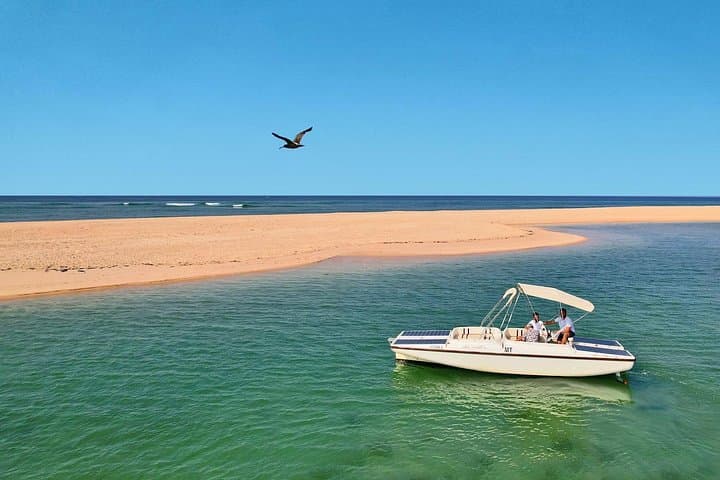


The boat slips away from Faro Marina with little more than a whisper—solar panels humming, hull cutting cleanly through the lagoon. Salt-sweet air and the distant croak of wading birds set the rhythm as your small-group guide, often a trained biologist, points out rails, spoonbills and white storks wheeling above the marshes.
The boat slips away from Faro Marina with little more than a whisper—solar panels humming, hull cutting cleanly through the lagoon. Salt-sweet air and the distant croak of wading birds set the rhythm as your small-group guide, often a trained biologist, points out rails, spoonbills and white storks wheeling above the marshes.
Ria Formosa is a barrier-lagoon system sculpted by currents and sandbanks over millennia; today it’s protected as Ria Formosa Natural Park (since 1987) and supports shellfish beds, salt pans and migratory stopovers. The landscape alternates shallow channels, reed-fringed marsh and islands where tidal flats stretch like breath on the horizon. Local communities still harvest oysters and clams, and guides often explain how those activities shape bird concentrations.
Practically: tours depart from Faro Marina—check in 10 minutes early—and run about two hours in a quiet solar-electric vessel with a maximum group of 14. Operators supply binoculars, life vests and live commentary; a minimum of two adults is required and children must be accompanied. Expect easy, mostly seated viewing with short standing periods for photography. Bring sun protection, a reusable water bottle and light layers for wind off the water. Photography benefits from a telephoto lens but even a phone with a steady hand will capture herons and shorebirds.
Respectful viewing keeps the park healthy: stay on board unless the guide invites you to disembark, avoid loud noises, and opt for eco-operators—your booking helps fund conservation.