THE ADVENTURE COLLECTIVE® · Independent discovery and booking for outdoor travel
A strenuous, private hike along Madeira’s little‑traveled Vereda da Ladeira, descending to the remote fajã of Quebrada Nova. Expect steep, uneven terrain, sweeping Atlantic views, and true solitude on a trail shaped by volcanic cliffs and old community routes.
A strenuous, private hike along Madeira’s little‑traveled Vereda da Ladeira, descending to the remote fajã of Quebrada Nova. Expect steep, uneven terrain, sweeping Atlantic views, and true solitude on a trail shaped by volcanic cliffs and old community routes.
A wind-swept ridge opens and the Atlantic fills the frame — sharp, silver, endless. On the Vereda da Ladeira, an old community path unravels across steep terraces and raw cliff faces, leading down to the remote fajã of Quebrada Nova. The route feels elemental: rock, scrub, and the constant salt tang that the sea presses up against the trail.
Verified experiences and guided adventures in the surrounding area.
Operated by Peak2Peak Adventures · Porto Moniz, Madeira
A wind-swept ridge opens and the Atlantic fills the frame — sharp, silver, endless. On the Vereda da Ladeira, an old community path unravels across steep terraces and raw cliff faces, leading down to the remote fajã of Quebrada Nova. The route feels elemental: rock, scrub, and the constant salt tang that the sea presses up against the trail.
These veredas were Madeira’s arteries for centuries, used by farmers and fishers moving between isolated settlements. Geologically the coast here is young volcanic basalt, eroded into steep escarpments and narrow coastal plains where landslides and wave action have shaped dramatic shelves. Local culture remains quietly present in stone walls and faint terraces; guides often point out where subsistence plots once clung to the slopes.
Expect long, steep descents and a strenuous return climb; the trail is little‑used and requires focus on uneven footing and loose rock. The guide provides context at Pombais viewpoint and shares safety tips before the zigzag descent to the fajã, where the silence and sea views reward the effort.
Practical advice: start early to avoid midday heat, carry 2–3 liters of water, wear stiff-soled boots and gaiters for scree, and use poles for the steep return. Weather on Madeira’s northwest can change fast — a lightweight waterproof and warm midlayer are essential. Mobile signal may be patchy; trust your guide, move deliberately, and leave no trace: this is fragile coastline that rewards patience with solitude and uncompromised views.
The tour runs about 5–6 hours total; pace is adapted but expects sustained effort for descents and a strenuous climb back up.
Yes — the hike is private with a guide; private round-trip transportation from a local pickup point is included.
Not recommended for those with significant heart or spinal problems, pregnant travelers, or people unable to handle steep, uneven terrain.
Guides monitor conditions and will alter plans or retreat if safety is threatened; cancellation policies allow refund if canceled at least 24 hours in advance.
Peak2Peak Adventures operates guided outdoor trips and adventures with an emphasis on safety, stewardship, and memorable experiences.
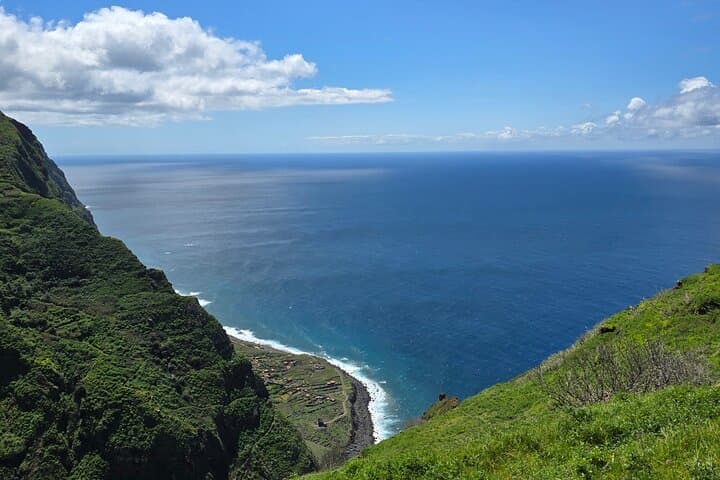
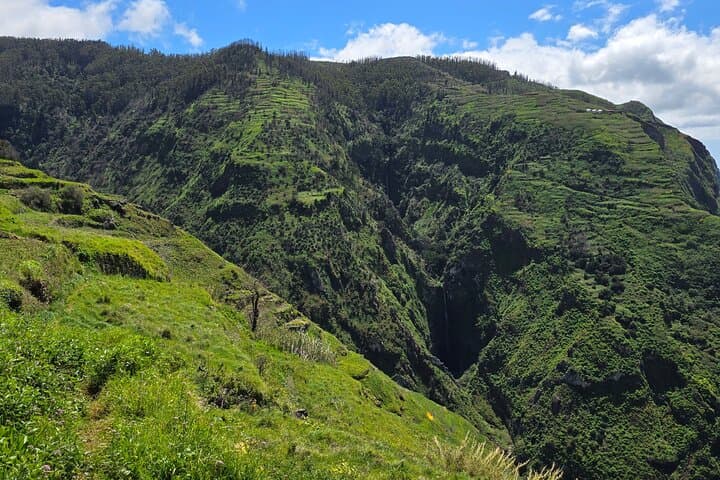
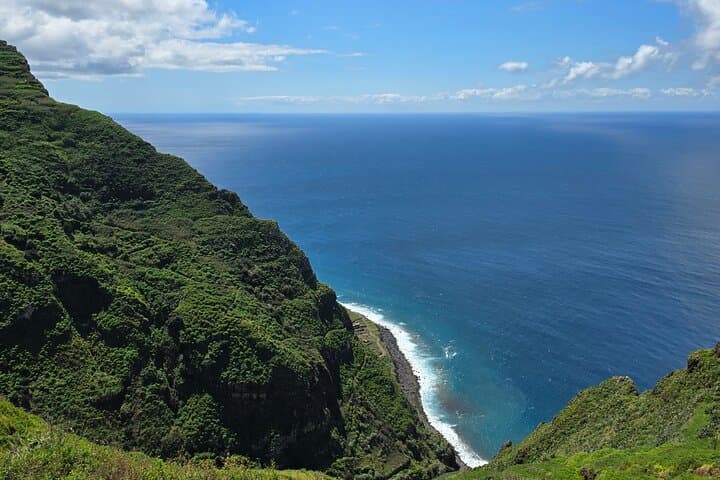
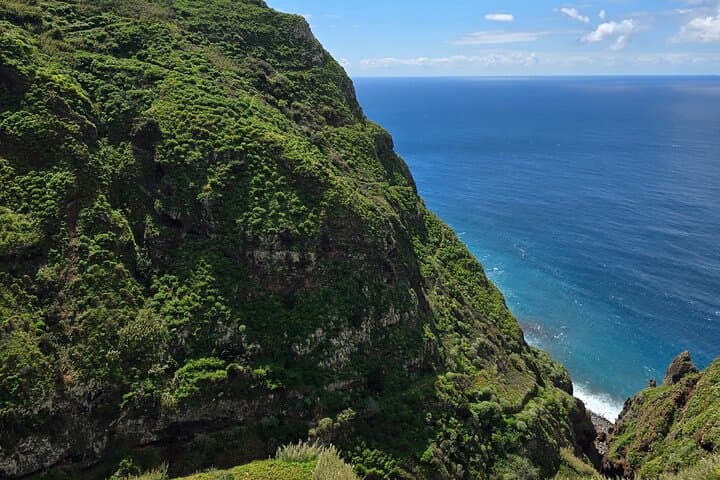
A wind-swept ridge opens and the Atlantic fills the frame — sharp, silver, endless. On the Vereda da Ladeira, an old community path unravels across steep terraces and raw cliff faces, leading down to the remote fajã of Quebrada Nova. The route feels elemental: rock, scrub, and the constant salt tang that the sea presses up against the trail.
A wind-swept ridge opens and the Atlantic fills the frame — sharp, silver, endless. On the Vereda da Ladeira, an old community path unravels across steep terraces and raw cliff faces, leading down to the remote fajã of Quebrada Nova. The route feels elemental: rock, scrub, and the constant salt tang that the sea presses up against the trail.
These veredas were Madeira’s arteries for centuries, used by farmers and fishers moving between isolated settlements. Geologically the coast here is young volcanic basalt, eroded into steep escarpments and narrow coastal plains where landslides and wave action have shaped dramatic shelves. Local culture remains quietly present in stone walls and faint terraces; guides often point out where subsistence plots once clung to the slopes.
Expect long, steep descents and a strenuous return climb; the trail is little‑used and requires focus on uneven footing and loose rock. The guide provides context at Pombais viewpoint and shares safety tips before the zigzag descent to the fajã, where the silence and sea views reward the effort.
Practical advice: start early to avoid midday heat, carry 2–3 liters of water, wear stiff-soled boots and gaiters for scree, and use poles for the steep return. Weather on Madeira’s northwest can change fast — a lightweight waterproof and warm midlayer are essential. Mobile signal may be patchy; trust your guide, move deliberately, and leave no trace: this is fragile coastline that rewards patience with solitude and uncompromised views.
