THE ADVENTURE COLLECTIVE® · Independent discovery and booking for outdoor travel

Spend a long day from Paris walking the Somme’s scarred fields: Thiepval’s vast panels, the hollowed Lochnagar Crater and the preserved trenches at Beaumont-Hamel. This guided day trip pairs onsite memorials with museum galleries that map the Battle of the Somme hour by hour.
Spend a long day from Paris walking the Somme’s scarred fields: Thiepval’s vast panels, the hollowed Lochnagar Crater and the preserved trenches at Beaumont-Hamel. This guided day trip pairs onsite memorials with museum galleries that map the Battle of the Somme hour by hour.
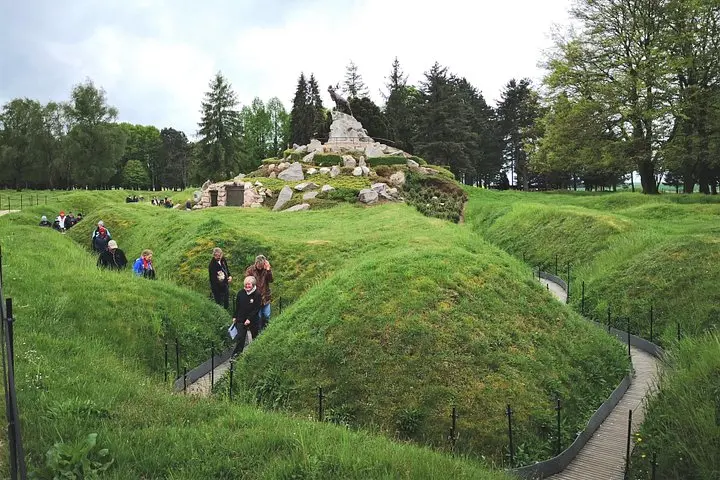
A morning coach pulls out of Paris and, in under two hours, the flat chalklands of the Somme open up—wind-cut fields dotted with white stone and grass-scored shell craters. You step down at Thiepval; the Memorial of the Missing rises in pale limestone, names etched in rows that turn scale into story. The day’s rhythm alternates between silent open ground and the close, claustrophobic cut of preserved trenches at Beaumont-Hamel.
Verified experiences and guided adventures in the surrounding area.
Operated by ADRIAN ROADS · Albert, Hauts-de-France
A morning coach pulls out of Paris and, in under two hours, the flat chalklands of the Somme open up—wind-cut fields dotted with white stone and grass-scored shell craters. You step down at Thiepval; the Memorial of the Missing rises in pale limestone, names etched in rows that turn scale into story. The day’s rhythm alternates between silent open ground and the close, claustrophobic cut of preserved trenches at Beaumont-Hamel.
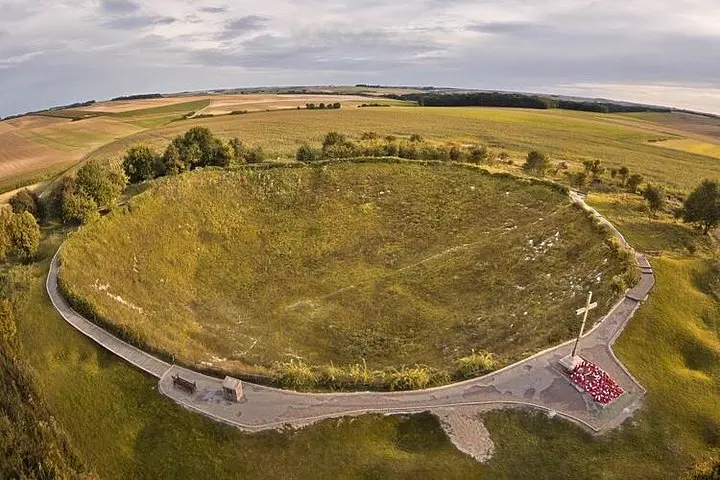
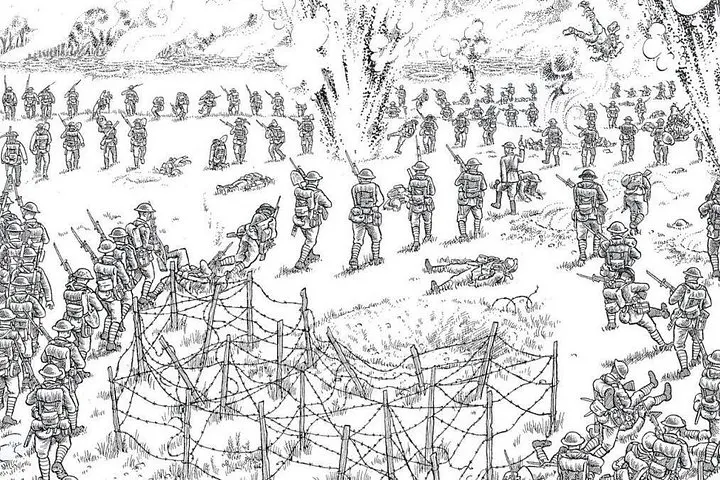
Geology here is plain: Cretaceous chalk overlain by shallow topsoil, a landscape that the war’s mines and artillery hollowed into craters like Lochnagar. The tour threads through the Battle of the Somme’s most visible sites—Lochnagar Crater at La Boisselle, Thiepval Memorial, Ulster Tower, and the Beaumont-Hamel Newfoundland Memorial—while museum galleries at the Historial of the Somme present hour-by-hour narratives and artifact displays that contextualise the frontline experience.
Practical details matter: this is a 12–13 hour day trip from Paris with roughly 2–4 km of on-foot exploration across uneven, often muddy ground and gentle slopes (cumulative ascent under 50 m). Expect paved museum paths but boardwalks and timber steps in preserved trench zones; comfortable, waterproof footwear and 1–2 L of water are essential. Museums provide restrooms and short films; guides arrange time for reflection and photos—observe signage around graves and memorials and avoid handling artefacts.
Timing tip: visit outside peak summer to avoid crowds and strong sun. The emotional tone is restrained and reflective; come prepared for quiet, and to leave the sites as you found them.
The tour runs about 12–13 hours round trip, including coach travel and guided visits at multiple sites.
Walking distances are short (2–4 km) but the ground is uneven and can be muddy; sturdy shoes are recommended.
Photography is generally permitted outdoors and in museum galleries, but obey signage and avoid close shots of names during private ceremonies.
The tour is family-friendly, but preserved trenches and crater rims have uneven terrain and limited accessibility; contact the operator about mobility needs.
ADRIAN ROADS operates guided outdoor trips and adventures with an emphasis on safety, stewardship, and memorable experiences.

A morning coach pulls out of Paris and, in under two hours, the flat chalklands of the Somme open up—wind-cut fields dotted with white stone and grass-scored shell craters. You step down at Thiepval; the Memorial of the Missing rises in pale limestone, names etched in rows that turn scale into story. The day’s rhythm alternates between silent open ground and the close, claustrophobic cut of preserved trenches at Beaumont-Hamel.
A morning coach pulls out of Paris and, in under two hours, the flat chalklands of the Somme open up—wind-cut fields dotted with white stone and grass-scored shell craters. You step down at Thiepval; the Memorial of the Missing rises in pale limestone, names etched in rows that turn scale into story. The day’s rhythm alternates between silent open ground and the close, claustrophobic cut of preserved trenches at Beaumont-Hamel.
Geology here is plain: Cretaceous chalk overlain by shallow topsoil, a landscape that the war’s mines and artillery hollowed into craters like Lochnagar. The tour threads through the Battle of the Somme’s most visible sites—Lochnagar Crater at La Boisselle, Thiepval Memorial, Ulster Tower, and the Beaumont-Hamel Newfoundland Memorial—while museum galleries at the Historial of the Somme present hour-by-hour narratives and artifact displays that contextualise the frontline experience.
Practical details matter: this is a 12–13 hour day trip from Paris with roughly 2–4 km of on-foot exploration across uneven, often muddy ground and gentle slopes (cumulative ascent under 50 m). Expect paved museum paths but boardwalks and timber steps in preserved trench zones; comfortable, waterproof footwear and 1–2 L of water are essential. Museums provide restrooms and short films; guides arrange time for reflection and photos—observe signage around graves and memorials and avoid handling artefacts.
Timing tip: visit outside peak summer to avoid crowds and strong sun. The emotional tone is restrained and reflective; come prepared for quiet, and to leave the sites as you found them.