THE ADVENTURE COLLECTIVE® · Independent discovery and booking for outdoor travel

Drive from the towering red dunes of Sossusvlei to the Atlantic town of Swakopmund on a six-day self-drive that mixes rooftop-tent camping with B&B nights. Expect long gravel roads, massive dunes at sunrise, and a seal-kayak day where desert and ocean collide.
Drive from the towering red dunes of Sossusvlei to the Atlantic town of Swakopmund on a six-day self-drive that mixes rooftop-tent camping with B&B nights. Expect long gravel roads, massive dunes at sunrise, and a seal-kayak day where desert and ocean collide.
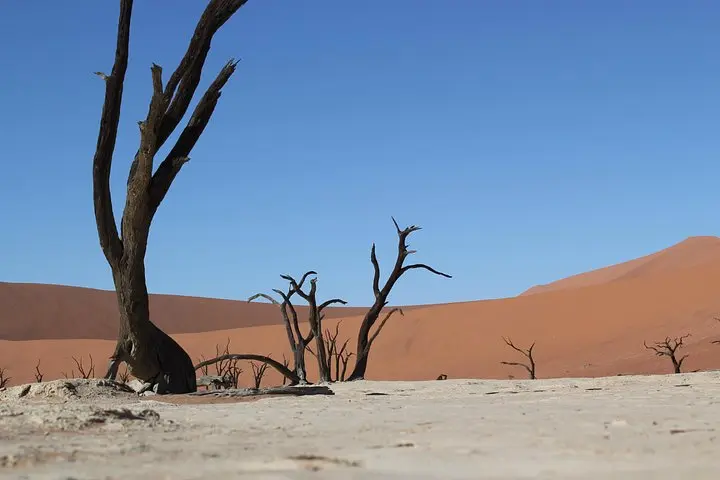
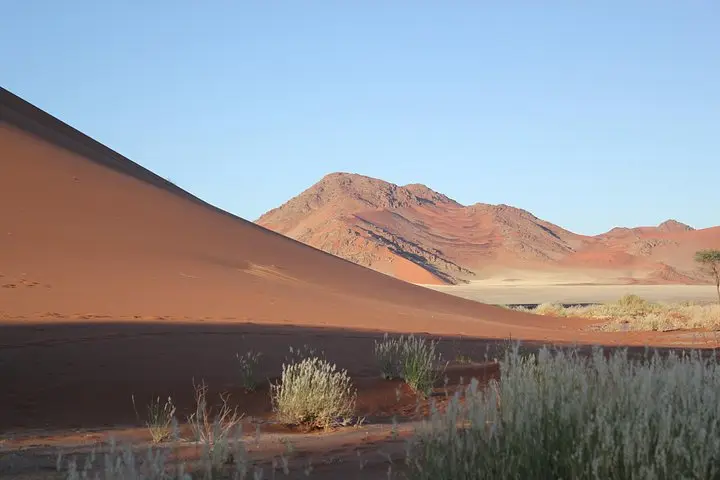
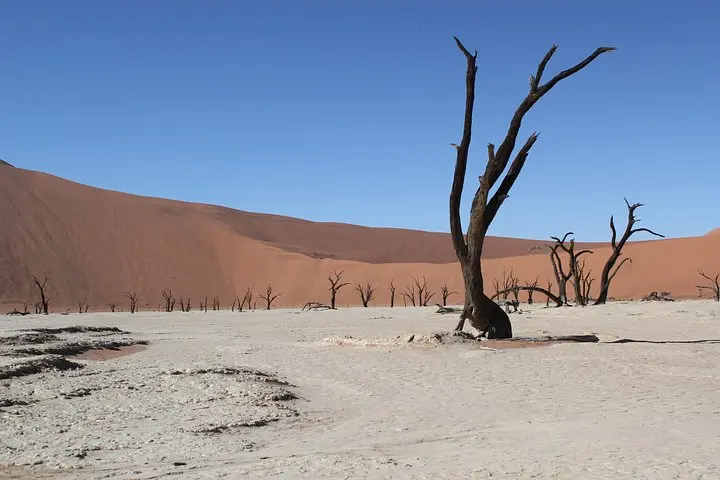
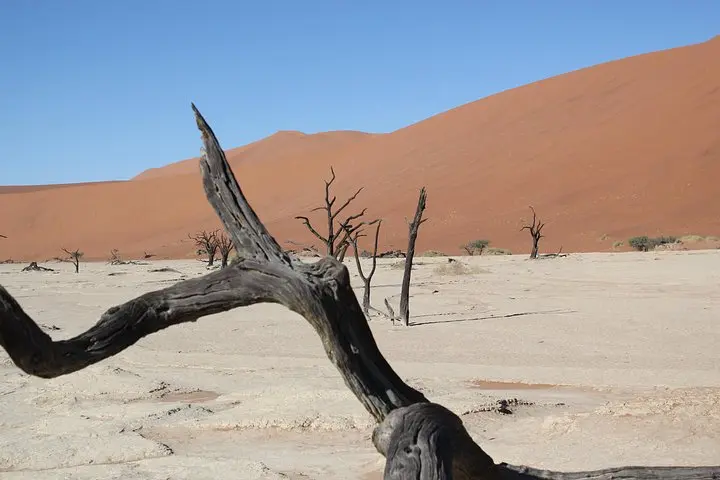
You wake before dawn with sand still cooling under the stars, unzip the roof-top tent and watch a sun the color of molten ochre pull itself up behind a wall of dunes. The first morning here is visual proof that the Namib is not empty—it rearranges light itself. Your convoy is a single 4x4 and a pair of kettles; the only people for miles are other early risers making their way to the same high ridge.
Verified experiences and guided adventures in the surrounding area.
Operated by Okutembuka Safaris · Swakopmund, Erongo
You wake before dawn with sand still cooling under the stars, unzip the roof-top tent and watch a sun the color of molten ochre pull itself up behind a wall of dunes. The first morning here is visual proof that the Namib is not empty—it rearranges light itself. Your convoy is a single 4x4 and a pair of kettles; the only people for miles are other early risers making their way to the same high ridge.
This six-day self-drive stitches together two very different Namibian landscapes: the inland salt-and-clay pans of Sossusvlei and the windswept Atlantic edge at Swakopmund. Geologically the route follows the edge of the Namib Desert—the world’s oldest desert—formed by coastal upwelling and aeolian deposits over tens of millions of years. The dunes here, including the famed Big Daddy, rise as high as 325 meters and are shaped daily by fine, relentless wind.
Culturally the corridor connects Himba and Nama lands inland with a small footprint of German colonial architecture on the coast. Solitaire and small guest farms like Namibgrens grew as waypoints for travelers and still serve as the lifeline between dunes and ocean: fuel, baked goods, and local gossip.
The trip is straightforward but specific: expect long drives on graded gravel and occasional maintenance-graded dirt. Windhoek to the Sossusvlei area is roughly 350–380 km (4.5–5.5 hours driving), with Solitaire about an hour from the park gates; the transfer from Sossusvlei to Swakopmund is another 350–380 km (5–6 hours). Elevation falls from the interior plateau to sea level at the coast; pack layers accordingly.
Practical notes: you’ll receive a detailed info pack with route notes and maps and collect a 4x4 with roof-top tent and basic camping equipment. Campsites at Sesriem are simple—communal showers and gas stoves—and you should be comfortable setting up camp and cooking. Fuel up in Solitaire and Swakopmund; there are long stretches without services. The Seal Kayak and Sandwich Harbour combo from Swakopmund offers a dramatic contrast—dunes meeting surf—and is often the day that redefines what “desert” feels like.
Timing matters: sunrise and sunset on the dunes are non-negotiable. Bring water (min. 3 liters/day), sun protection, binoculars for oryx and springbok sightings, and a headlamp for early starts. If you’ve never driven gravel, practice lower speeds and give extra stopping distance; weather can change traction fast. With a bit of planning, this self-drive delivers two worlds in one week—silent, red dunes that demand attention, and a brisk Atlantic town where seals punctuate the surf.
Yes. The itinerary supplies a 4x4 double cab with rooftop tent—gravel and sandy spurs require higher clearance and stable handling.
Expect two long driving days of roughly 4.5–6 hours (350–380 km) between Windhoek, Sossusvlei and Swakopmund, plus shorter transfers on other days.
Sesriem campsites have communal showers and toilets; camping is self-catered with gas cookers provided in the rental kit.
Basic items like fuel, snacks and some camping extras are available in Solitaire and Swakopmund, but bring specialized gear with you.
Travelers should have moderate physical fitness and basic camping skills; the tour notes recommend some prior experience but staff provide orientation.
Look for oryx, springbok and larks near the dunes, and Cape fur seals along the Swakopmund coastline during the kayak tour.
Okutembuka Safaris operates guided outdoor trips and adventures with an emphasis on safety, stewardship, and memorable experiences.
You wake before dawn with sand still cooling under the stars, unzip the roof-top tent and watch a sun the color of molten ochre pull itself up behind a wall of dunes. The first morning here is visual proof that the Namib is not empty—it rearranges light itself. Your convoy is a single 4x4 and a pair of kettles; the only people for miles are other early risers making their way to the same high ridge.
You wake before dawn with sand still cooling under the stars, unzip the roof-top tent and watch a sun the color of molten ochre pull itself up behind a wall of dunes. The first morning here is visual proof that the Namib is not empty—it rearranges light itself. Your convoy is a single 4x4 and a pair of kettles; the only people for miles are other early risers making their way to the same high ridge.
This six-day self-drive stitches together two very different Namibian landscapes: the inland salt-and-clay pans of Sossusvlei and the windswept Atlantic edge at Swakopmund. Geologically the route follows the edge of the Namib Desert—the world’s oldest desert—formed by coastal upwelling and aeolian deposits over tens of millions of years. The dunes here, including the famed Big Daddy, rise as high as 325 meters and are shaped daily by fine, relentless wind.
Culturally the corridor connects Himba and Nama lands inland with a small footprint of German colonial architecture on the coast. Solitaire and small guest farms like Namibgrens grew as waypoints for travelers and still serve as the lifeline between dunes and ocean: fuel, baked goods, and local gossip.
The trip is straightforward but specific: expect long drives on graded gravel and occasional maintenance-graded dirt. Windhoek to the Sossusvlei area is roughly 350–380 km (4.5–5.5 hours driving), with Solitaire about an hour from the park gates; the transfer from Sossusvlei to Swakopmund is another 350–380 km (5–6 hours). Elevation falls from the interior plateau to sea level at the coast; pack layers accordingly.
Practical notes: you’ll receive a detailed info pack with route notes and maps and collect a 4x4 with roof-top tent and basic camping equipment. Campsites at Sesriem are simple—communal showers and gas stoves—and you should be comfortable setting up camp and cooking. Fuel up in Solitaire and Swakopmund; there are long stretches without services. The Seal Kayak and Sandwich Harbour combo from Swakopmund offers a dramatic contrast—dunes meeting surf—and is often the day that redefines what “desert” feels like.
Timing matters: sunrise and sunset on the dunes are non-negotiable. Bring water (min. 3 liters/day), sun protection, binoculars for oryx and springbok sightings, and a headlamp for early starts. If you’ve never driven gravel, practice lower speeds and give extra stopping distance; weather can change traction fast. With a bit of planning, this self-drive delivers two worlds in one week—silent, red dunes that demand attention, and a brisk Atlantic town where seals punctuate the surf.