THE ADVENTURE COLLECTIVE® · Independent discovery and booking for outdoor travel

Spend a day traveling Iceland’s dramatic south coast from Reykjavík: walk behind Seljalandsfoss, climb above Skógafoss, and stand on the black sands of Reynisfjara. This private full-day tour packs geology, birdlife and coastal power into an accessible eight-hour loop.
Spend a day traveling Iceland’s dramatic south coast from Reykjavík: walk behind Seljalandsfoss, climb above Skógafoss, and stand on the black sands of Reynisfjara. This private full-day tour packs geology, birdlife and coastal power into an accessible eight-hour loop.
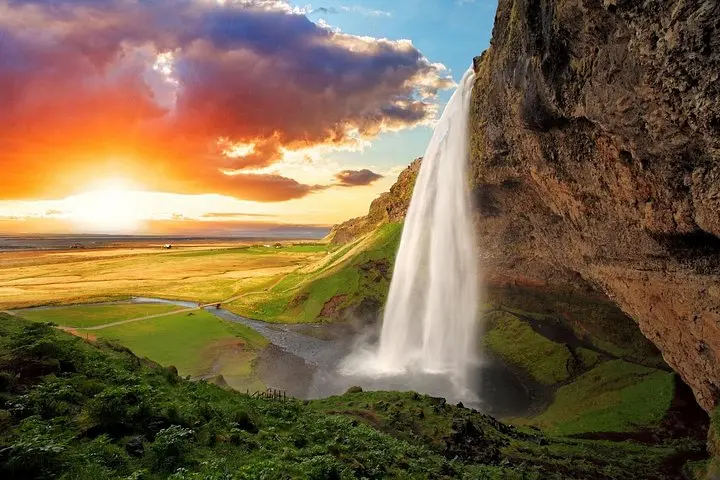
A low cloud peels back and the thunder of Seljalandsfoss announces the start of the day: water hurling itself off green-clad cliffs and daring you to step behind its curtain. You feel the spray on your face and the path underfoot give way to pebbles and peat as the van rolls south along a coastline still shaped by fire and ice.
Verified experiences and guided adventures in the surrounding area.
Operated by Marina Travel · Vík í Mýrdal, Southern Region
A low cloud peels back and the thunder of Seljalandsfoss announces the start of the day: water hurling itself off green-clad cliffs and daring you to step behind its curtain. You feel the spray on your face and the path underfoot give way to pebbles and peat as the van rolls south along a coastline still shaped by fire and ice.
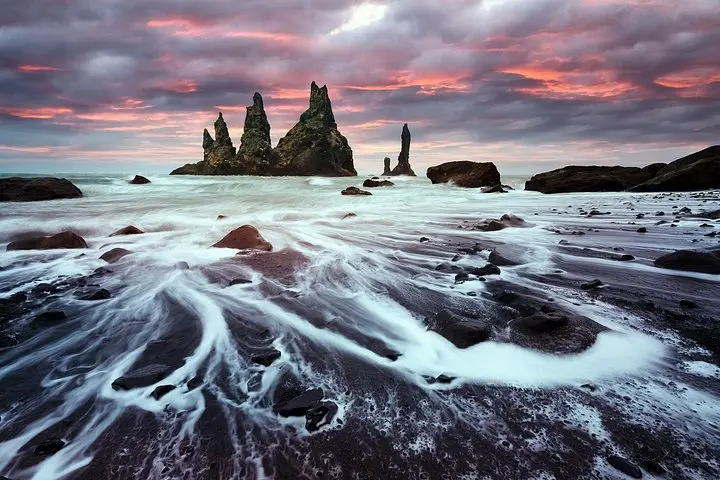
This stretch of Iceland’s southern flank tells a compact geological story — glaciers carving valleys, rivers cutting gorges, and repeated volcanic eruptions laying down black sand beaches like a dark, windblown stage. Seljalandsfoss and Skógafoss are accessible expressions of that history: waterfalls fed by glacial melt, dropping over former sea cliffs. Reynisfjara’s basalt columns and Reynisdrangar sea stacks are volcanic architecture, while nearby farmland and sagas reflect a culture that has long negotiated weather and isolation.
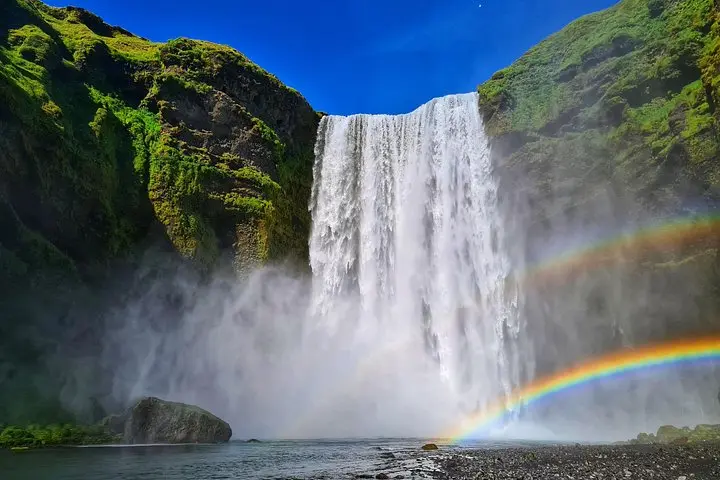
Practically, expect short, steep stair climbs at Skógafoss, a damp, 20–30 minute path behind Seljalandsfoss if conditions allow, and uneven, compacted black sand with strong sneaker waves at Reynisfjara. Guides will time stops for light and bird activity in summer; winter visits emphasize daylight and road conditions.
Plan waterproof layers and sturdy soles, give nesting cliffs and ocean waves wide berth, and budget eight hours for a private round-trip from Reykjavík. The payoff is immediate: glacier-fed mist, thunderous falls, and the raw geometry of basalt and surf — a concentrated day that feels like the island in miniature.
Yes, there is a short path that leads behind the curtain of water, but it can be slippery and wet — wear waterproof outer layers and take care on uneven rock.
Yes — Reynisfjara is known for powerful, unpredictable sneaker waves; stay well above the waterline, follow guide directions, and never turn your back on the sea.
The tour is family-friendly in general, but participants should be able to manage short walks and stairs; those with mobility limits or spinal/heart conditions should consult the operator.
Puffins nest on coastal cliffs roughly from June through August; summer visits have the best chance to see them from safe viewing points.
Marina Travel operates guided outdoor trips and adventures with an emphasis on safety, stewardship, and memorable experiences.
A low cloud peels back and the thunder of Seljalandsfoss announces the start of the day: water hurling itself off green-clad cliffs and daring you to step behind its curtain. You feel the spray on your face and the path underfoot give way to pebbles and peat as the van rolls south along a coastline still shaped by fire and ice.
A low cloud peels back and the thunder of Seljalandsfoss announces the start of the day: water hurling itself off green-clad cliffs and daring you to step behind its curtain. You feel the spray on your face and the path underfoot give way to pebbles and peat as the van rolls south along a coastline still shaped by fire and ice.
This stretch of Iceland’s southern flank tells a compact geological story — glaciers carving valleys, rivers cutting gorges, and repeated volcanic eruptions laying down black sand beaches like a dark, windblown stage. Seljalandsfoss and Skógafoss are accessible expressions of that history: waterfalls fed by glacial melt, dropping over former sea cliffs. Reynisfjara’s basalt columns and Reynisdrangar sea stacks are volcanic architecture, while nearby farmland and sagas reflect a culture that has long negotiated weather and isolation.
Practically, expect short, steep stair climbs at Skógafoss, a damp, 20–30 minute path behind Seljalandsfoss if conditions allow, and uneven, compacted black sand with strong sneaker waves at Reynisfjara. Guides will time stops for light and bird activity in summer; winter visits emphasize daylight and road conditions.
Plan waterproof layers and sturdy soles, give nesting cliffs and ocean waves wide berth, and budget eight hours for a private round-trip from Reykjavík. The payoff is immediate: glacier-fed mist, thunderous falls, and the raw geometry of basalt and surf — a concentrated day that feels like the island in miniature.