THE ADVENTURE COLLECTIVE® · Independent discovery and booking for outdoor travel

A two-day small-group circuit along Iceland’s southern coast that pairs black-sand beaches, thundering waterfalls, and a guide-led ice cave visit at Vatnajökull. Ideal for photographers and travelers who want a compact, high-impact introduction to Icelandic extremes.
A two-day small-group circuit along Iceland’s southern coast that pairs black-sand beaches, thundering waterfalls, and a guide-led ice cave visit at Vatnajökull. Ideal for photographers and travelers who want a compact, high-impact introduction to Icelandic extremes.
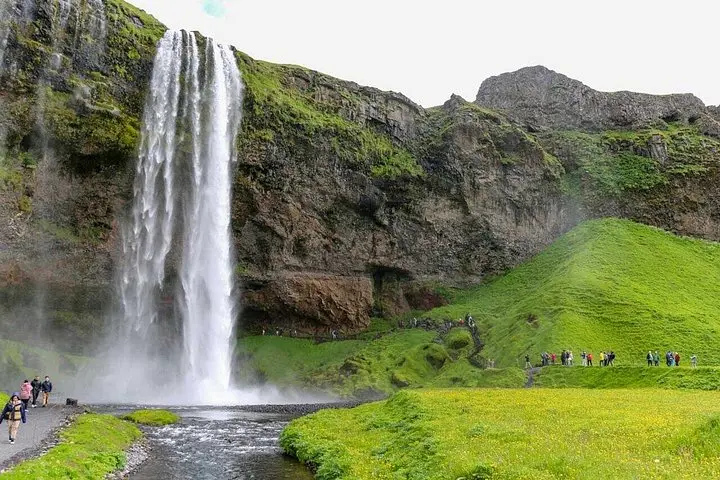
A thin curtain of mist hangs over Seljalandsfoss as the minivan eases to a stop and a guide opens the door to the island of sound: water. You step onto a gravel path and the fall fills the air—its voice loud enough to hush conversation. Walk behind the sheet of water and the world rearranges itself into a wet blue room, droplets spitting like silver hail. That first afternoon sets the tone for a two-day loop across Iceland’s southern spine, a route where volcano and glacier argue for dominance and each landscape dares you to look closer.
Verified experiences and guided adventures in the surrounding area.
Operated by BusTravel Iceland · Jökulsárlón, Southern Region
A thin curtain of mist hangs over Seljalandsfoss as the minivan eases to a stop and a guide opens the door to the island of sound: water. You step onto a gravel path and the fall fills the air—its voice loud enough to hush conversation. Walk behind the sheet of water and the world rearranges itself into a wet blue room, droplets spitting like silver hail. That first afternoon sets the tone for a two-day loop across Iceland’s southern spine, a route where volcano and glacier argue for dominance and each landscape dares you to look closer.
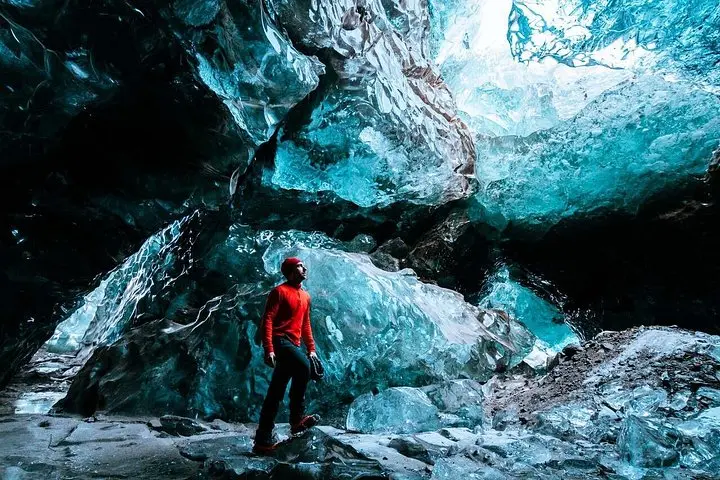
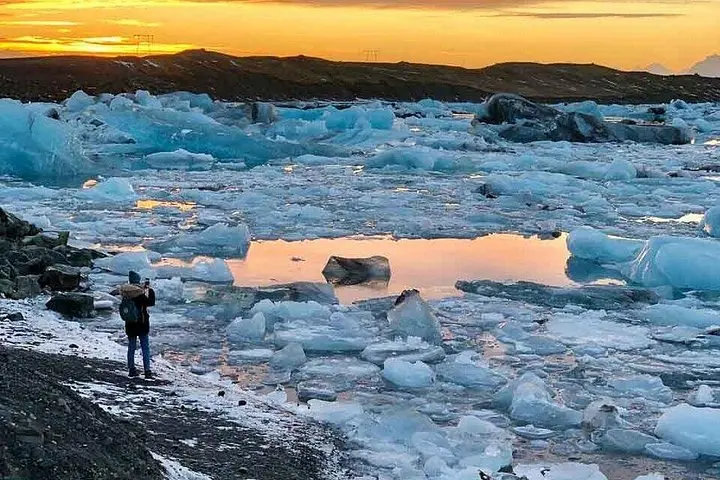
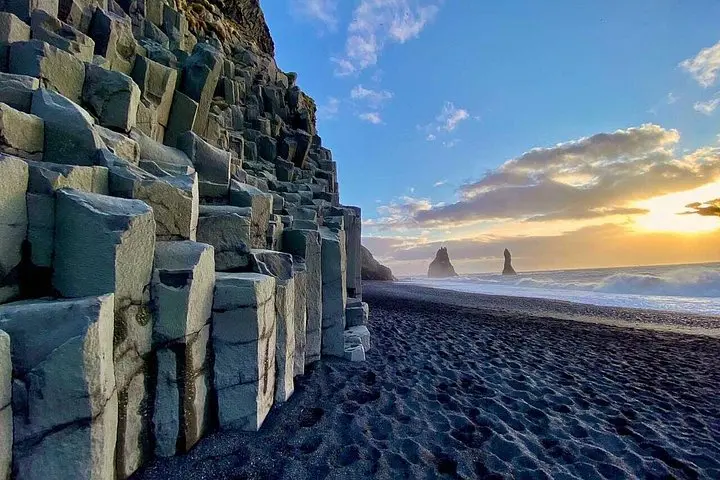
This small-group tour threads together landmarks that have become shorthand for Iceland’s power: Seljalandsfoss and Skógafoss, where basalt cliffs funnel rivers into thunder; Reynisfjara, a black-sand coastline carved by lava and pounded into columns; and Jökulsárlón, the glacier lagoon where bergs calve and drift like slow-running jewels. Day two takes you closer to ice—guided access into a seasonal crystal cave in Vatnajökull offers a rare chance to stand under blue-tinged ice, carved by meltwater and time.
Geology here is recent and energetic. The south coast is a collision zone: lava fields from Katla and Eyjafjallajökull sit beside the slow, massive pull of Vatnajökull glacier. Human history is sparser but no less compelling—the farmsteads and fishing villages that dot the ring road recall centuries of adaptation to wind and isolation.
Local guides run this as a practical expedition: expect driving between 4–5 hours each day and short walks at each stop. The itinerary balances accessible viewpoints with more tactile experiences—walking behind a waterfall, crossing a black-sand strand, and donning crampons for a guided cave approach.
Practical matters matter here. Weather shapes every element; layers and waterproofs are the baseline. The tour is suitable for a wide range of fitness levels, but terrain is uneven, sometimes slushy or icy. Photography is a focus—bring spare batteries, because cold kills power faster than you think.
If chasing the Aurora Borealis is on your checklist, this route gives you a fighting chance: minimal light, wide northern skies, and frequent geomagnetic action in winter months. Still, the show is never guaranteed—be prepared to be awed just by the landscape itself.
Whether you come for ice, beach, or the sharp satisfaction of a country that feels very much still in formation, this two-day run along Iceland’s south coast delivers concentrated, cinematic nature. Expect a mix of long drives, short hikes, and moments when the rawness of the place insists on your attention.
Expect roughly 4–5 hours of driving per day between stops; the tour balances drive time with multiple short walks at key sites.
Yes—access to the Crystal Ice Cave is guided, with safety briefings and equipment; you should follow guide instructions and wear provided crampons when required.
The tour offers opportunities for aurora viewing, especially in winter, but sightings depend on solar activity and clear skies and cannot be guaranteed.
Families with older children can participate, but ensure kids are comfortable with long drives and cold, uneven terrain; check age limits with the operator on booking.
Windproof layers, waterproof boots, and a hat—stay well back from the surf and respect posted warnings about sneaker waves.
Yes—hotel and designated pickup points in Reykjavík are included; confirm your pickup location and time when booking.
BusTravel Iceland operates guided outdoor trips and adventures with an emphasis on safety, stewardship, and memorable experiences.
A thin curtain of mist hangs over Seljalandsfoss as the minivan eases to a stop and a guide opens the door to the island of sound: water. You step onto a gravel path and the fall fills the air—its voice loud enough to hush conversation. Walk behind the sheet of water and the world rearranges itself into a wet blue room, droplets spitting like silver hail. That first afternoon sets the tone for a two-day loop across Iceland’s southern spine, a route where volcano and glacier argue for dominance and each landscape dares you to look closer.
A thin curtain of mist hangs over Seljalandsfoss as the minivan eases to a stop and a guide opens the door to the island of sound: water. You step onto a gravel path and the fall fills the air—its voice loud enough to hush conversation. Walk behind the sheet of water and the world rearranges itself into a wet blue room, droplets spitting like silver hail. That first afternoon sets the tone for a two-day loop across Iceland’s southern spine, a route where volcano and glacier argue for dominance and each landscape dares you to look closer.
This small-group tour threads together landmarks that have become shorthand for Iceland’s power: Seljalandsfoss and Skógafoss, where basalt cliffs funnel rivers into thunder; Reynisfjara, a black-sand coastline carved by lava and pounded into columns; and Jökulsárlón, the glacier lagoon where bergs calve and drift like slow-running jewels. Day two takes you closer to ice—guided access into a seasonal crystal cave in Vatnajökull offers a rare chance to stand under blue-tinged ice, carved by meltwater and time.
Geology here is recent and energetic. The south coast is a collision zone: lava fields from Katla and Eyjafjallajökull sit beside the slow, massive pull of Vatnajökull glacier. Human history is sparser but no less compelling—the farmsteads and fishing villages that dot the ring road recall centuries of adaptation to wind and isolation.
Local guides run this as a practical expedition: expect driving between 4–5 hours each day and short walks at each stop. The itinerary balances accessible viewpoints with more tactile experiences—walking behind a waterfall, crossing a black-sand strand, and donning crampons for a guided cave approach.
Practical matters matter here. Weather shapes every element; layers and waterproofs are the baseline. The tour is suitable for a wide range of fitness levels, but terrain is uneven, sometimes slushy or icy. Photography is a focus—bring spare batteries, because cold kills power faster than you think.
If chasing the Aurora Borealis is on your checklist, this route gives you a fighting chance: minimal light, wide northern skies, and frequent geomagnetic action in winter months. Still, the show is never guaranteed—be prepared to be awed just by the landscape itself.
Whether you come for ice, beach, or the sharp satisfaction of a country that feels very much still in formation, this two-day run along Iceland’s south coast delivers concentrated, cinematic nature. Expect a mix of long drives, short hikes, and moments when the rawness of the place insists on your attention.