THE ADVENTURE COLLECTIVE® · Independent discovery and booking for outdoor travel

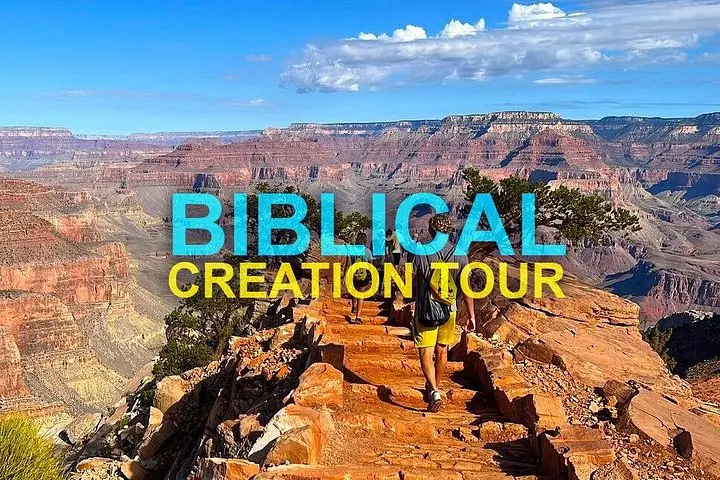
Descend the South Kaibab Trail with a guided exploration that blends Grand Canyon geology and biblical creation interpretation. This 3-mile round-trip hike to Cedar Ridge delivers dramatic views, on-trail teachings, and practical guidance for a safe inner-canyon experience.
Descend the South Kaibab Trail with a guided exploration that blends Grand Canyon geology and biblical creation interpretation. This 3-mile round-trip hike to Cedar Ridge delivers dramatic views, on-trail teachings, and practical guidance for a safe inner-canyon experience.
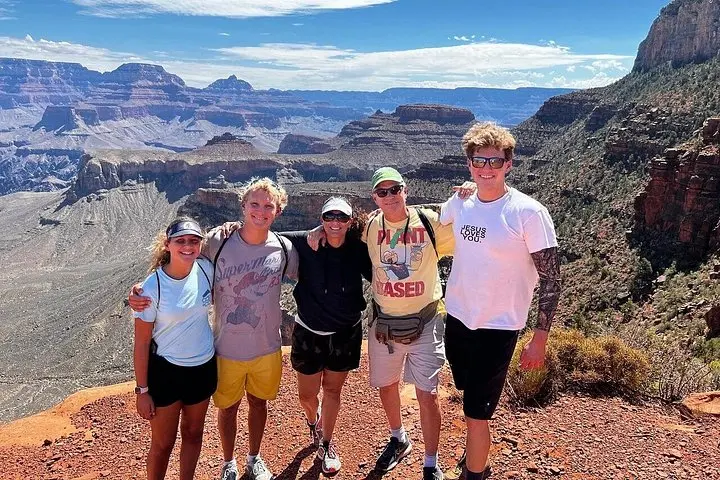
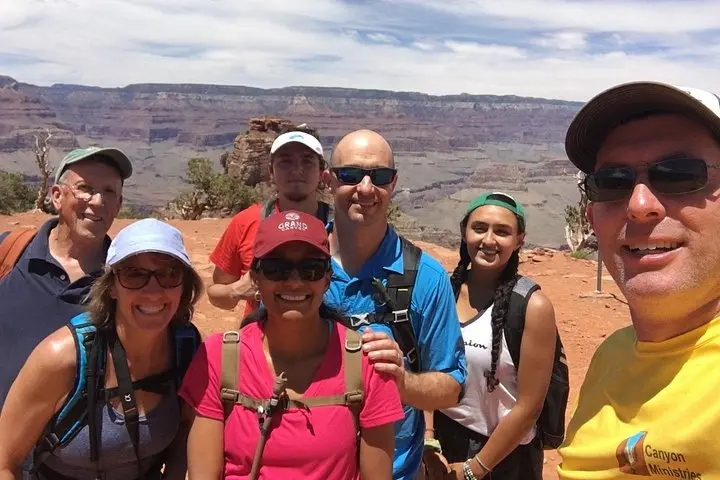
The morning air on the South Rim has a thin, honest clarity that makes every rock face look hand-cut. You meet at the flag pole outside the Grand Canyon Visitor Center with a small group, backpacks snug, water bottles glinting. A short shuttle deposits you at the South Kaibab trailhead; the rim falls away in an immediate, vertiginous promise. The trail pulls you into the canyon—steep, exposed switchbacks that demand steady feet and steady breathing—until the rim becomes a memory and the canyon’s layers read like a page in a very old book.
Verified experiences and guided adventures in the surrounding area.
Operated by Canyon Ministries Christian Tours · Grand Canyon Village, Arizona
The morning air on the South Rim has a thin, honest clarity that makes every rock face look hand-cut. You meet at the flag pole outside the Grand Canyon Visitor Center with a small group, backpacks snug, water bottles glinting. A short shuttle deposits you at the South Kaibab trailhead; the rim falls away in an immediate, vertiginous promise. The trail pulls you into the canyon—steep, exposed switchbacks that demand steady feet and steady breathing—until the rim becomes a memory and the canyon’s layers read like a page in a very old book.
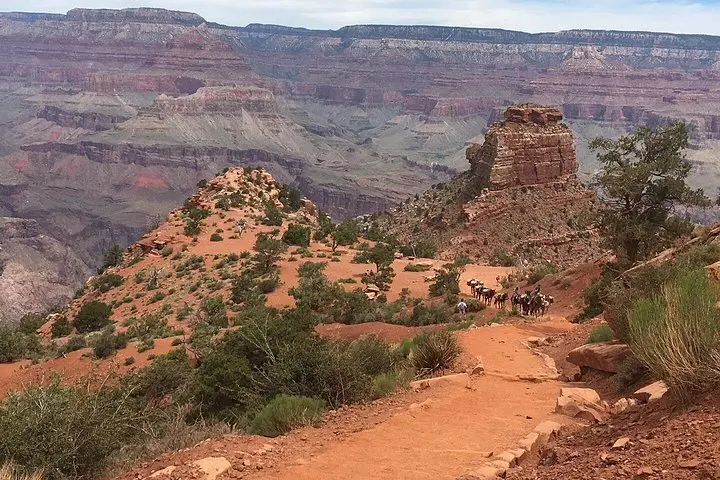
This guided walk to Cedar Ridge covers about 1.5 miles each way but concentrates drama and geology into a compact slice of the inner canyon. The route crosses distinct formations: the Kaibab Limestone cap, the pale sweep of Coconino Sandstone, the darker bands of Hermit Shale and Supai layers below. Guides from Canyon Ministries weave on-trail interpretation of those rock layers with readings and reflections framed by biblical creation perspectives; whether you come for the vistas or the theology, the conversation foregrounds how people have read the canyon’s story across cultures and centuries.
Geologically, the South Kaibab offers one of the clearest cross-sections of the canyon’s sedimentary stack. Culturally, this rim has long been a meeting place—Native communities, early explorers, and modern park stewards shaped how the canyon is seen and managed. On this route you’ll also notice fossilized remnants and ripple marks that still argue for ancient environments, and the guides will point them out in plain language.
Practically: expect a round-trip distance of roughly 3 miles and an elevation change of about 1,100 feet. The descent is fast; the return is a workout—plan for 5–6 hours including stops. Hydration is non-negotiable: guides require 2 liters (64 oz) minimum. Footwear should be sturdy with good traction; the trail is mostly rocky and exposed with limited shade. Start early to avoid midday heat and to catch the canyon lighting when the sandstone seems to glow.
Leave no trace here—this is a fragile desert ecosystem where water is scarce and human impact is visible. The tour runs with small groups (max seven) and requires a modest level of fitness; minimum age is 12. Bring sunscreen, a full lunch, and layers—the rim can be cool while the inner canyon is warm. Whether you’re drawn by faith-based discussion or raw geology, descending South Kaibab to Cedar Ridge is an intimacy with the canyon that’s both humbling and clarifying.
The full outing is about 3 miles round-trip with roughly 1,100 feet of elevation change to Cedar Ridge; plan 5–6 hours including stops.
No—park entrance fees are separate. Check the National Park Service site for current rates before arrival.
Participants must be at least 12 years old for this tour.
Moderate fitness is expected; no technical experience is required but you should be comfortable on steep, exposed trails and able to complete a strenuous climb back to the rim.
Bring a packed lunch, sun protection, sturdy footwear, and layers. Trekking poles are optional but can help on the ascent.
The operator may cancel for bad weather; for a full refund cancel at least 24 hours prior. Lightning and extreme heat are common reasons for schedule changes.
Canyon Ministries Christian Tours operates guided outdoor trips and adventures with an emphasis on safety, stewardship, and memorable experiences.
The morning air on the South Rim has a thin, honest clarity that makes every rock face look hand-cut. You meet at the flag pole outside the Grand Canyon Visitor Center with a small group, backpacks snug, water bottles glinting. A short shuttle deposits you at the South Kaibab trailhead; the rim falls away in an immediate, vertiginous promise. The trail pulls you into the canyon—steep, exposed switchbacks that demand steady feet and steady breathing—until the rim becomes a memory and the canyon’s layers read like a page in a very old book.
The morning air on the South Rim has a thin, honest clarity that makes every rock face look hand-cut. You meet at the flag pole outside the Grand Canyon Visitor Center with a small group, backpacks snug, water bottles glinting. A short shuttle deposits you at the South Kaibab trailhead; the rim falls away in an immediate, vertiginous promise. The trail pulls you into the canyon—steep, exposed switchbacks that demand steady feet and steady breathing—until the rim becomes a memory and the canyon’s layers read like a page in a very old book.
This guided walk to Cedar Ridge covers about 1.5 miles each way but concentrates drama and geology into a compact slice of the inner canyon. The route crosses distinct formations: the Kaibab Limestone cap, the pale sweep of Coconino Sandstone, the darker bands of Hermit Shale and Supai layers below. Guides from Canyon Ministries weave on-trail interpretation of those rock layers with readings and reflections framed by biblical creation perspectives; whether you come for the vistas or the theology, the conversation foregrounds how people have read the canyon’s story across cultures and centuries.
Geologically, the South Kaibab offers one of the clearest cross-sections of the canyon’s sedimentary stack. Culturally, this rim has long been a meeting place—Native communities, early explorers, and modern park stewards shaped how the canyon is seen and managed. On this route you’ll also notice fossilized remnants and ripple marks that still argue for ancient environments, and the guides will point them out in plain language.
Practically: expect a round-trip distance of roughly 3 miles and an elevation change of about 1,100 feet. The descent is fast; the return is a workout—plan for 5–6 hours including stops. Hydration is non-negotiable: guides require 2 liters (64 oz) minimum. Footwear should be sturdy with good traction; the trail is mostly rocky and exposed with limited shade. Start early to avoid midday heat and to catch the canyon lighting when the sandstone seems to glow.
Leave no trace here—this is a fragile desert ecosystem where water is scarce and human impact is visible. The tour runs with small groups (max seven) and requires a modest level of fitness; minimum age is 12. Bring sunscreen, a full lunch, and layers—the rim can be cool while the inner canyon is warm. Whether you’re drawn by faith-based discussion or raw geology, descending South Kaibab to Cedar Ridge is an intimacy with the canyon that’s both humbling and clarifying.