THE ADVENTURE COLLECTIVE® · Independent discovery and booking for outdoor travel

Drive from Lisbon to the pine‑clad ridges and turquoise coves of Arrábida on a full‑day tour that mixes historic forts, a family winery tasting, and seaside villages. Expect short walks to viewpoints, regional pastries in Azeitão and beach time in Setúbal.
Drive from Lisbon to the pine‑clad ridges and turquoise coves of Arrábida on a full‑day tour that mixes historic forts, a family winery tasting, and seaside villages. Expect short walks to viewpoints, regional pastries in Azeitão and beach time in Setúbal.
You pull away from Lisbon with the Tagus behind you and the Cristo Rei statue watching over the city like a patient guardian. The road drops toward Setúbal, and soon the land tightens into the green, limestone spine of Arrábida Natural Park — low mountains that push their cliffs into turquoise coves. Salt air and pine resin follow you on the wind; gulls wheel over fishing boats in the Sado estuary.
Verified experiences and guided adventures in the surrounding area.
Operated by On Tours Portugal · Setúbal, Lisbon District
You pull away from Lisbon with the Tagus behind you and the Cristo Rei statue watching over the city like a patient guardian. The road drops toward Setúbal, and soon the land tightens into the green, limestone spine of Arrábida Natural Park — low mountains that push their cliffs into turquoise coves. Salt air and pine resin follow you on the wind; gulls wheel over fishing boats in the Sado estuary.
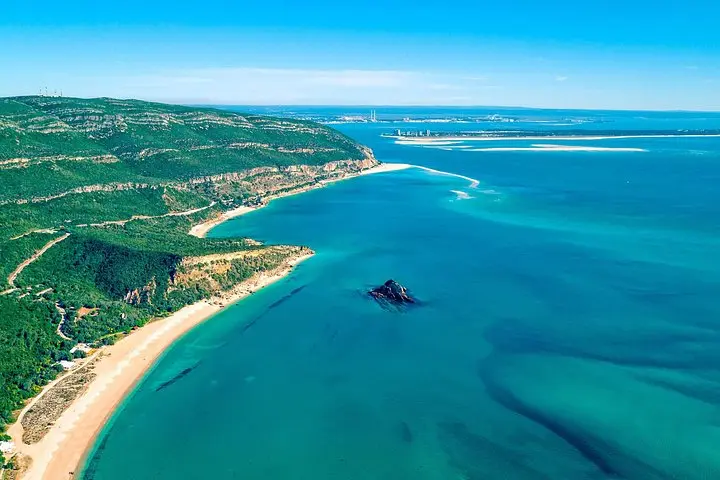
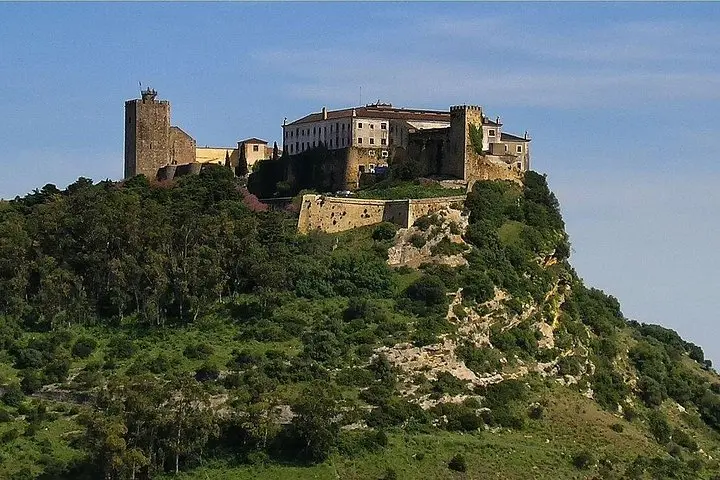
This full-day loop stitches together centuries: the Manueline and Renaissance echoes in Palmela Castle, the 16th‑century Fort São Filipe guarding Setúbal’s river mouth, and the wines of José Maria da Fonseca, a family cellar with roots in the 1830s. Geologically, Arrábida is compact karst — limestone ridges rising to roughly 500 m — creating steep escarpments, hidden coves and beaches like Portinho da Arrábida and Figueirinha with clear water that tempts swimmers.
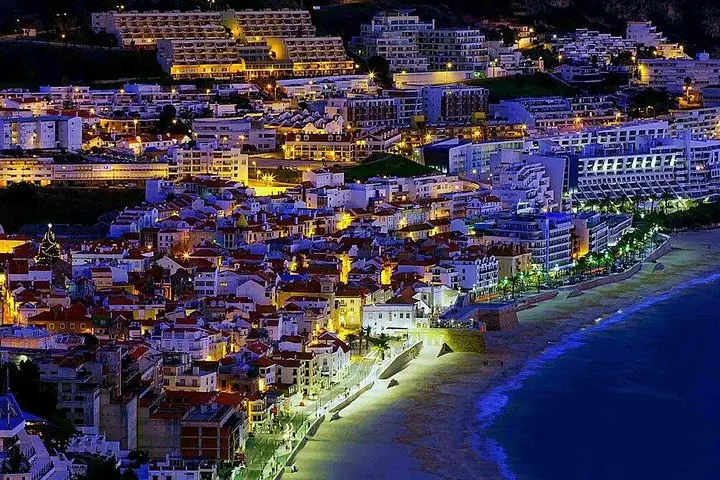
Expect short, unpaved viewpoint walks, winery interiors with seated tastings, a stroll through Azeitão’s narrow lanes for the famous tortas pastry, and a longer visit to Setúbal for lunch and the fort’s ramparts. Practicalities: the tour runs about 8–9 hours, uses an air‑conditioned vehicle with short on‑foot segments, and is suitable for most fitness levels. Bring sun protection, a light layer for breezy ridges, comfortable shoes for cobbled streets, and your camera — the viewpoints demand it. If you plan to swim, pack swimwear and a quick‑dry towel; tides and currents vary, so choose sheltered coves for calmer water.
The tour lasts about 8–9 hours with a mix of driving, two winery and village stops, viewpoint walks of 10–20 minutes, and a 60–90 minute lunch stop in Setúbal.
Swimming time is optional—guides can suggest sheltered coves like Portinho da Arrábida and Figueirinha; check local conditions before entering the water.
The itinerary includes a wine‑cellar visit with two tastings; participants must provide valid ID for alcohol service and under‑age guests should be declared at booking.
Yes—most operators accept dietary requests if noted at booking; the tour is family‑friendly with short walks and stroller accessibility in village areas.
On Tours Portugal operates guided outdoor trips and adventures with an emphasis on safety, stewardship, and memorable experiences.

You pull away from Lisbon with the Tagus behind you and the Cristo Rei statue watching over the city like a patient guardian. The road drops toward Setúbal, and soon the land tightens into the green, limestone spine of Arrábida Natural Park — low mountains that push their cliffs into turquoise coves. Salt air and pine resin follow you on the wind; gulls wheel over fishing boats in the Sado estuary.
You pull away from Lisbon with the Tagus behind you and the Cristo Rei statue watching over the city like a patient guardian. The road drops toward Setúbal, and soon the land tightens into the green, limestone spine of Arrábida Natural Park — low mountains that push their cliffs into turquoise coves. Salt air and pine resin follow you on the wind; gulls wheel over fishing boats in the Sado estuary.
This full-day loop stitches together centuries: the Manueline and Renaissance echoes in Palmela Castle, the 16th‑century Fort São Filipe guarding Setúbal’s river mouth, and the wines of José Maria da Fonseca, a family cellar with roots in the 1830s. Geologically, Arrábida is compact karst — limestone ridges rising to roughly 500 m — creating steep escarpments, hidden coves and beaches like Portinho da Arrábida and Figueirinha with clear water that tempts swimmers.
Expect short, unpaved viewpoint walks, winery interiors with seated tastings, a stroll through Azeitão’s narrow lanes for the famous tortas pastry, and a longer visit to Setúbal for lunch and the fort’s ramparts. Practicalities: the tour runs about 8–9 hours, uses an air‑conditioned vehicle with short on‑foot segments, and is suitable for most fitness levels. Bring sun protection, a light layer for breezy ridges, comfortable shoes for cobbled streets, and your camera — the viewpoints demand it. If you plan to swim, pack swimwear and a quick‑dry towel; tides and currents vary, so choose sheltered coves for calmer water.