THE ADVENTURE COLLECTIVE® · Independent discovery and booking for outdoor travel

Make the most of a day-trip from Kingman with a guided bus tour to the Grand Canyon’s South Rim. Three hours on-site, trained guides, and classic viewpoints like Mather Point and Bright Angel Lodge make this an efficient way to experience the canyon.
Make the most of a day-trip from Kingman with a guided bus tour to the Grand Canyon’s South Rim. Three hours on-site, trained guides, and classic viewpoints like Mather Point and Bright Angel Lodge make this an efficient way to experience the canyon.
Before the sun softens the desert heat, a shuttle pulls away from Kingman and the road begins to unwind toward something older than memory. The bus hums, air conditioning steady, as scrub brush and red-rock buttes trade places outside the window. Conversation is polite, cameras are ready, and there’s a low sense of expectation — the canyon doesn’t ask to be believed; it insists.
Verified experiences and guided adventures in the surrounding area.
Operated by Grand Canyon Destinations · Grand Canyon Village, Arizona
Before the sun softens the desert heat, a shuttle pulls away from Kingman and the road begins to unwind toward something older than memory. The bus hums, air conditioning steady, as scrub brush and red-rock buttes trade places outside the window. Conversation is polite, cameras are ready, and there’s a low sense of expectation — the canyon doesn’t ask to be believed; it insists.
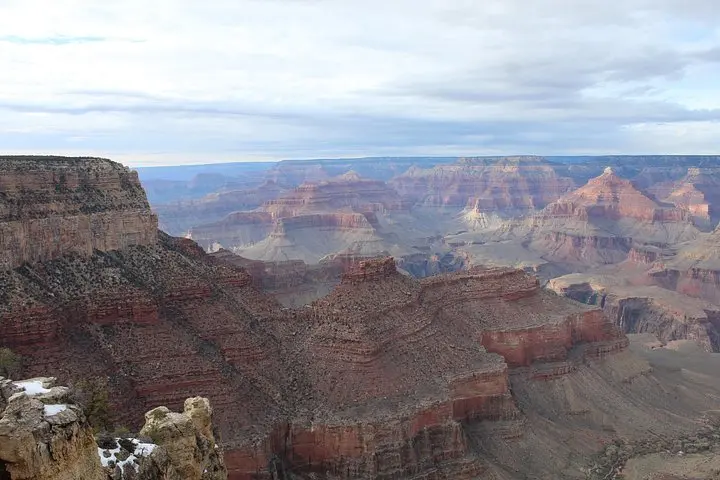
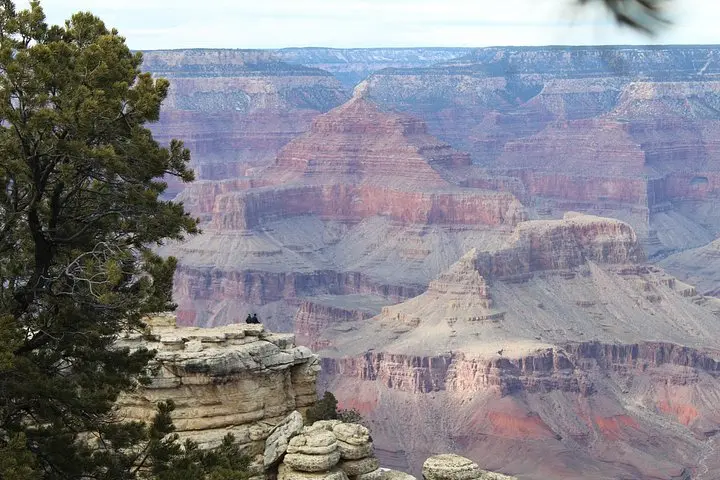
Three hours later you step out at the South Rim and the scale takes over: a raked horizon of layered rock, sheer walls cut by the Colorado River, and a sky so clear it sharpens the edges of time. Mather Point is often the first stop — a broad platform built for the view — where wind pushes at you like a question. Bright Angel Lodge and El Tovar stand a short walk away: early-20th-century buildings that marked the arrival of rail-and-hotel tourism, when the canyon became a destination for Americans and Europeans alike.
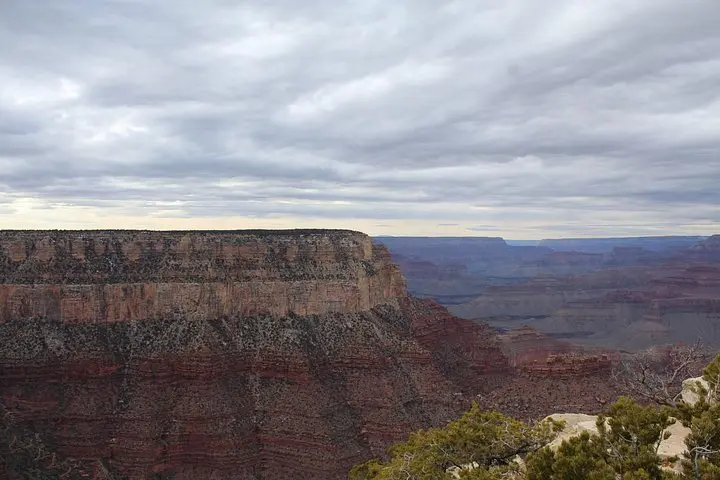
Geology here is a visible archive. The rim exposes nearly two billion years of Earth’s history compressed into banded cliffs: limestone, sandstone, and shale folded and exposed by the river’s patient force. Culturally the rim is a living place for Hopi, Havasupai, Navajo and other Indigenous communities; Hopi House on the rim still sells crafts and stories linking today’s viewpoints to ancestral trails.
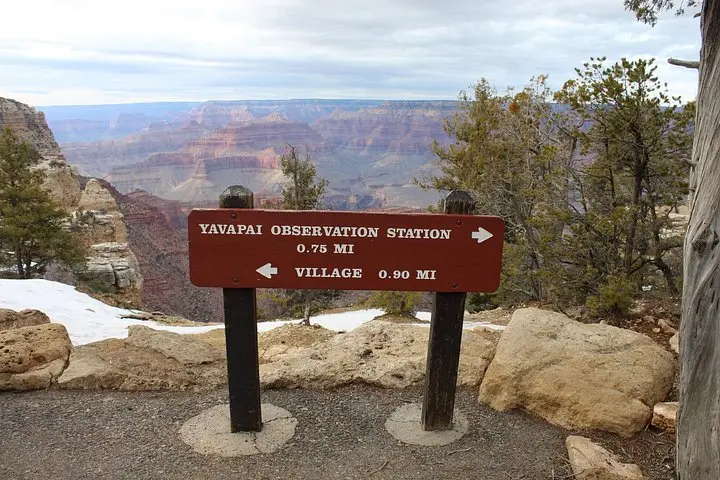
This particular tour is built for efficiency: a trained step-on guide brings the canyon to life while a separate driver handles long stretches of highway — a safety-first setup that lets you focus on the landscape instead of the logistics. The schedule gives roughly three hours on-site: enough for a rim walk, a visit to the Yavapai Geology Museum, and photos at Kolb Studio or the Bright Angel Trailhead, but not for deep hikes into the canyon.
Practicalities matter. The South Rim sits near 7,000 feet; mornings are cool even in summer, and storms can roll up fast. Bring layers, a refillable water bottle, and sun protection. The tour includes bottled water and on-board restrooms, and the operator asks that large luggage be left behind — there’s only space for small daypacks.
If you only have a day, this trip is a pragmatic way to check the South Rim off your list without renting a car or navigating long drives. To get the most out of it, arrive rested, sit on the canyon-facing side of the bus for the drive in, and set expectations: three hours of rim time is immersive but brisk. When you leave, the canyon will still be there, unchanged except for the way it rearranged your sense of distance.
Expect roughly three hours each way; the full tour lasts about 9–10 hours including approximately three hours at the South Rim.
Yes — the bus has an on-board restroom and there are restrooms at major rim facilities like Mather Point and Bright Angel Lodge.
Short rim walks and the Bright Angel Trailhead are accessible in the time provided, but there isn’t time for longer descents into the canyon.
The route and major viewpoints are accessible, but some overlooks have uneven surfaces; contact the operator in advance for specific accommodations.
Park entrance fees apply; the guide will advise where to pay if it isn’t already covered — bring a credit card or your National Park pass.
Bring a wide-angle lens for panoramas, a telephoto for distant details, spare batteries and a small tripod if you plan sunrise or low-light shots.
Grand Canyon Destinations operates guided outdoor trips and adventures with an emphasis on safety, stewardship, and memorable experiences.
Before the sun softens the desert heat, a shuttle pulls away from Kingman and the road begins to unwind toward something older than memory. The bus hums, air conditioning steady, as scrub brush and red-rock buttes trade places outside the window. Conversation is polite, cameras are ready, and there’s a low sense of expectation — the canyon doesn’t ask to be believed; it insists.
Before the sun softens the desert heat, a shuttle pulls away from Kingman and the road begins to unwind toward something older than memory. The bus hums, air conditioning steady, as scrub brush and red-rock buttes trade places outside the window. Conversation is polite, cameras are ready, and there’s a low sense of expectation — the canyon doesn’t ask to be believed; it insists.
Three hours later you step out at the South Rim and the scale takes over: a raked horizon of layered rock, sheer walls cut by the Colorado River, and a sky so clear it sharpens the edges of time. Mather Point is often the first stop — a broad platform built for the view — where wind pushes at you like a question. Bright Angel Lodge and El Tovar stand a short walk away: early-20th-century buildings that marked the arrival of rail-and-hotel tourism, when the canyon became a destination for Americans and Europeans alike.
Geology here is a visible archive. The rim exposes nearly two billion years of Earth’s history compressed into banded cliffs: limestone, sandstone, and shale folded and exposed by the river’s patient force. Culturally the rim is a living place for Hopi, Havasupai, Navajo and other Indigenous communities; Hopi House on the rim still sells crafts and stories linking today’s viewpoints to ancestral trails.
This particular tour is built for efficiency: a trained step-on guide brings the canyon to life while a separate driver handles long stretches of highway — a safety-first setup that lets you focus on the landscape instead of the logistics. The schedule gives roughly three hours on-site: enough for a rim walk, a visit to the Yavapai Geology Museum, and photos at Kolb Studio or the Bright Angel Trailhead, but not for deep hikes into the canyon.
Practicalities matter. The South Rim sits near 7,000 feet; mornings are cool even in summer, and storms can roll up fast. Bring layers, a refillable water bottle, and sun protection. The tour includes bottled water and on-board restrooms, and the operator asks that large luggage be left behind — there’s only space for small daypacks.
If you only have a day, this trip is a pragmatic way to check the South Rim off your list without renting a car or navigating long drives. To get the most out of it, arrive rested, sit on the canyon-facing side of the bus for the drive in, and set expectations: three hours of rim time is immersive but brisk. When you leave, the canyon will still be there, unchanged except for the way it rearranged your sense of distance.