THE ADVENTURE COLLECTIVE® · Independent discovery and booking for outdoor travel

A long day through southern Georgia visiting the cliff-carved Vardzia monastery, medieval Rabati Castle and the mineral-rich forests of Borjomi—ideal for travelers seeking culture, geology and accessible hikes in one route.
A long day through southern Georgia visiting the cliff-carved Vardzia monastery, medieval Rabati Castle and the mineral-rich forests of Borjomi—ideal for travelers seeking culture, geology and accessible hikes in one route.
You step from the coach into a landscape that changes by the hour: basalt cliffs cut with tiers of carved rooms, a broad castle mound that watches over a market town, and a forested valley scented with mineral springs. This full-day route threads three distinct chapters of southern Georgia—Vardzia’s cave monastery, Rabati Castle in Akhaltsikhe, and the restorative woods and springs of Borjomi—each offering its own rhythm and layers of history.
Verified experiences and guided adventures in the surrounding area.
Operated by Reziko bukuri · Akhaltsikhe, Samtskhe-Javakheti
You step from the coach into a landscape that changes by the hour: basalt cliffs cut with tiers of carved rooms, a broad castle mound that watches over a market town, and a forested valley scented with mineral springs. This full-day route threads three distinct chapters of southern Georgia—Vardzia’s cave monastery, Rabati Castle in Akhaltsikhe, and the restorative woods and springs of Borjomi—each offering its own rhythm and layers of history.
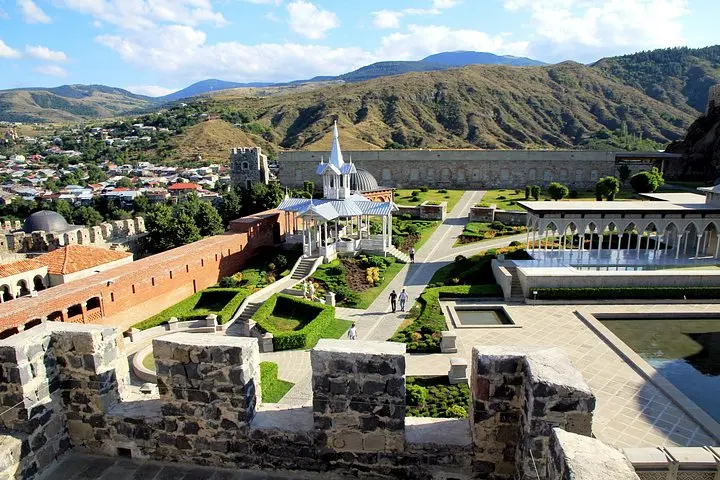
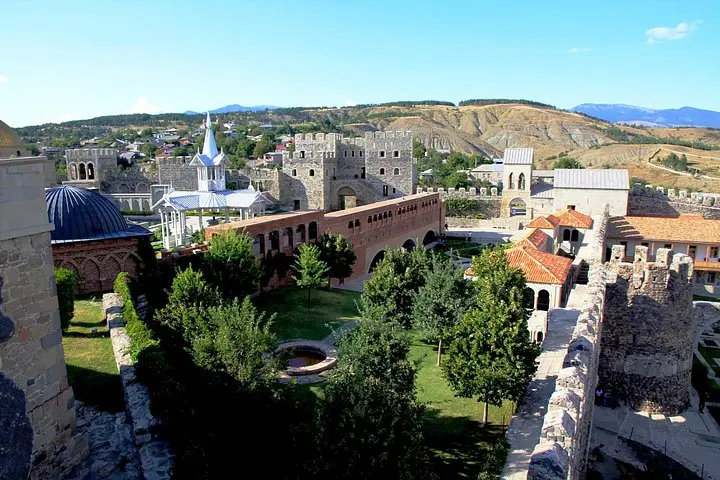
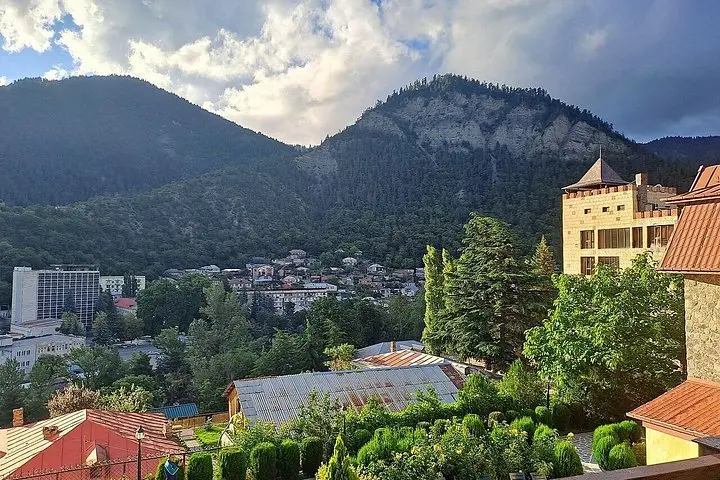
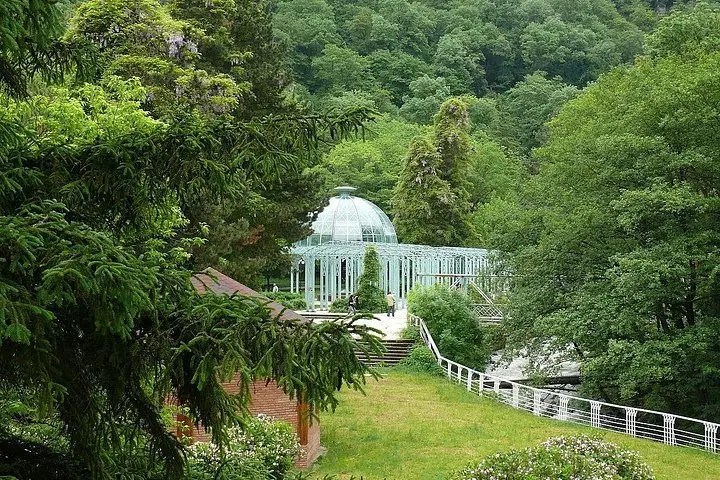
Vardzia began as a defensive and monastic complex in the 12th century during the reigns of George III and Queen Tamar; its honeycombed facades are carved into volcanic tuff and reveal both Byzantine-era fresco fragments and later restorations. Rabati Castle records Ottoman, Georgian and Russian influences in stonework, towers and a converted mosque, while Borjomi sits on mineral-rich geology that feeds springs long prized for health and commerce.
Expect steady walking at each site—stone steps, uneven cave passages and short trails through pine and beech. Guides explain local customs, the Orthodox monastic life that shaped the region, and how geothermal activity gives Borjomi its effervescent water.
Practical guidance: depart early from Tbilisi to avoid midday crowds, carry cash for small entrance fees and local vendors, and reserve at least an hour at each major stop to move at a comfortable pace. Footwear with grip and a light daypack will keep the day efficient and enjoyable. The tour balances cultural immersion and short hikes, making it a compact way to sample southern Georgia’s deep past and green, mineral-rich present.
The full-day tour runs approximately 12–13 hours with early morning departure from Tbilisi; exact pickup times are provided at booking.
Entrance fees are not included in the base price—Vardzia and Rabati have entrance fees (~17 GEL each) and the Borjomi museum is around 5 GEL.
Yes—physically it’s graded easy but involves stairs and some uneven surfaces; pace can be managed with rest stops and the tour is family-friendly.
Each stop allows roughly an hour for exploration; there’s limited time for shopping in Akhaltsikhe and Borjomi, so prioritize what you want to see.
Reziko bukuri operates guided outdoor trips and adventures with an emphasis on safety, stewardship, and memorable experiences.
You step from the coach into a landscape that changes by the hour: basalt cliffs cut with tiers of carved rooms, a broad castle mound that watches over a market town, and a forested valley scented with mineral springs. This full-day route threads three distinct chapters of southern Georgia—Vardzia’s cave monastery, Rabati Castle in Akhaltsikhe, and the restorative woods and springs of Borjomi—each offering its own rhythm and layers of history.
You step from the coach into a landscape that changes by the hour: basalt cliffs cut with tiers of carved rooms, a broad castle mound that watches over a market town, and a forested valley scented with mineral springs. This full-day route threads three distinct chapters of southern Georgia—Vardzia’s cave monastery, Rabati Castle in Akhaltsikhe, and the restorative woods and springs of Borjomi—each offering its own rhythm and layers of history.
Vardzia began as a defensive and monastic complex in the 12th century during the reigns of George III and Queen Tamar; its honeycombed facades are carved into volcanic tuff and reveal both Byzantine-era fresco fragments and later restorations. Rabati Castle records Ottoman, Georgian and Russian influences in stonework, towers and a converted mosque, while Borjomi sits on mineral-rich geology that feeds springs long prized for health and commerce.
Expect steady walking at each site—stone steps, uneven cave passages and short trails through pine and beech. Guides explain local customs, the Orthodox monastic life that shaped the region, and how geothermal activity gives Borjomi its effervescent water.
Practical guidance: depart early from Tbilisi to avoid midday crowds, carry cash for small entrance fees and local vendors, and reserve at least an hour at each major stop to move at a comfortable pace. Footwear with grip and a light daypack will keep the day efficient and enjoyable. The tour balances cultural immersion and short hikes, making it a compact way to sample southern Georgia’s deep past and green, mineral-rich present.