THE ADVENTURE COLLECTIVE® · Independent discovery and booking for outdoor travel

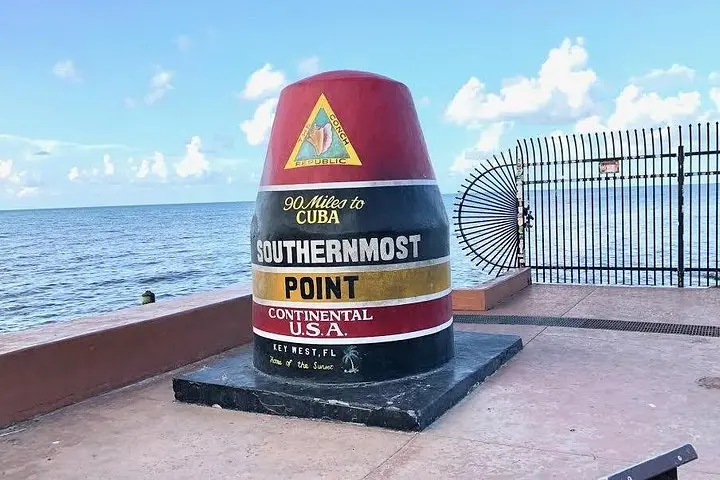
Start at a Cuban sandal factory and finish at the Southernmost Point buoy on a compact, 105‑minute walking tour that blends shipwreck lore, Hemingway tales, and Cuban‑influenced street life. Perfect for travelers who want local stories, practical tips, and iconic photo stops.
Start at a Cuban sandal factory and finish at the Southernmost Point buoy on a compact, 105‑minute walking tour that blends shipwreck lore, Hemingway tales, and Cuban‑influenced street life. Perfect for travelers who want local stories, practical tips, and iconic photo stops.
The tour begins where the island wakes: outside a small Cuban sandal shop, the scent of leather and citrus in the air, a guide in a straw hat holding an iPad and a promise of stories. From that plaza you step off the tourist map and onto narrow streets that still move at Key West’s own unhurried pace. Palmettos lean over clapboard houses, paint peels in bright, stubborn colors, and the ocean waits in the distance—constant, insistently nearby.
Verified experiences and guided adventures in the surrounding area.
Operated by Florida Keys Ventures · Key West, Florida
The tour begins where the island wakes: outside a small Cuban sandal shop, the scent of leather and citrus in the air, a guide in a straw hat holding an iPad and a promise of stories. From that plaza you step off the tourist map and onto narrow streets that still move at Key West’s own unhurried pace. Palmettos lean over clapboard houses, paint peels in bright, stubborn colors, and the ocean waits in the distance—constant, insistently nearby.
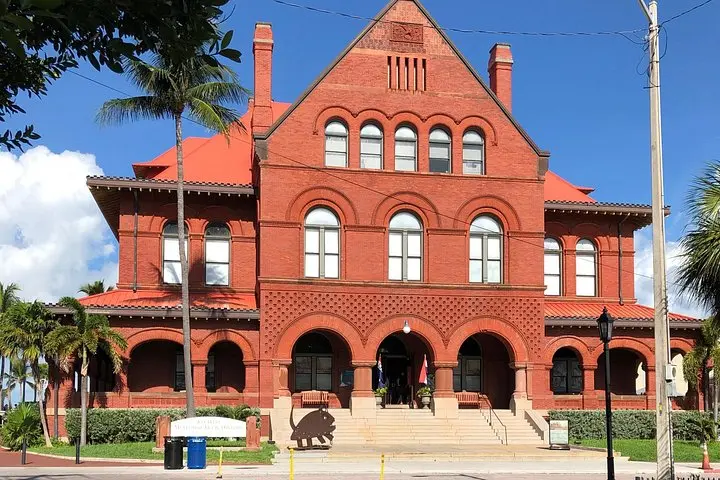
Key West sits on fossilized coral and sand, a limestone cap on the Florida Reef that has dictated everything from architecture to industry. In the 19th century the island’s fate was shaped by shipwrecks and salvage: locally called the wrecking industry, it brought sudden wealth and an eccentric cast of characters. Guides on this 1.4–1.8 mile route stitch those chapters together—Mel Fisher’s treasure hunts, Hemingway’s house and polydactyl cats, the relocated lighthouse—and point out how Cuban, Bahamian and American influences layered to make Key West culturally distinct.
Walking here is geological and cultural anthropology at once. Streets named for sailors and merchants give way to small storefronts selling coffee heavy with Cuban sugar, cigar rollers working at open windows, and a sandal factory where leather is still cut by hand. Buildings bear the scars and repairs of hurricanes; porches and tin roofs are practical responses to a landscape that alternates between sun and sudden storms.
Practicalities are straightforward: the route is flat with minimal elevation gain but expect heat, humidity, and crowds at the buoy by midday. The company runs this as a small-group tour (max ~10) that moves at a moderate pace for about 105 minutes. Guides point out landmarks without long museum stops—this is neighborhood storytelling, not an exhibit crawl—so bring water and a camera and be ready to ask questions.
Timing matters. Early morning gives you softer light, cooler air and fewer selfie lines at the Southernmost Point buoy; late afternoon brings warm light and the possibility of a dramatic sky. Wear closed-toe walking shoes for uneven sidewalks and bring reef-safe sunscreen and a reusable water bottle to keep local waters protected. If you want deeper dives—Hemingway’s house interior, Fort Zachary Taylor—build extra time into your day.
This walk is for travelers who want more than a postcard shot. It’s a concise, informed primer on Key West: compact, lively, and designed to leave you with directions for further exploration—where to get a Cuban sandwich, which alleys hide murals, and how to spot an iguana warming on a stone wall. In 105 minutes you’ll see why this small island still has stories that demand to be heard.
The tour lasts about 105 minutes and covers roughly 1.4–1.8 miles at a moderate pace.
Meet at the Kino Sandals Factory plaza; the tour finishes at the Southernmost Point buoy at Whitehead and South streets.
Strollers are acceptable and the route is mostly flat, but some sidewalks can be narrow or uneven; contact the operator for specific accessibility accommodations.
Yes—families are welcome, but participants should be able to walk the distance; infants can ride in strollers.
Bring water, sun protection, comfortable shoes, and reef-safe sunscreen; a small umbrella or light layer is useful during sudden showers.
Tipping is customary for good service; 10–20% of the tour cost or a few dollars per person is typical.
Florida Keys Ventures operates guided outdoor trips and adventures with an emphasis on safety, stewardship, and memorable experiences.
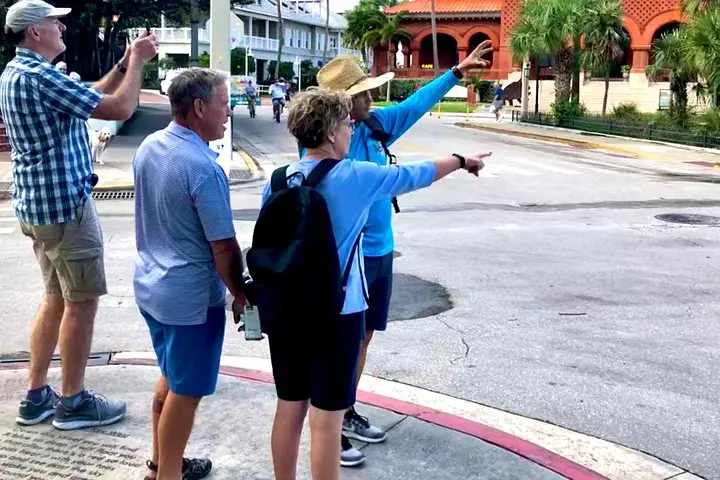
The tour begins where the island wakes: outside a small Cuban sandal shop, the scent of leather and citrus in the air, a guide in a straw hat holding an iPad and a promise of stories. From that plaza you step off the tourist map and onto narrow streets that still move at Key West’s own unhurried pace. Palmettos lean over clapboard houses, paint peels in bright, stubborn colors, and the ocean waits in the distance—constant, insistently nearby.
The tour begins where the island wakes: outside a small Cuban sandal shop, the scent of leather and citrus in the air, a guide in a straw hat holding an iPad and a promise of stories. From that plaza you step off the tourist map and onto narrow streets that still move at Key West’s own unhurried pace. Palmettos lean over clapboard houses, paint peels in bright, stubborn colors, and the ocean waits in the distance—constant, insistently nearby.
Key West sits on fossilized coral and sand, a limestone cap on the Florida Reef that has dictated everything from architecture to industry. In the 19th century the island’s fate was shaped by shipwrecks and salvage: locally called the wrecking industry, it brought sudden wealth and an eccentric cast of characters. Guides on this 1.4–1.8 mile route stitch those chapters together—Mel Fisher’s treasure hunts, Hemingway’s house and polydactyl cats, the relocated lighthouse—and point out how Cuban, Bahamian and American influences layered to make Key West culturally distinct.
Walking here is geological and cultural anthropology at once. Streets named for sailors and merchants give way to small storefronts selling coffee heavy with Cuban sugar, cigar rollers working at open windows, and a sandal factory where leather is still cut by hand. Buildings bear the scars and repairs of hurricanes; porches and tin roofs are practical responses to a landscape that alternates between sun and sudden storms.
Practicalities are straightforward: the route is flat with minimal elevation gain but expect heat, humidity, and crowds at the buoy by midday. The company runs this as a small-group tour (max ~10) that moves at a moderate pace for about 105 minutes. Guides point out landmarks without long museum stops—this is neighborhood storytelling, not an exhibit crawl—so bring water and a camera and be ready to ask questions.
Timing matters. Early morning gives you softer light, cooler air and fewer selfie lines at the Southernmost Point buoy; late afternoon brings warm light and the possibility of a dramatic sky. Wear closed-toe walking shoes for uneven sidewalks and bring reef-safe sunscreen and a reusable water bottle to keep local waters protected. If you want deeper dives—Hemingway’s house interior, Fort Zachary Taylor—build extra time into your day.
This walk is for travelers who want more than a postcard shot. It’s a concise, informed primer on Key West: compact, lively, and designed to leave you with directions for further exploration—where to get a Cuban sandwich, which alleys hide murals, and how to spot an iguana warming on a stone wall. In 105 minutes you’ll see why this small island still has stories that demand to be heard.