THE ADVENTURE COLLECTIVE® · Independent discovery and booking for outdoor travel

Walk through the neighborhoods and museums that shaped modern South Africa. This day tour combines Vilakazi Street, the Hector Pieterson Memorial, and the Apartheid Museum for a concentrated look at resistance, memory, and everyday life in Soweto and Johannesburg.
Walk through the neighborhoods and museums that shaped modern South Africa. This day tour combines Vilakazi Street, the Hector Pieterson Memorial, and the Apartheid Museum for a concentrated look at resistance, memory, and everyday life in Soweto and Johannesburg.
The morning light falls across Vilakazi Street and the city wakes with the rattle of kombis and vendors calling out their wares. You step from a minibus into Soweto’s pulse: corrugated roofs, painted facades, children running between stoops, and the rhythm of township life setting the pace for the day.
Verified experiences and guided adventures in the surrounding area.
Operated by Jeff Tours and Transfers - Day Tours · Soweto, Gauteng
The morning light falls across Vilakazi Street and the city wakes with the rattle of kombis and vendors calling out their wares. You step from a minibus into Soweto’s pulse: corrugated roofs, painted facades, children running between stoops, and the rhythm of township life setting the pace for the day.
This full-day tour threads modern Johannesburg and Soweto together—driving past Hillbrow and Constitution Hill, stopping at Mandela House and the Hector Pieterson Memorial, and finishing at the Apartheid Museum. The route maps political geography as much as physical: sites of student protest, former hostels, and homes of figures such as Nelson Mandela and Desmond Tutu. Geologically, the low-lying Highveld gives wide sightlines; you’ll notice the ochre dust and gravel surfaces that mark the region’s urban edges.
Culturally the tour is about people moving through history—bus ranks, matchbox houses, and community clinics reveal daily resilience alongside memorials and archives. Local guides often point out oral histories and small entrepreneurs whose livelihoods support the area.
Practical guidance: expect 6–8 hours with several short walks and museum time; wear comfortable walking shoes, sun protection, and bring a refillable water bottle. Photography is generally allowed at outdoor sites, but respect museum rules and private homes. The tour is wheelchair accessible in many parts, though some streets are uneven. Arrive early to avoid peak traffic and pick a mid-week date for quieter museum visits.
This is a day for listening closely—to voices, to street life, and to the landscape that witnessed South Africa’s transformation.
Some tour packages include museum admission; confirm at booking—this itinerary often includes Hector Pieterson and Apartheid Museum admissions.
Many stops and vehicles are wheelchair accessible, but some township streets are uneven; notify the operator when booking to arrange assistance.
The tour runs approximately 6–8 hours and mixes guided driving with short walks and museum time—plan for a full day.
Outdoor photography is generally permitted; interior photography may be restricted—follow signage and guide instructions.
Jeff Tours and Transfers - Day Tours operates guided outdoor trips and adventures with an emphasis on safety, stewardship, and memorable experiences.
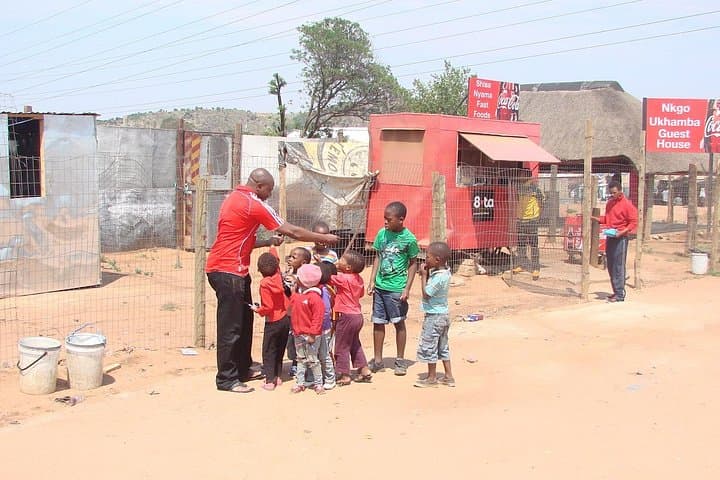


The morning light falls across Vilakazi Street and the city wakes with the rattle of kombis and vendors calling out their wares. You step from a minibus into Soweto’s pulse: corrugated roofs, painted facades, children running between stoops, and the rhythm of township life setting the pace for the day.
The morning light falls across Vilakazi Street and the city wakes with the rattle of kombis and vendors calling out their wares. You step from a minibus into Soweto’s pulse: corrugated roofs, painted facades, children running between stoops, and the rhythm of township life setting the pace for the day.
This full-day tour threads modern Johannesburg and Soweto together—driving past Hillbrow and Constitution Hill, stopping at Mandela House and the Hector Pieterson Memorial, and finishing at the Apartheid Museum. The route maps political geography as much as physical: sites of student protest, former hostels, and homes of figures such as Nelson Mandela and Desmond Tutu. Geologically, the low-lying Highveld gives wide sightlines; you’ll notice the ochre dust and gravel surfaces that mark the region’s urban edges.
Culturally the tour is about people moving through history—bus ranks, matchbox houses, and community clinics reveal daily resilience alongside memorials and archives. Local guides often point out oral histories and small entrepreneurs whose livelihoods support the area.
Practical guidance: expect 6–8 hours with several short walks and museum time; wear comfortable walking shoes, sun protection, and bring a refillable water bottle. Photography is generally allowed at outdoor sites, but respect museum rules and private homes. The tour is wheelchair accessible in many parts, though some streets are uneven. Arrive early to avoid peak traffic and pick a mid-week date for quieter museum visits.
This is a day for listening closely—to voices, to street life, and to the landscape that witnessed South Africa’s transformation.