THE ADVENTURE COLLECTIVE® · Independent discovery and booking for outdoor travel

Walk cliffside from Praia da Silveira to the Esfinge, study Sambaqui rock inscriptions, then cool off in sea-carved natural pools. This short coastal hike blends archaeology, geology and a refreshing swim—ideal for a half-day outing from Florianópolis.
Walk cliffside from Praia da Silveira to the Esfinge, study Sambaqui rock inscriptions, then cool off in sea-carved natural pools. This short coastal hike blends archaeology, geology and a refreshing swim—ideal for a half-day outing from Florianópolis.
The trail opens along wind-scoured cliffs above the Atlantic, waves gnawing at rock while the Esfinge — a squat, Sphinx-like outcrop — juts into the surf and dares you closer. Start on the pebbled shore of Praia da Silveira and follow a narrow coastal path that alternates between packed sand, exposed bedrock and low dune vegetation; the ocean is a constant companion, sometimes roaring, sometimes whispering.
Verified experiences and guided adventures in the surrounding area.
Operated by Ao Sul Natural · Florianópolis, Santa Catarina
The trail opens along wind-scoured cliffs above the Atlantic, waves gnawing at rock while the Esfinge — a squat, Sphinx-like outcrop — juts into the surf and dares you closer. Start on the pebbled shore of Praia da Silveira and follow a narrow coastal path that alternates between packed sand, exposed bedrock and low dune vegetation; the ocean is a constant companion, sometimes roaring, sometimes whispering.
This coastline records deep time: granite and metamorphic shelves shaped by sea-level cycles, and human marks carved by the millenary Sambaqui peoples—shell-mound builders whose rock inscriptions and middens speak to coastal lifeways long before European contact. Local fishing communities still read the tides here, and small family-run boats dot nearby bays.
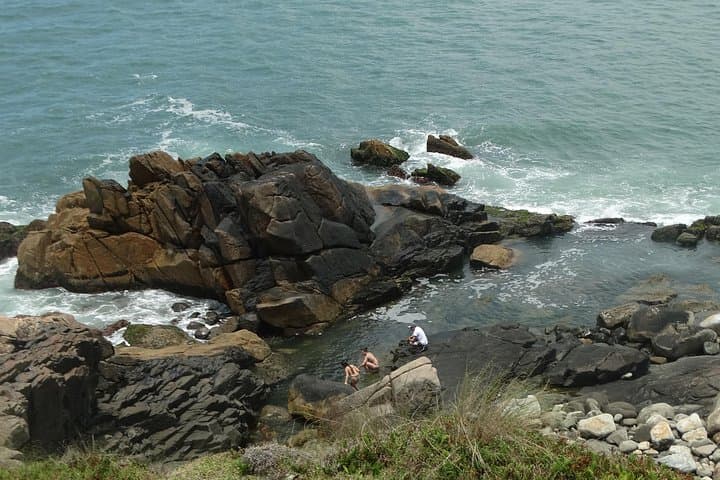
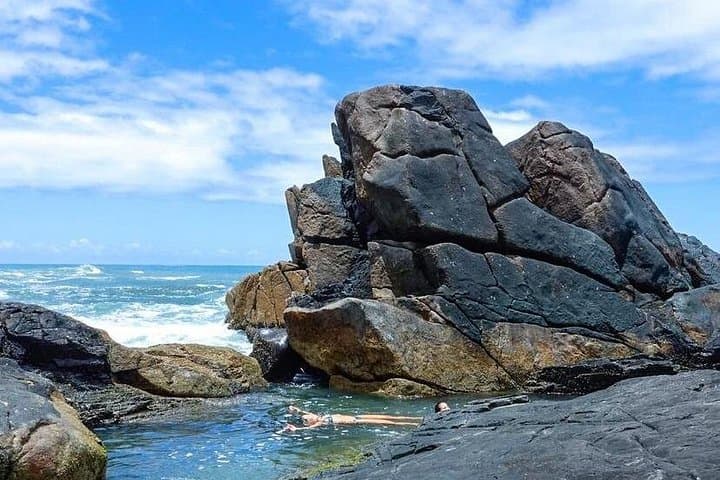
Practical guidance is straightforward. Expect a short coastal hike (roughly 2–3 km round trip) with minimal elevation gain, uneven footing and sections of slippery rock near tidepools. The payoff is access to preserved rock art and sheltered natural pools where a cool swim refreshes hot limbs. Tours typically include air-conditioned transfer and a guide who points out inscriptions and safe entry points to the pools.
Pack sturdy shoes with grip, reef-safe sunscreen, and swimwear; respect the inscriptions—do not climb or touch them. Time your visit by the tide table: low to mid tide exposes pools and petroglyphs but watch for rising water. Hydrate, keep a small dry bag for electronics, and leave no trace: these are living archaeological and ecological sites where simple care preserves both the art and the shore for the next visitor.
The round trip is short—roughly 2–3 km—with minimal elevation gain; footing can be uneven but the hike is generally classified as easy.
Yes, but they are fragile archaeological features; visitors should not touch or climb on them and should follow guide instructions to avoid damage.
Many tour options include air-conditioned transfers from Florianópolis; check your booking for pickup details and meeting points.
Low to mid tide exposes the pools and rock art; mornings often offer calmer seas and cooler hiking conditions.
Ao Sul Natural operates guided outdoor trips and adventures with an emphasis on safety, stewardship, and memorable experiences.
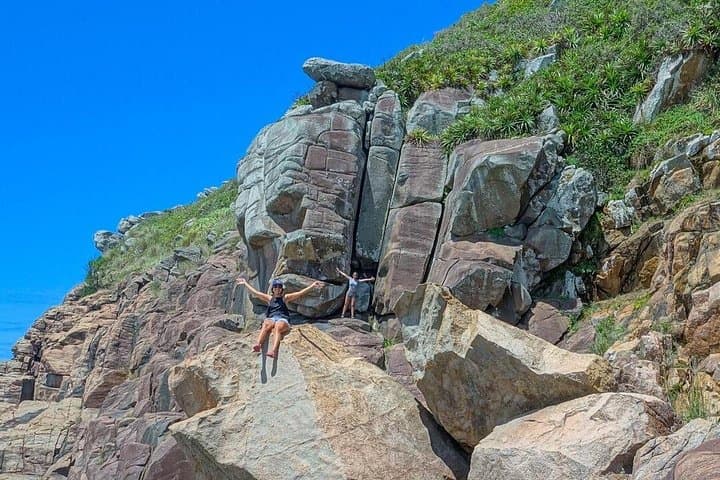
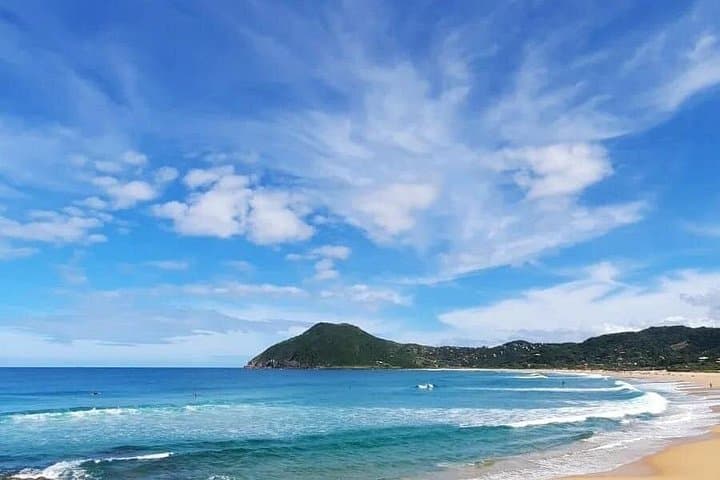
The trail opens along wind-scoured cliffs above the Atlantic, waves gnawing at rock while the Esfinge — a squat, Sphinx-like outcrop — juts into the surf and dares you closer. Start on the pebbled shore of Praia da Silveira and follow a narrow coastal path that alternates between packed sand, exposed bedrock and low dune vegetation; the ocean is a constant companion, sometimes roaring, sometimes whispering.
The trail opens along wind-scoured cliffs above the Atlantic, waves gnawing at rock while the Esfinge — a squat, Sphinx-like outcrop — juts into the surf and dares you closer. Start on the pebbled shore of Praia da Silveira and follow a narrow coastal path that alternates between packed sand, exposed bedrock and low dune vegetation; the ocean is a constant companion, sometimes roaring, sometimes whispering.
This coastline records deep time: granite and metamorphic shelves shaped by sea-level cycles, and human marks carved by the millenary Sambaqui peoples—shell-mound builders whose rock inscriptions and middens speak to coastal lifeways long before European contact. Local fishing communities still read the tides here, and small family-run boats dot nearby bays.
Practical guidance is straightforward. Expect a short coastal hike (roughly 2–3 km round trip) with minimal elevation gain, uneven footing and sections of slippery rock near tidepools. The payoff is access to preserved rock art and sheltered natural pools where a cool swim refreshes hot limbs. Tours typically include air-conditioned transfer and a guide who points out inscriptions and safe entry points to the pools.
Pack sturdy shoes with grip, reef-safe sunscreen, and swimwear; respect the inscriptions—do not climb or touch them. Time your visit by the tide table: low to mid tide exposes pools and petroglyphs but watch for rising water. Hydrate, keep a small dry bag for electronics, and leave no trace: these are living archaeological and ecological sites where simple care preserves both the art and the shore for the next visitor.