THE ADVENTURE COLLECTIVE® · Independent discovery and booking for outdoor travel

Travel comfortably from Split to Plitvice Lakes in a Mercedes V‑Class with a dedicated four‑hour park visit. This door‑to‑door transfer pairs climate‑controlled travel with enough time to walk the iconic boardwalks and waterfalls.
Travel comfortably from Split to Plitvice Lakes in a Mercedes V‑Class with a dedicated four‑hour park visit. This door‑to‑door transfer pairs climate‑controlled travel with enough time to walk the iconic boardwalks and waterfalls.
The day begins on coastal asphalt as a Mercedes V‑Class glides out of Split, leather seats cooling the small-group of travelers while the Adriatic recedes in the rearview. Hills roll past—olive groves, karst outcrops, and the sudden, green bowl of Lika—until the minivan slips into the shaded approach roads of Plitvice Lakes National Park.
Verified experiences and guided adventures in the surrounding area.
Operated by Kristijan · Plitvička Jezera, Lika-Senj County
The day begins on coastal asphalt as a Mercedes V‑Class glides out of Split, leather seats cooling the small-group of travelers while the Adriatic recedes in the rearview. Hills roll past—olive groves, karst outcrops, and the sudden, green bowl of Lika—until the minivan slips into the shaded approach roads of Plitvice Lakes National Park.
Plitvice's stepped lakes and waterfalls are formed by active travertine (tufa) deposition, a process of mineral-rich water laying down porous barriers that reroute streams and create cascades. Declared Croatia’s first national park in 1949 and inscribed as a UNESCO World Heritage Site in 1979, the area mixes montane beech forests, karst geology, and paths of wooden boardwalks that put you knee-deep in the park's motion.
Local culture in the Lika region is quiet and pastoral—sheep pastures, smoked cheeses, and roadside stands selling honey—reflecting a long history of subsistence farming and seasonal migration.
Practically, expect a ten-hour door-to-door day: roughly three to four hours each way and a scheduled four-hour visit inside the park. Admission is typically not included; bring a ticket or buy at the park (cards accepted). Trails are uneven and can be wet; waterproof shoes and layered clothing help. The transfer includes bottled water and comfort amenities, and luggage rides in the vehicle’s rear. Aim for early departures to catch the waterfalls at their most audible and the boardwalks with fewer crowds. This trip is an efficient way to experience Plitvice’s geology and forested drama in a single, comfortable day from Split.
No—admission is typically not included; guests should purchase Plitvice entry tickets in advance or at the park, subject to availability.
Pickup points are in Split (hotel or central meeting points)—the service proceeds to Plitvice for the scheduled stop and continues to Zagreb; confirm your exact pickup during booking.
Yes—small to medium luggage can be stored in the vehicle’s rear; large or excess baggage should be flagged when booking to confirm space.
Expect about 2–4 hours of walking on boardwalks, trails, and short stair sections during the scheduled four‑hour park stop.
Kristijan operates guided outdoor trips and adventures with an emphasis on safety, stewardship, and memorable experiences.
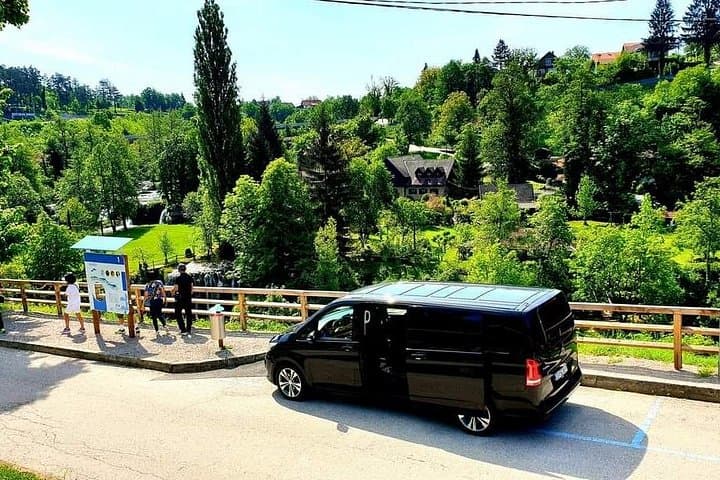

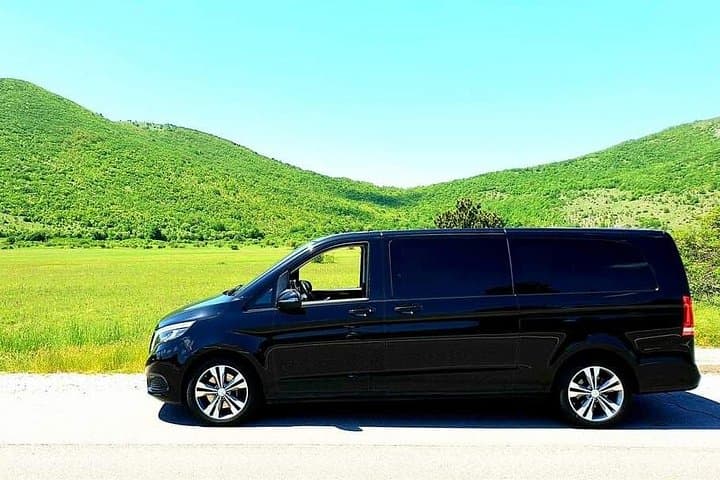

The day begins on coastal asphalt as a Mercedes V‑Class glides out of Split, leather seats cooling the small-group of travelers while the Adriatic recedes in the rearview. Hills roll past—olive groves, karst outcrops, and the sudden, green bowl of Lika—until the minivan slips into the shaded approach roads of Plitvice Lakes National Park.
The day begins on coastal asphalt as a Mercedes V‑Class glides out of Split, leather seats cooling the small-group of travelers while the Adriatic recedes in the rearview. Hills roll past—olive groves, karst outcrops, and the sudden, green bowl of Lika—until the minivan slips into the shaded approach roads of Plitvice Lakes National Park.
Plitvice's stepped lakes and waterfalls are formed by active travertine (tufa) deposition, a process of mineral-rich water laying down porous barriers that reroute streams and create cascades. Declared Croatia’s first national park in 1949 and inscribed as a UNESCO World Heritage Site in 1979, the area mixes montane beech forests, karst geology, and paths of wooden boardwalks that put you knee-deep in the park's motion.
Local culture in the Lika region is quiet and pastoral—sheep pastures, smoked cheeses, and roadside stands selling honey—reflecting a long history of subsistence farming and seasonal migration.
Practically, expect a ten-hour door-to-door day: roughly three to four hours each way and a scheduled four-hour visit inside the park. Admission is typically not included; bring a ticket or buy at the park (cards accepted). Trails are uneven and can be wet; waterproof shoes and layered clothing help. The transfer includes bottled water and comfort amenities, and luggage rides in the vehicle’s rear. Aim for early departures to catch the waterfalls at their most audible and the boardwalks with fewer crowds. This trip is an efficient way to experience Plitvice’s geology and forested drama in a single, comfortable day from Split.