THE ADVENTURE COLLECTIVE® · Independent discovery and booking for outdoor travel

Head offshore from Guanacaste for a five-hour sport-fishing day that chases tuna, dorado, and billfish along the continental shelf. Local captains, fully equipped boats, and flexible trip lengths make this a smart pick whether you want to land dinner or chase a trophy.
Head offshore from Guanacaste for a five-hour sport-fishing day that chases tuna, dorado, and billfish along the continental shelf. Local captains, fully equipped boats, and flexible trip lengths make this a smart pick whether you want to land dinner or chase a trophy.
The engine eases the boat away from the harbor and the shoreline shrinks to a ribbon of sand and palm. Salt spray stitches the air, and within minutes the mainland is a low silhouette while the crew checks lines and baits with the calm precision of people who read the sea. In Guanacaste the water is the main stage: blue open ocean that pushes you into an older rhythm, where each bite means a moment of honest surprise.
Verified experiences and guided adventures in the surrounding area.
Operated by COSTA RICA XPLORES · Playas del Coco, Guanacaste
The engine eases the boat away from the harbor and the shoreline shrinks to a ribbon of sand and palm. Salt spray stitches the air, and within minutes the mainland is a low silhouette while the crew checks lines and baits with the calm precision of people who read the sea. In Guanacaste the water is the main stage: blue open ocean that pushes you into an older rhythm, where each bite means a moment of honest surprise.
Guanacaste's coastline is geologically young—lava flows and uplifted terraces shape a coastline that drops quickly into deep water. That abrupt shelf is why big pelagics migrate here; currents funnel baitfish along underwater canyons and pin coastal predators against the continental slope. Fishing in these waters is as much about reading wind and swell as it is about gear: local captains who grew up on the water speak of seasonal runs and wind shifts the way mountain guides talk about ridgelines.
The region has a storied fishing culture. For decades, local crews have blended ancestral coastal knowledge with modern tackle—what you see today is a hybrid of traditional skill and GPS-driven precision. The boats used on these charters are set up for long days: fighting chairs, outriggers, fish boxes, and an onboard head so you can stay out until the bite fades.
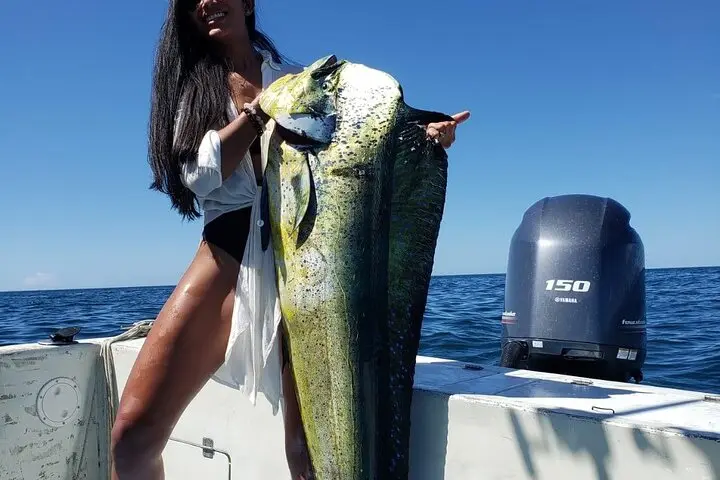
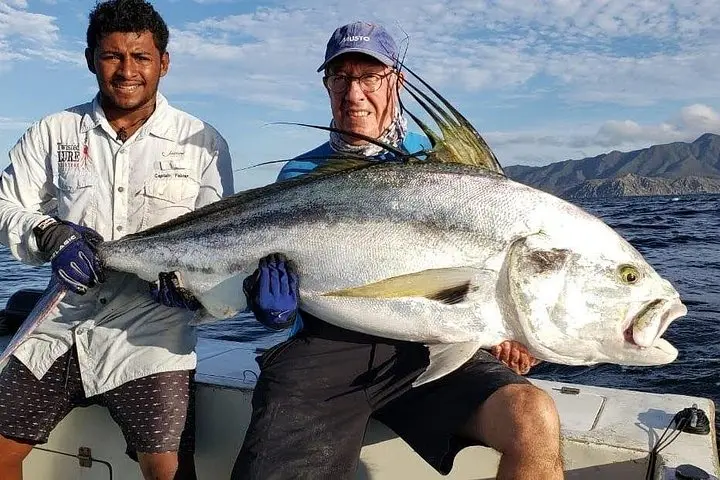
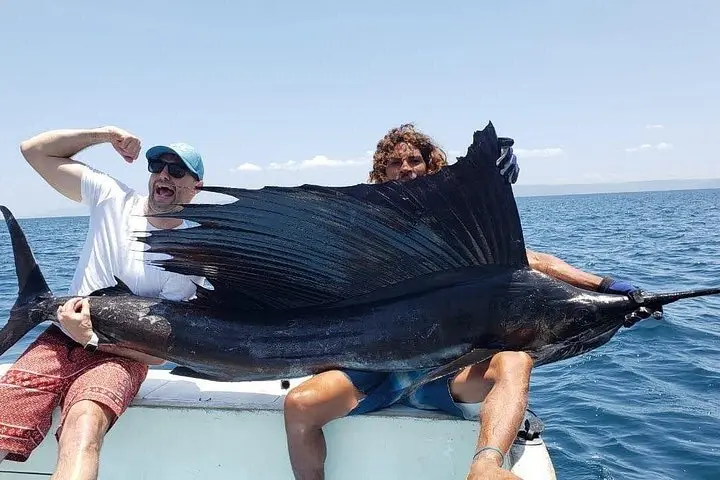
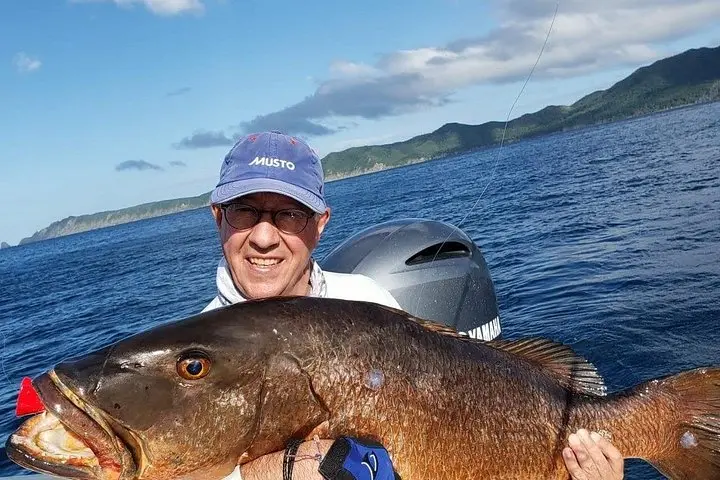
Expect a focused, physical outing. A five-hour trip gives time for trolling, bait presentation, and handling the rush of a strike. Common targets include yellowfin tuna, dorado, and billfish like sailfish and marlin. Captains encourage catch-and-release for billfish and will process market-quality catches if you want to take home dinner.
Practical edge: head out early. Calm seas and dawn light improve hookup odds and photography. Bring motion-sickness medicine if you are sensitive, wear layered sun protection, and secure non-slip footwear; the deck gets wet and the fight can be long. Hydrate—boats will often carry water and snacks, but plan for sun and salt. Ask before booking about boat size and crew experience; this operator provides licensed captains, first aid kits, GPS, radio, and a head onboard.
If you want a calmer day, choose a smaller boat for inshore light-tackle work; for big-game ambitions, reserve the larger offshore options. The trip is accessible to anglers of varying experience: crews will coach novices through a hookup, but expect physical exertion when a big fish runs. Leave room on your itinerary for a late-afternoon nap and a fresh grilled catch at a seaside palapa—the end of the day often feels like a proper punctuation to the ocean’s work.
No—crews will coach beginners through baiting, hooking, and fighting fish; expect hands-on guidance for first-time anglers.
Trips usually include tackle, bait, use of the boat, crew services, and basic refreshments; confirm whether fish cleaning or filleting is included.
Yes for many species, but captains often recommend catch-and-release for billfish; local regulations and size limits may apply.
Conditions vary by season—mornings are generally calmer; captains monitor forecasts and can advise if conditions are unsafe.
Pickup from major hotels in the Guanacaste area is commonly offered—confirm the exact pickup point when booking.
Layered sun-protective clothing, a hat, polarized sunglasses, and closed non-slip shoes; bring a light wind layer for early mornings.
COSTA RICA XPLORES operates guided outdoor trips and adventures with an emphasis on safety, stewardship, and memorable experiences.
The engine eases the boat away from the harbor and the shoreline shrinks to a ribbon of sand and palm. Salt spray stitches the air, and within minutes the mainland is a low silhouette while the crew checks lines and baits with the calm precision of people who read the sea. In Guanacaste the water is the main stage: blue open ocean that pushes you into an older rhythm, where each bite means a moment of honest surprise.
The engine eases the boat away from the harbor and the shoreline shrinks to a ribbon of sand and palm. Salt spray stitches the air, and within minutes the mainland is a low silhouette while the crew checks lines and baits with the calm precision of people who read the sea. In Guanacaste the water is the main stage: blue open ocean that pushes you into an older rhythm, where each bite means a moment of honest surprise.
Guanacaste's coastline is geologically young—lava flows and uplifted terraces shape a coastline that drops quickly into deep water. That abrupt shelf is why big pelagics migrate here; currents funnel baitfish along underwater canyons and pin coastal predators against the continental slope. Fishing in these waters is as much about reading wind and swell as it is about gear: local captains who grew up on the water speak of seasonal runs and wind shifts the way mountain guides talk about ridgelines.
The region has a storied fishing culture. For decades, local crews have blended ancestral coastal knowledge with modern tackle—what you see today is a hybrid of traditional skill and GPS-driven precision. The boats used on these charters are set up for long days: fighting chairs, outriggers, fish boxes, and an onboard head so you can stay out until the bite fades.
Expect a focused, physical outing. A five-hour trip gives time for trolling, bait presentation, and handling the rush of a strike. Common targets include yellowfin tuna, dorado, and billfish like sailfish and marlin. Captains encourage catch-and-release for billfish and will process market-quality catches if you want to take home dinner.
Practical edge: head out early. Calm seas and dawn light improve hookup odds and photography. Bring motion-sickness medicine if you are sensitive, wear layered sun protection, and secure non-slip footwear; the deck gets wet and the fight can be long. Hydrate—boats will often carry water and snacks, but plan for sun and salt. Ask before booking about boat size and crew experience; this operator provides licensed captains, first aid kits, GPS, radio, and a head onboard.
If you want a calmer day, choose a smaller boat for inshore light-tackle work; for big-game ambitions, reserve the larger offshore options. The trip is accessible to anglers of varying experience: crews will coach novices through a hookup, but expect physical exertion when a big fish runs. Leave room on your itinerary for a late-afternoon nap and a fresh grilled catch at a seaside palapa—the end of the day often feels like a proper punctuation to the ocean’s work.