THE ADVENTURE COLLECTIVE® · Independent discovery and booking for outdoor travel

Ten days that stitch Sri Lanka’s main storylines together: UNESCO sites, misted tea country, jeep safaris and river rapids. Expect long drives, cool hill stations, and a steady mix of cultural immersion and active days.
Ten days that stitch Sri Lanka’s main storylines together: UNESCO sites, misted tea country, jeep safaris and river rapids. Expect long drives, cool hill stations, and a steady mix of cultural immersion and active days.
The first morning light in Sri Lanka arrives as a warm breath — humid and patient — pushing across Galle Face Green and into the van’s open window as you head inland. The tour’s rhythm is set here: early departures, quiet temple hours, and long stretches where tea terraces and rubber forests seem to race the road. This 10-day guided loop moves with purpose — Colombo’s colonial facades to Sigiriya’s iron-hard summit, Kandy’s lake-side sanctuaries to the misted heights of Nuwara Eliya — packing heritage sites, white-water, and wildlife into a single, coherent arc.
Verified experiences and guided adventures in the surrounding area.
Operated by CeyVentra · Colombo, Western Province
The first morning light in Sri Lanka arrives as a warm breath — humid and patient — pushing across Galle Face Green and into the van’s open window as you head inland. The tour’s rhythm is set here: early departures, quiet temple hours, and long stretches where tea terraces and rubber forests seem to race the road. This 10-day guided loop moves with purpose — Colombo’s colonial facades to Sigiriya’s iron-hard summit, Kandy’s lake-side sanctuaries to the misted heights of Nuwara Eliya — packing heritage sites, white-water, and wildlife into a single, coherent arc.
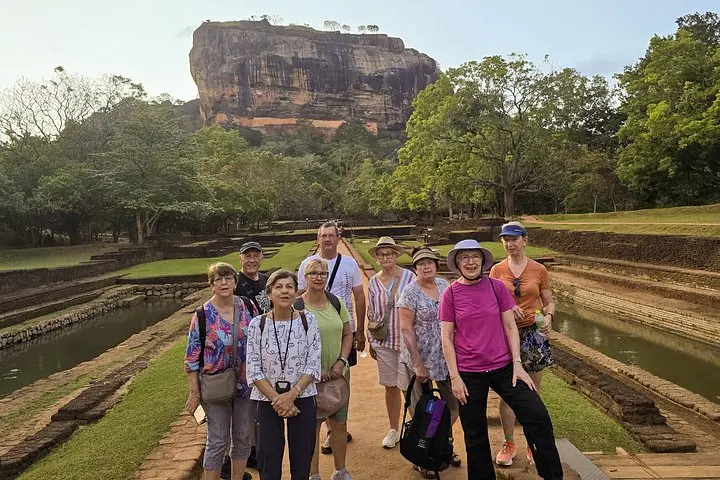
Sigiriya is the spine of the trip: a 200-meter volcanic plug crowned by palace ruins, fresco panels, and a ladder of iron stairs that insists you measure each breath. Nearby Polonnaruwa and Anuradhapura extend the island’s Buddhist timeline — stone Buddhas and irrigated reservoirs that show how ancient engineers shaped paddy fields and temples alike. In the hill country the landscape changes; tea estates roll like green waves and the air cools to a crisp 1,800 meters above sea level in Nuwara Eliya. The nine-arch bridge outside Ella and the slow, scenic rail between Nuwara Eliya and Ella are not just views but transitions: from cultural history to a geography that made Ceylon tea world-famous.
Wildlife is a deliberate counterpoint. Wilpattu and the parks around Polonnaruwa stage elephant gatherings and wary leopards; jeeps move with patient intent across scrub and pools. For a different pulse, the Kelani River offers Class II–III rapids where a guide’s commands and the current’s insistence keep momentum honest.
Practical notes matter. Distances are long: expect multi-hour drives (Colombo to Sigiriya ~3.5–4 hours, Kandy to Nuwara Eliya ~2.5–3 hours), so plan your rest and motion sickness strategy. Temperatures vary with elevation — light layers for coastal humidity, a warm midlayer for hill stations at dawn. Temple visits require modest dress (shoulders and knees covered) and shoes removed at entrances. Bookings include most entrance fees, meals, and transfers; verify train seat reservations in advance if you want a window-facing perch.
This itinerary is ideal for travelers who want cultural context without logistical friction: an English-speaking chauffeur-guide handles routes and local introductions, while you manage hydration, camera batteries, and a flexible sense of curiosity. With a mix of active moments and slow cultural pauses, the tour is both a primer on Sri Lanka’s past and a practical route through its present — from mangrove-streaked lagoons to tea-swept ridgelines.
Most breakfasts and dinners are included along with many entrance fees listed (Sigiriya, cultural shows, certain safaris); confirm any optional extras with your operator.
Yes—private transport and family-friendly accommodations help, but check age restrictions for rafting and note strollers may be awkward at some sites.
Most visitors require an Electronic Travel Authorization (ETA) that should be applied for before travel; check your nationality’s requirements and timing.
November–March favors south and west coasts and hill country, while May–September is drier for the east; shoulder months avoid peak crowds.
Moderate — includes climbing, short hikes, and long drives; not recommended for travelers with serious spinal or heart problems per supplier notes.
Yes—the operator offers flexible pickup and will arrange airport or city pickups if you contact them after booking.
CeyVentra operates guided outdoor trips and adventures with an emphasis on safety, stewardship, and memorable experiences.
The first morning light in Sri Lanka arrives as a warm breath — humid and patient — pushing across Galle Face Green and into the van’s open window as you head inland. The tour’s rhythm is set here: early departures, quiet temple hours, and long stretches where tea terraces and rubber forests seem to race the road. This 10-day guided loop moves with purpose — Colombo’s colonial facades to Sigiriya’s iron-hard summit, Kandy’s lake-side sanctuaries to the misted heights of Nuwara Eliya — packing heritage sites, white-water, and wildlife into a single, coherent arc.
The first morning light in Sri Lanka arrives as a warm breath — humid and patient — pushing across Galle Face Green and into the van’s open window as you head inland. The tour’s rhythm is set here: early departures, quiet temple hours, and long stretches where tea terraces and rubber forests seem to race the road. This 10-day guided loop moves with purpose — Colombo’s colonial facades to Sigiriya’s iron-hard summit, Kandy’s lake-side sanctuaries to the misted heights of Nuwara Eliya — packing heritage sites, white-water, and wildlife into a single, coherent arc.
Sigiriya is the spine of the trip: a 200-meter volcanic plug crowned by palace ruins, fresco panels, and a ladder of iron stairs that insists you measure each breath. Nearby Polonnaruwa and Anuradhapura extend the island’s Buddhist timeline — stone Buddhas and irrigated reservoirs that show how ancient engineers shaped paddy fields and temples alike. In the hill country the landscape changes; tea estates roll like green waves and the air cools to a crisp 1,800 meters above sea level in Nuwara Eliya. The nine-arch bridge outside Ella and the slow, scenic rail between Nuwara Eliya and Ella are not just views but transitions: from cultural history to a geography that made Ceylon tea world-famous.
Wildlife is a deliberate counterpoint. Wilpattu and the parks around Polonnaruwa stage elephant gatherings and wary leopards; jeeps move with patient intent across scrub and pools. For a different pulse, the Kelani River offers Class II–III rapids where a guide’s commands and the current’s insistence keep momentum honest.
Practical notes matter. Distances are long: expect multi-hour drives (Colombo to Sigiriya ~3.5–4 hours, Kandy to Nuwara Eliya ~2.5–3 hours), so plan your rest and motion sickness strategy. Temperatures vary with elevation — light layers for coastal humidity, a warm midlayer for hill stations at dawn. Temple visits require modest dress (shoulders and knees covered) and shoes removed at entrances. Bookings include most entrance fees, meals, and transfers; verify train seat reservations in advance if you want a window-facing perch.
This itinerary is ideal for travelers who want cultural context without logistical friction: an English-speaking chauffeur-guide handles routes and local introductions, while you manage hydration, camera batteries, and a flexible sense of curiosity. With a mix of active moments and slow cultural pauses, the tour is both a primer on Sri Lanka’s past and a practical route through its present — from mangrove-streaked lagoons to tea-swept ridgelines.