THE ADVENTURE COLLECTIVE® · Independent discovery and booking for outdoor travel

This seven-day private tour threads Sri Lanka’s highlights—Sigiriya’s rock fortress, Kandy’s sacred tooth, Ella’s tea landscapes, and Mirissa’s whales—into a single, guided loop. Expect wildlife safaris, scenic train travel, and coastal sunsets with logistics handled by an English-speaking chauffeur-guide.
This seven-day private tour threads Sri Lanka’s highlights—Sigiriya’s rock fortress, Kandy’s sacred tooth, Ella’s tea landscapes, and Mirissa’s whales—into a single, guided loop. Expect wildlife safaris, scenic train travel, and coastal sunsets with logistics handled by an English-speaking chauffeur-guide.
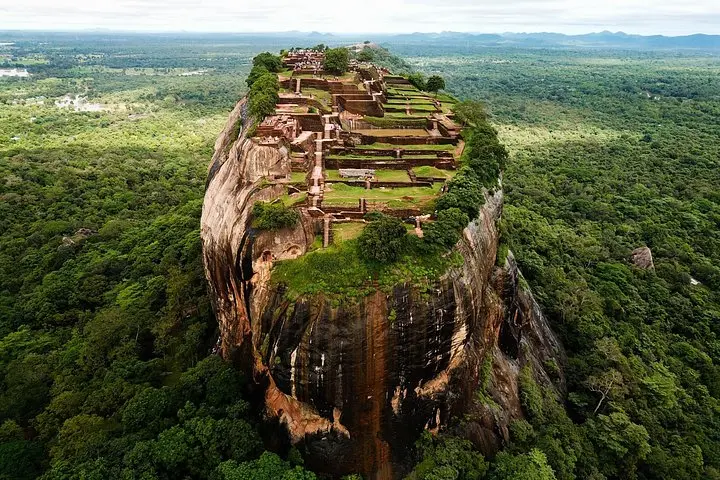
The van turns off the highway and the air changes—humid, green, full of the smell of wet earth and cinnamon bark being dried on racks. On day one, Sigiriya’s sheer red face rises from paddy fields like a parked ship; climbers thread through iron staircases and fresco galleries, wind nudging at their shoulders as the valley below stretches out in patchwork rice and scrub. This is a circuit of contrasts: lowland wilds where elephants graze, mist-rolled tea country in the central hills, and the slow blue of the Indian Ocean where whales breathe and disappear.
Verified experiences and guided adventures in the surrounding area.
Operated by PearlTrail Tours Srilanka · Colombo, Western Province
The van turns off the highway and the air changes—humid, green, full of the smell of wet earth and cinnamon bark being dried on racks. On day one, Sigiriya’s sheer red face rises from paddy fields like a parked ship; climbers thread through iron staircases and fresco galleries, wind nudging at their shoulders as the valley below stretches out in patchwork rice and scrub. This is a circuit of contrasts: lowland wilds where elephants graze, mist-rolled tea country in the central hills, and the slow blue of the Indian Ocean where whales breathe and disappear.
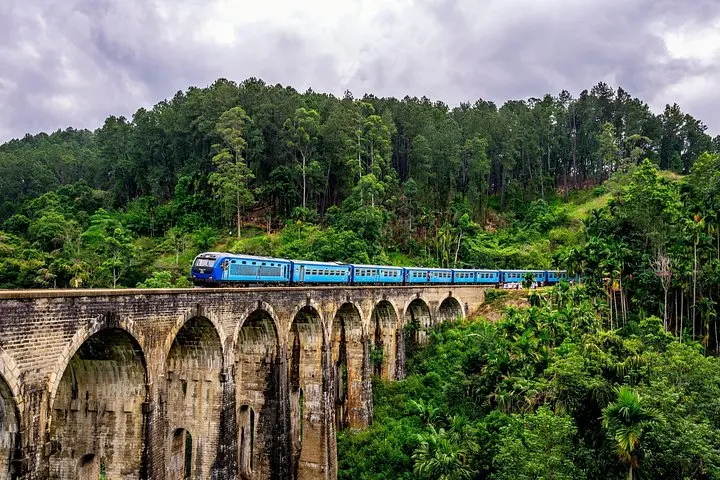
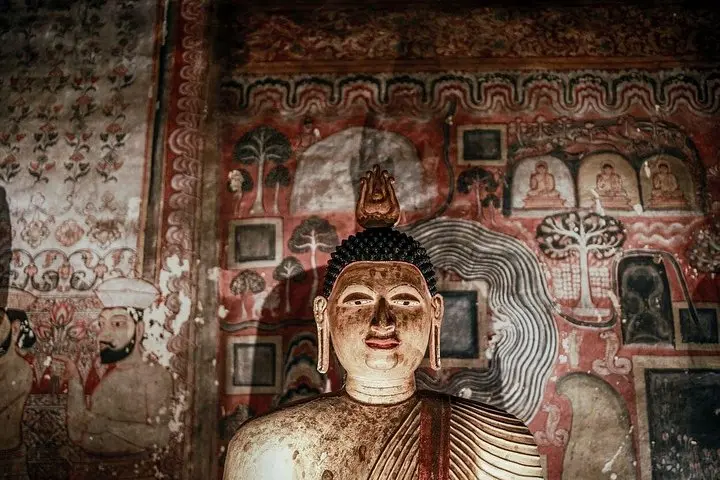
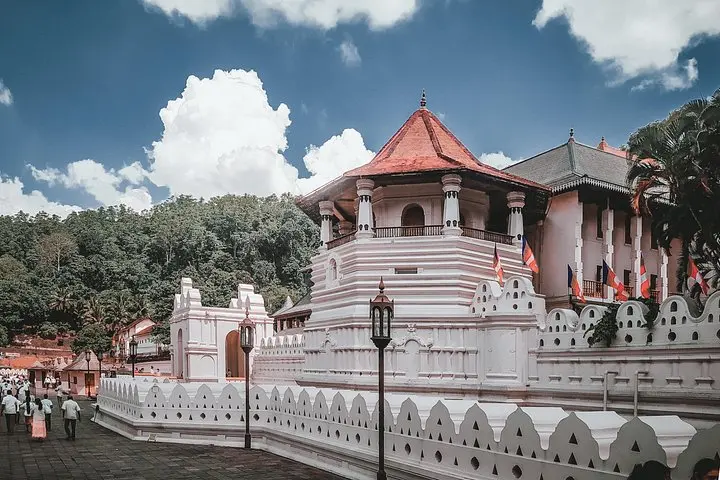
The route follows more than convenience; it follows history. Sigiriya Rock is a 5th-century fortress and formal garden cut into volcanic rock—an engineered citadel that still holds frescoes and a terraced water garden system. Kandy’s Temple of the Tooth anchors Sri Lanka’s Buddhist identity, while colonial-era Galle Fort records Portuguese, Dutch and British layers of trade and defense along the southern coast. Geologically the island is ancient: Precambrian metamorphic beds in the interior give way to coastal sands and coral shelves, a transition you feel moving downhill by train from Nanu Oya into Ella—rice terraces and tea gardens opening like folded maps.
Wildlife is deliberate here: Minneriya National Park’s seasonal reservoir attracts elephant herds in the dry months, and Mirissa’s offshore currents bring blue whales close to shore from December through April. Cultural moments punctuate the trip—spice gardens in Matale, a gem-cutting demonstration, and a visit to a turtle conservation center—each offering practical insight into local livelihoods and conservation.
Practicalities matter. The seven-day loop covers roughly 600–800 km by road with multiple short hikes—Sigiriya’s climb is a steep 200–250 m ascent spread across staircases; Little Adam’s Peak is a 1–2 km round trip with 150–250 m gain and easy trail footing. Expect uneven stone steps, muddy paths after rain, and a mix of paved roads and rural lanes. Bring breathable layers for humid lowlands and a warm mid-layer for hill-country mornings where temperatures can drop into the mid-teens Celsius.
Timing is tactical: early starts for safaris and whale-watching improve sightings and avoid midday heat. Hydrate on the road, carry sunscreen, and budget a few hours for the Nanu Oya–Ella train—the slow, window-side ride is as much an attraction as any temple. The tour is private and guided, so logistics—hotel pickups, entrance guide fees for major sites, and air-conditioned transfer—are covered; that lets travelers trade map-reading for watching a herd cross a dusty plain or catching the last light on Galle’s ramparts.
Site guide fees for Sigiriya and the Temple of the Tooth are covered; entrance fees vary by site and are typically paid locally—confirm specific inclusions at booking.
Mirissa’s whale season runs November–April with calm seas and higher sighting rates—book early in that window for the best chance to see blue whales.
Sigiriya involves steep stairs and metal walkways over about 200–250 m of ascent; it’s short but physically steady—take breaks and wear good shoes.
Yes—transport is private and accessible, and the itinerary notes stroller and wheelchair access where possible; discuss any mobility needs when booking.
Most travelers require an Electronic Travel Authorization (ETA); routine vaccinations are recommended—check with your healthcare provider for up-to-date advice.
Bring breathable, sun-protective clothing for the coast and a light insulating layer for mornings in Ella; include swimwear for Mirissa and a waterproof layer for sudden rain.
PearlTrail Tours Srilanka operates guided outdoor trips and adventures with an emphasis on safety, stewardship, and memorable experiences.
The van turns off the highway and the air changes—humid, green, full of the smell of wet earth and cinnamon bark being dried on racks. On day one, Sigiriya’s sheer red face rises from paddy fields like a parked ship; climbers thread through iron staircases and fresco galleries, wind nudging at their shoulders as the valley below stretches out in patchwork rice and scrub. This is a circuit of contrasts: lowland wilds where elephants graze, mist-rolled tea country in the central hills, and the slow blue of the Indian Ocean where whales breathe and disappear.
The van turns off the highway and the air changes—humid, green, full of the smell of wet earth and cinnamon bark being dried on racks. On day one, Sigiriya’s sheer red face rises from paddy fields like a parked ship; climbers thread through iron staircases and fresco galleries, wind nudging at their shoulders as the valley below stretches out in patchwork rice and scrub. This is a circuit of contrasts: lowland wilds where elephants graze, mist-rolled tea country in the central hills, and the slow blue of the Indian Ocean where whales breathe and disappear.
The route follows more than convenience; it follows history. Sigiriya Rock is a 5th-century fortress and formal garden cut into volcanic rock—an engineered citadel that still holds frescoes and a terraced water garden system. Kandy’s Temple of the Tooth anchors Sri Lanka’s Buddhist identity, while colonial-era Galle Fort records Portuguese, Dutch and British layers of trade and defense along the southern coast. Geologically the island is ancient: Precambrian metamorphic beds in the interior give way to coastal sands and coral shelves, a transition you feel moving downhill by train from Nanu Oya into Ella—rice terraces and tea gardens opening like folded maps.
Wildlife is deliberate here: Minneriya National Park’s seasonal reservoir attracts elephant herds in the dry months, and Mirissa’s offshore currents bring blue whales close to shore from December through April. Cultural moments punctuate the trip—spice gardens in Matale, a gem-cutting demonstration, and a visit to a turtle conservation center—each offering practical insight into local livelihoods and conservation.
Practicalities matter. The seven-day loop covers roughly 600–800 km by road with multiple short hikes—Sigiriya’s climb is a steep 200–250 m ascent spread across staircases; Little Adam’s Peak is a 1–2 km round trip with 150–250 m gain and easy trail footing. Expect uneven stone steps, muddy paths after rain, and a mix of paved roads and rural lanes. Bring breathable layers for humid lowlands and a warm mid-layer for hill-country mornings where temperatures can drop into the mid-teens Celsius.
Timing is tactical: early starts for safaris and whale-watching improve sightings and avoid midday heat. Hydrate on the road, carry sunscreen, and budget a few hours for the Nanu Oya–Ella train—the slow, window-side ride is as much an attraction as any temple. The tour is private and guided, so logistics—hotel pickups, entrance guide fees for major sites, and air-conditioned transfer—are covered; that lets travelers trade map-reading for watching a herd cross a dusty plain or catching the last light on Galle’s ramparts.