THE ADVENTURE COLLECTIVE® · Independent discovery and booking for outdoor travel

Walk St. Augustine’s historic core to trace centuries of faith, architecture, and community, then finish with a chocolate cart dessert. This two-hour tour blends readable history with accessible urban walking and plenty of photo stops.
Walk St. Augustine’s historic core to trace centuries of faith, architecture, and community, then finish with a chocolate cart dessert. This two-hour tour blends readable history with accessible urban walking and plenty of photo stops.
You step off the cobbles into a city where the ocean wind still carries voices from another century. Spanish moss brushes the bell towers as sunlight hits stained glass, and the chocolate cart waits like a modern offering at the edge of an old plaza.
Verified experiences and guided adventures in the surrounding area.
You step off the cobbles into a city where the ocean wind still carries voices from another century. Spanish moss brushes the bell towers as sunlight hits stained glass, and the chocolate cart waits like a modern offering at the edge of an old plaza.
This compact walking tour moves through St. Augustine’s layered history — from 16th-century Spanish missions to 19th-century Episcopal and Catholic rebuilds — explaining how religion shaped the urban plan and social life. Geology explains the city’s siting: built atop coquina limestone that was quarried for fortifications and gave walls a warm, shell-speckled texture. Cultural threads include Minorcan, Spanish, African American, and Anglo influences visible in church architecture, cemetery iconography, and parish stories shared by local guides.
Expect short neighborhood walks between sites, inside visits where allowed, and moments to photograph steeples and altars. The chocolate cart finish is intentionally tactile — a small, sweet conclusion that contrasts with the weight of the stories you’ve heard. Guides focus on architecture, founding dates, patron saints, and how congregations adapted across centuries.
Practical guidance: wear comfortable walking shoes for uneven sidewalks and occasional steps; bring water and sun protection for the exposed plazas; plan around mass times if you want to enter active churches. Tours are typically 2 hours and suitable for most fitness levels; the pace is conversational with frequent stops. Morning tours avoid midday heat and offer softer light for photos, while late-afternoon tours pair well with nearby restaurants and sunset strolls along Matanzas Bay.
The tour lasts about two hours and covers short walks between multiple churches and stops in the historic district.
Not always; many churches are active and open around service times or for special hours—guides will enter when permitted.
Yes; the pace is moderate and suitable for older children, though younger kids may get restless during indoor visits.
Yes—most versions of this tour conclude with a chocolate cart dessert included in the itinerary.
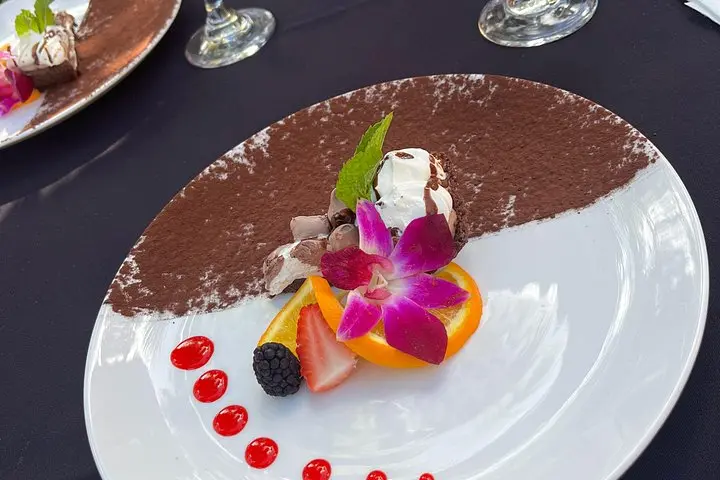
You step off the cobbles into a city where the ocean wind still carries voices from another century. Spanish moss brushes the bell towers as sunlight hits stained glass, and the chocolate cart waits like a modern offering at the edge of an old plaza.
You step off the cobbles into a city where the ocean wind still carries voices from another century. Spanish moss brushes the bell towers as sunlight hits stained glass, and the chocolate cart waits like a modern offering at the edge of an old plaza.
This compact walking tour moves through St. Augustine’s layered history — from 16th-century Spanish missions to 19th-century Episcopal and Catholic rebuilds — explaining how religion shaped the urban plan and social life. Geology explains the city’s siting: built atop coquina limestone that was quarried for fortifications and gave walls a warm, shell-speckled texture. Cultural threads include Minorcan, Spanish, African American, and Anglo influences visible in church architecture, cemetery iconography, and parish stories shared by local guides.
Expect short neighborhood walks between sites, inside visits where allowed, and moments to photograph steeples and altars. The chocolate cart finish is intentionally tactile — a small, sweet conclusion that contrasts with the weight of the stories you’ve heard. Guides focus on architecture, founding dates, patron saints, and how congregations adapted across centuries.
Practical guidance: wear comfortable walking shoes for uneven sidewalks and occasional steps; bring water and sun protection for the exposed plazas; plan around mass times if you want to enter active churches. Tours are typically 2 hours and suitable for most fitness levels; the pace is conversational with frequent stops. Morning tours avoid midday heat and offer softer light for photos, while late-afternoon tours pair well with nearby restaurants and sunset strolls along Matanzas Bay.