THE ADVENTURE COLLECTIVE® · Independent discovery and booking for outdoor travel

Float above St. George at sunrise in a modern 8-passenger balloon and watch red-rock ridgelines unfold beneath you. This early-morning flight blends geological spectacle with gentle adventure—perfect for celebrations or first-time fliers.
Float above St. George at sunrise in a modern 8-passenger balloon and watch red-rock ridgelines unfold beneath you. This early-morning flight blends geological spectacle with gentle adventure—perfect for celebrations or first-time fliers.
You meet before dawn in the low-lit lobby of the Million Air building, the airport hum muted and cool. Outside, the burners scratch the silence like a foreign animal; a balloon unfurls across the tarmac and the sky at first is the pale blue of a waking page. As the envelope fills, the city of St. George drops away into a grid of sleeping roofs while distant ridgelines sharpen into serrated red silhouettes. When you finally lift, the ground reorganizes into patterns—ridges, washes, and the patchwork of irrigated fields—each feature claiming its own steady story beneath the basket.
Verified experiences and guided adventures in the surrounding area.
Operated by Zion Balloons · St. George, Utah
You meet before dawn in the low-lit lobby of the Million Air building, the airport hum muted and cool. Outside, the burners scratch the silence like a foreign animal; a balloon unfurls across the tarmac and the sky at first is the pale blue of a waking page. As the envelope fills, the city of St. George drops away into a grid of sleeping roofs while distant ridgelines sharpen into serrated red silhouettes. When you finally lift, the ground reorganizes into patterns—ridges, washes, and the patchwork of irrigated fields—each feature claiming its own steady story beneath the basket.
Southern Utah’s cliffs are chapters of deep time. The view from a balloon emphasizes the layers: Navajo Sandstone ribbing into fins and mesas, younger alluvium where the Virgin River once wandered, and the dark, more recent basalt of lava flows in nearby Snow Canyon. Human history threads through that geology. The Paiute people moved seasonally across these deserts; Mormon settlers later irrigated what they called Dixie, planting cotton and orchards in the valley. Modern balloon flights offer a rare vantage where geology and human imprint converge without hurry.
Flights usually last about an hour aloft inside a two-and-a-half hour window—time enough to watch sunlight sweep across canyons and to feel the mild push of thermals. Pilots steer by choosing layers of wind at different altitudes; when the burner flares you feel the machine assert itself and the desert answers with broad, patient space. Wildlife below is incidental yet vivid: a bighorn silhouette on a slope, a raptor circling a thermal like it owns the sky.
Practicalities matter. Plan on an early start—summer and winter flights alike leave at sunrise to catch calm air. Wear layers; temperatures can swing 30 degrees from the parking lot to the open basket. The operator meets at Million Air; travel light and bring identification and any requested weight information. The provider supplies bottled water and a sparkling cider toast after landing, but carry your own small daypack with sun protection, sturdy shoes for uneven landing zones, and a windbreaker.
Safety and etiquette are straightforward. Ballooning is weather-dependent—trips cancel if winds or storms threaten—and operators will restrict participation for certain health conditions. Respect landing crews, follow the pilot’s brief, and pack out any trash. The payoff is an unhurried, nearly silent glide over red rock forms that dare you to name them, to map them from above, and to consider how small a city seems under a desert that has been reshaping itself for millions of years.
The balloon is typically aloft for about 45–60 minutes within a 2.5-hour experience that includes briefing and post-flight celebration.
Most operators accept guests ages 6 and up; pregnant travelers and those with significant spinal or heart issues are not recommended to fly.
Flights are canceled for high winds or storms; the operator will offer a full refund if canceled at least 24 hours before departure or reschedule if possible.
Meet inside the Million Air building lobby at St. George Regional Airport as instructed on your confirmation.
Yes, you will be asked to provide weight during booking to allow safe passenger distribution in the basket.
Most flights include a post-flight toast and may offer photos for purchase; bring your own camera for personal shots.
Zion Balloons operates guided outdoor trips and adventures with an emphasis on safety, stewardship, and memorable experiences.

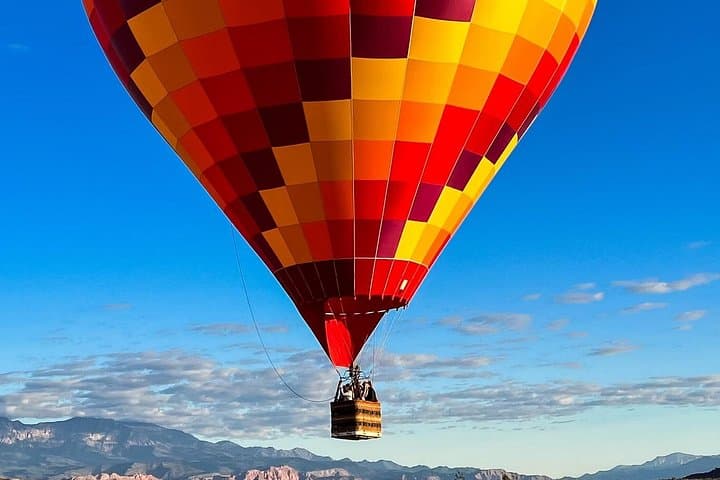


You meet before dawn in the low-lit lobby of the Million Air building, the airport hum muted and cool. Outside, the burners scratch the silence like a foreign animal; a balloon unfurls across the tarmac and the sky at first is the pale blue of a waking page. As the envelope fills, the city of St. George drops away into a grid of sleeping roofs while distant ridgelines sharpen into serrated red silhouettes. When you finally lift, the ground reorganizes into patterns—ridges, washes, and the patchwork of irrigated fields—each feature claiming its own steady story beneath the basket.
You meet before dawn in the low-lit lobby of the Million Air building, the airport hum muted and cool. Outside, the burners scratch the silence like a foreign animal; a balloon unfurls across the tarmac and the sky at first is the pale blue of a waking page. As the envelope fills, the city of St. George drops away into a grid of sleeping roofs while distant ridgelines sharpen into serrated red silhouettes. When you finally lift, the ground reorganizes into patterns—ridges, washes, and the patchwork of irrigated fields—each feature claiming its own steady story beneath the basket.
Southern Utah’s cliffs are chapters of deep time. The view from a balloon emphasizes the layers: Navajo Sandstone ribbing into fins and mesas, younger alluvium where the Virgin River once wandered, and the dark, more recent basalt of lava flows in nearby Snow Canyon. Human history threads through that geology. The Paiute people moved seasonally across these deserts; Mormon settlers later irrigated what they called Dixie, planting cotton and orchards in the valley. Modern balloon flights offer a rare vantage where geology and human imprint converge without hurry.
Flights usually last about an hour aloft inside a two-and-a-half hour window—time enough to watch sunlight sweep across canyons and to feel the mild push of thermals. Pilots steer by choosing layers of wind at different altitudes; when the burner flares you feel the machine assert itself and the desert answers with broad, patient space. Wildlife below is incidental yet vivid: a bighorn silhouette on a slope, a raptor circling a thermal like it owns the sky.
Practicalities matter. Plan on an early start—summer and winter flights alike leave at sunrise to catch calm air. Wear layers; temperatures can swing 30 degrees from the parking lot to the open basket. The operator meets at Million Air; travel light and bring identification and any requested weight information. The provider supplies bottled water and a sparkling cider toast after landing, but carry your own small daypack with sun protection, sturdy shoes for uneven landing zones, and a windbreaker.
Safety and etiquette are straightforward. Ballooning is weather-dependent—trips cancel if winds or storms threaten—and operators will restrict participation for certain health conditions. Respect landing crews, follow the pilot’s brief, and pack out any trash. The payoff is an unhurried, nearly silent glide over red rock forms that dare you to name them, to map them from above, and to consider how small a city seems under a desert that has been reshaping itself for millions of years.