THE ADVENTURE COLLECTIVE® · Independent discovery and booking for outdoor travel

Launch from a flight deck and rise 600 feet above the Straits of Mackinac for 10–12 minutes of aerial views of the Mackinac Bridge, Mackinac Island and Lake Huron. This easy, supervised parasail offers spectacular perspective with minimal experience required.
Launch from a flight deck and rise 600 feet above the Straits of Mackinac for 10–12 minutes of aerial views of the Mackinac Bridge, Mackinac Island and Lake Huron. This easy, supervised parasail offers spectacular perspective with minimal experience required.
You step onto a low-profile flight deck, the boat humming as clean Great Lakes air pushes off Lake Huron. The canopy fills like a giant wing and, within minutes, the shoreline drops away. From 600 feet up the Mackinac Bridge pins the horizon, Mackinac Island shrinks to a rocky silhouette and the Straits ripples beneath you — a sharp, open view that only a parasail offers.
Verified experiences and guided adventures in the surrounding area.
Operated by Mackinaw Parasailing · St. Ignace, Michigan
You step onto a low-profile flight deck, the boat humming as clean Great Lakes air pushes off Lake Huron. The canopy fills like a giant wing and, within minutes, the shoreline drops away. From 600 feet up the Mackinac Bridge pins the horizon, Mackinac Island shrinks to a rocky silhouette and the Straits ripples beneath you — a sharp, open view that only a parasail offers.
The Straits of Mackinac are shaped by glacial carving and centuries of freshwater commerce; the bridge itself (opened 1957) links two peninsulas and frames a seafaring culture that dates to Anishinaabe use of these waters and 19th-century shipping lanes. Geologically the region is limestone and dolomite bedrock with shoals that create lively currents; culturally the islands, lighthouses and ferry traffic give the air a working-maritime feel.
Practically, expect a 60-minute booking that includes safety briefing and harness fitting; actual airtime is about 10–12 minutes for the advertised 600-foot flights. Operators launch and land parasailers directly from the flight deck, minimizing wet landings. No prior skill is required, but operators screen out pregnant travelers, people with serious heart or back conditions, and follow weight/age guidelines. Weather controls departures — wind, visibility and waves determine go/no-go.
Bring sun protection, a wind layer and a secure camera; arrive early for check-in and listen to the crew’s weight and safety rules. For a short, high-altitude way to read the Straits, this parasail puts the Great Lakes in a compact, vivid frame.
Each flight typically lasts 10–12 minutes; the entire experience including briefing and gearing usually fits into a 60-minute booking.
Yes — trained crew manage harnessing, takeoff and landing from the boat’s flight deck; however, it’s not recommended for pregnant travelers or those with certain medical conditions.
Operators cancel for wind, storms or poor visibility; this operator’s policy allows full refund if cancelled at least 24 hours before departure or for weather-related cancellations.
Policies vary by operator; some allow infants to ride seated on an adult’s lap, but you must disclose ages at booking and follow staff guidance.
Mackinaw Parasailing operates guided outdoor trips and adventures with an emphasis on safety, stewardship, and memorable experiences.
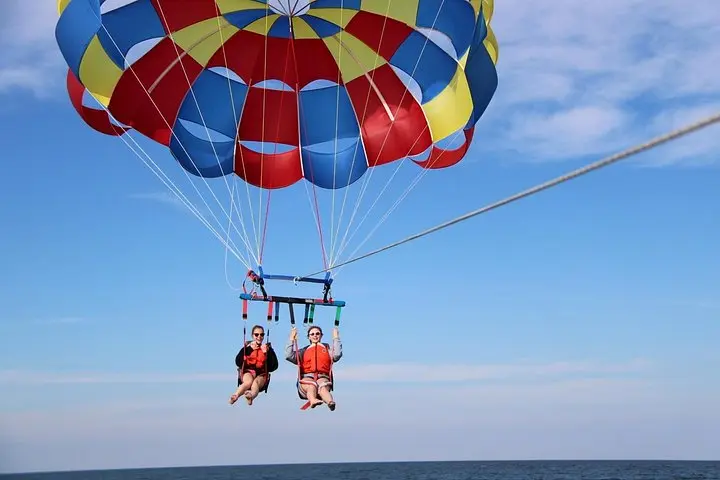
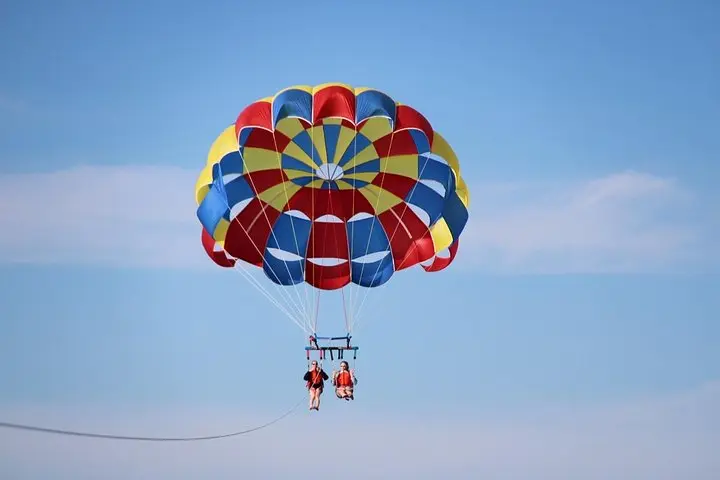
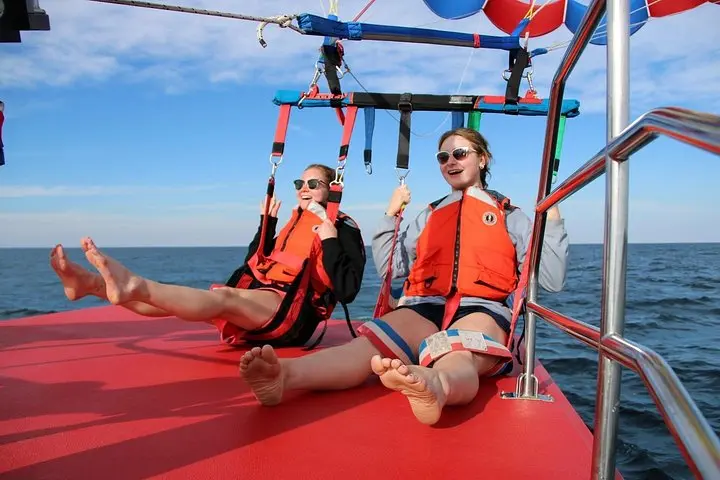
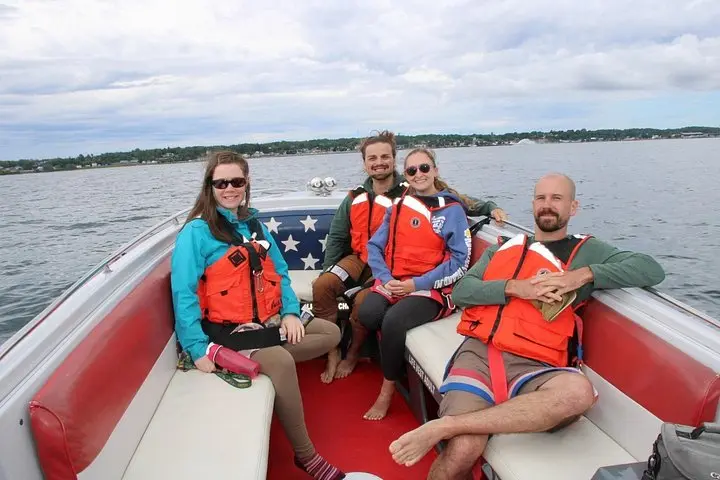
You step onto a low-profile flight deck, the boat humming as clean Great Lakes air pushes off Lake Huron. The canopy fills like a giant wing and, within minutes, the shoreline drops away. From 600 feet up the Mackinac Bridge pins the horizon, Mackinac Island shrinks to a rocky silhouette and the Straits ripples beneath you — a sharp, open view that only a parasail offers.
You step onto a low-profile flight deck, the boat humming as clean Great Lakes air pushes off Lake Huron. The canopy fills like a giant wing and, within minutes, the shoreline drops away. From 600 feet up the Mackinac Bridge pins the horizon, Mackinac Island shrinks to a rocky silhouette and the Straits ripples beneath you — a sharp, open view that only a parasail offers.
The Straits of Mackinac are shaped by glacial carving and centuries of freshwater commerce; the bridge itself (opened 1957) links two peninsulas and frames a seafaring culture that dates to Anishinaabe use of these waters and 19th-century shipping lanes. Geologically the region is limestone and dolomite bedrock with shoals that create lively currents; culturally the islands, lighthouses and ferry traffic give the air a working-maritime feel.
Practically, expect a 60-minute booking that includes safety briefing and harness fitting; actual airtime is about 10–12 minutes for the advertised 600-foot flights. Operators launch and land parasailers directly from the flight deck, minimizing wet landings. No prior skill is required, but operators screen out pregnant travelers, people with serious heart or back conditions, and follow weight/age guidelines. Weather controls departures — wind, visibility and waves determine go/no-go.
Bring sun protection, a wind layer and a secure camera; arrive early for check-in and listen to the crew’s weight and safety rules. For a short, high-altitude way to read the Straits, this parasail puts the Great Lakes in a compact, vivid frame.