THE ADVENTURE COLLECTIVE® · Independent discovery and booking for outdoor travel

Walk a former quarry where Liverpool’s Georgian and Victorian dead lie side by side. This small-group, two-hour tour pairs close-up history—slavers, merchants, the first railway casualty—with hands-on wax rubbings and accessible, story-driven interpretation.
Walk a former quarry where Liverpool’s Georgian and Victorian dead lie side by side. This small-group, two-hour tour pairs close-up history—slavers, merchants, the first railway casualty—with hands-on wax rubbings and accessible, story-driven interpretation.
You step through an iron gate and the city noise softens; stone monuments lean like readers bent over thick books, the wind turning pages of lichen and inscription. The quarry-turned-cemetery spreads on a shallow slope, terraces of weathered sandstone and clipped lawns where memorials mark lives that shaped Liverpool's rise and contradictions.
Verified experiences and guided adventures in the surrounding area.
Operated by LiverpoolGO · Liverpool, Merseyside
You step through an iron gate and the city noise softens; stone monuments lean like readers bent over thick books, the wind turning pages of lichen and inscription. The quarry-turned-cemetery spreads on a shallow slope, terraces of weathered sandstone and clipped lawns where memorials mark lives that shaped Liverpool's rise and contradictions.
The tour traces late Georgian and Victorian expansion: merchants whose fortunes moved cotton and coal across the Atlantic, merchants and slave traders interred beside sea captains and reformers. The ground itself remembers—stone quarried for building became the city’s common burial place when churchyards closed. You’ll hear about William Huskisson, noted as the first railway casualty, and Sir William Brown, whose philanthropy reshaped civic spaces. The guide connects local streets to global commerce, and how wealth and poverty coexisted in tight terraces and courts.
Interpretation is tactile: guests make wax rubbings from grave markers, an uncommon way to touch the carved script of a century. The setting leans practical—paths are compacted earth and flagstone with shallow steps; benches and open sightlines make for an accessible, reflective two-hour walk.
Plan for changeable British weather, wear sturdy shoes and a rain shell, and allow time afterwards for nearby Rodney Street’s Georgian streetscapes. Public transport drops you within a short walk; the operator notes the tour is wheelchair accessible and suitable for most fitness levels. Bring a camera, an inquisitive mind, and respect: this is an active burial ground and a community of memory, not a theatrical stage.
The tour lasts approximately two hours and covers compacted paths and short flights of steps.
Yes—operators list the tour as wheelchair accessible; contact the provider in advance to confirm specific access needs.
Wax rubbing sessions are guided and limited to selected, non-fragile monuments to protect historic stonework.
Tours may be canceled for severe weather; the operator typically allows full refunds if canceled at least 24 hours prior.
LiverpoolGO operates guided outdoor trips and adventures with an emphasis on safety, stewardship, and memorable experiences.


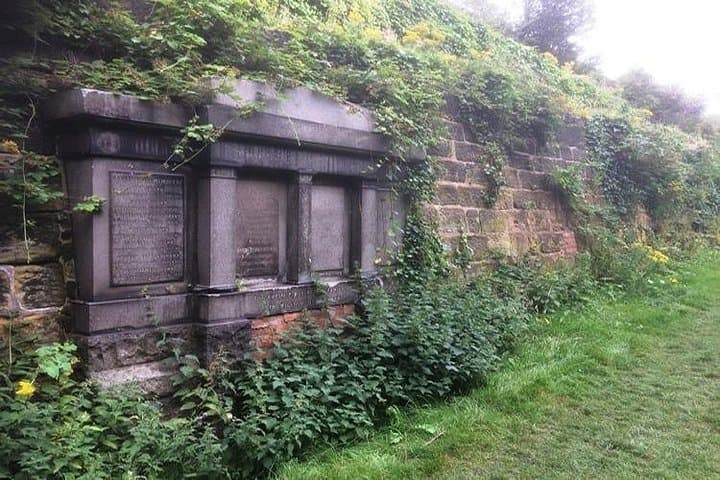

You step through an iron gate and the city noise softens; stone monuments lean like readers bent over thick books, the wind turning pages of lichen and inscription. The quarry-turned-cemetery spreads on a shallow slope, terraces of weathered sandstone and clipped lawns where memorials mark lives that shaped Liverpool's rise and contradictions.
You step through an iron gate and the city noise softens; stone monuments lean like readers bent over thick books, the wind turning pages of lichen and inscription. The quarry-turned-cemetery spreads on a shallow slope, terraces of weathered sandstone and clipped lawns where memorials mark lives that shaped Liverpool's rise and contradictions.
The tour traces late Georgian and Victorian expansion: merchants whose fortunes moved cotton and coal across the Atlantic, merchants and slave traders interred beside sea captains and reformers. The ground itself remembers—stone quarried for building became the city’s common burial place when churchyards closed. You’ll hear about William Huskisson, noted as the first railway casualty, and Sir William Brown, whose philanthropy reshaped civic spaces. The guide connects local streets to global commerce, and how wealth and poverty coexisted in tight terraces and courts.
Interpretation is tactile: guests make wax rubbings from grave markers, an uncommon way to touch the carved script of a century. The setting leans practical—paths are compacted earth and flagstone with shallow steps; benches and open sightlines make for an accessible, reflective two-hour walk.
Plan for changeable British weather, wear sturdy shoes and a rain shell, and allow time afterwards for nearby Rodney Street’s Georgian streetscapes. Public transport drops you within a short walk; the operator notes the tour is wheelchair accessible and suitable for most fitness levels. Bring a camera, an inquisitive mind, and respect: this is an active burial ground and a community of memory, not a theatrical stage.