THE ADVENTURE COLLECTIVE® · Independent discovery and booking for outdoor travel

Take a private two-hour stroll down Summit Avenue in St. Paul to see some of America’s most intact Victorian residential architecture. This guided loop highlights grand styles, local stories, and practical tips for an easy, informative walk.
Take a private two-hour stroll down Summit Avenue in St. Paul to see some of America’s most intact Victorian residential architecture. This guided loop highlights grand styles, local stories, and practical tips for an easy, informative walk.
You start on the broad sidewalk in front of the James J. Hill House, the city’s brick-and-stone answer to Gilded Age ambition, and the boulevard opens before you—trees arcing over flagstone steps, carriage-house facades, and columns that dare you to look closer.
Verified experiences and guided adventures in the surrounding area.
Operated by Douglas Kline · St. Paul, Minnesota
You start on the broad sidewalk in front of the James J. Hill House, the city’s brick-and-stone answer to Gilded Age ambition, and the boulevard opens before you—trees arcing over flagstone steps, carriage-house facades, and columns that dare you to look closer.
Summit Avenue is one of the longest contiguous stretches of Victorian residential architecture in the United States. Built during the late 19th and early 20th centuries by railroad and lumber barons, the homes display Queen Anne, Italianate, Georgian Revival, Romanesque and Beaux-Arts flourishes. Geologically the avenue sits atop glacially smoothed bedrock and bluffs that slope toward the Mississippi—an urban ridge that helped determine the city’s wealthy developments.
Culturally, the street reads like a neighborhood biography: churches, private clubs and schools punctuate the grand houses, while modern residents maintain old parcels as lived-in museums. Guides highlight stories of builders, adaptive reuse of carriage houses, and a former alley that’s now a charming, narrow residential lane.
Practical guidance is simple: the private loop runs about 1.5–2 miles and takes roughly two hours at an easy pace. Sidewalks are generally wide and mostly level; the route is suitable for most fitness levels and is wheelchair accessible. Wear comfortable walking shoes, bring a camera and water, and allow time to pause at details—the masonry, ironwork and era-accurate porches reward a slow eye. Respect private property, keep noise measured in residential blocks, and consider pairing this walk with a separately booked tour of the Hill House for interior context.
This is an urban stroll that reads like a field guide to architecture and social history—quiet, observant, and grounded in the city's physical and human landscape.
The private loop covers roughly 1.5–2 miles and is paced to fill two hours with stops and commentary.
Most sidewalks and the planned route are accessible; meeting point and route notes indicate wheelchair access, but contact the operator to confirm any specific mobility needs.
No—interior tours of the Hill House are run separately by the Minnesota Historical Society and can be scheduled before or after the walking tour.
Yes—strollers are allowed and the route is suitable for families, though parts include curbs and steps near properties.
Douglas Kline operates guided outdoor trips and adventures with an emphasis on safety, stewardship, and memorable experiences.
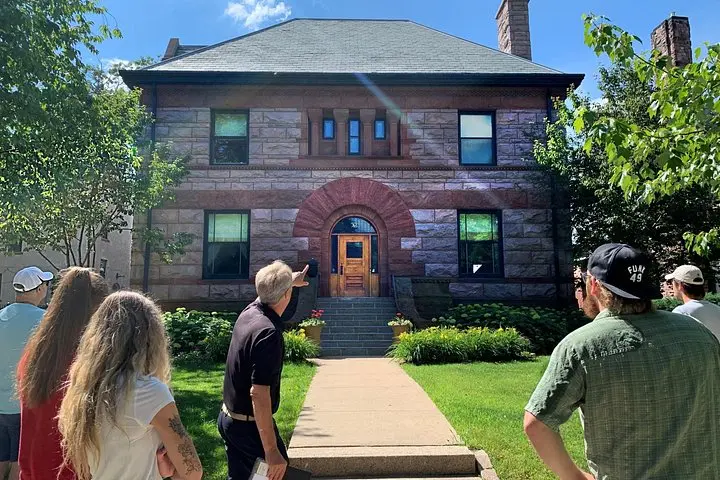
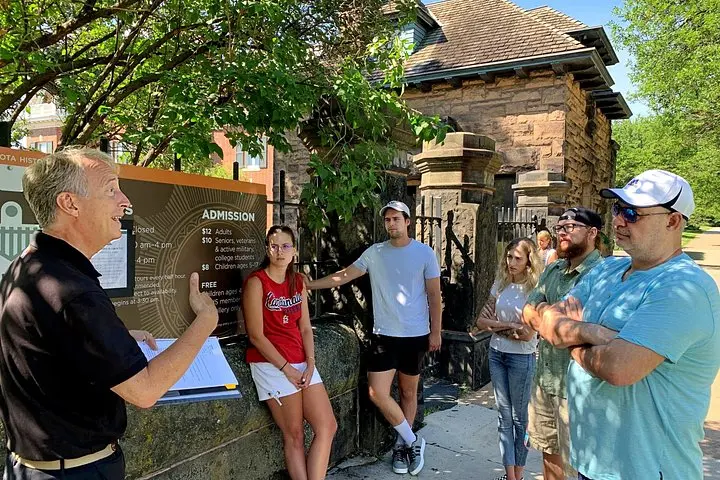

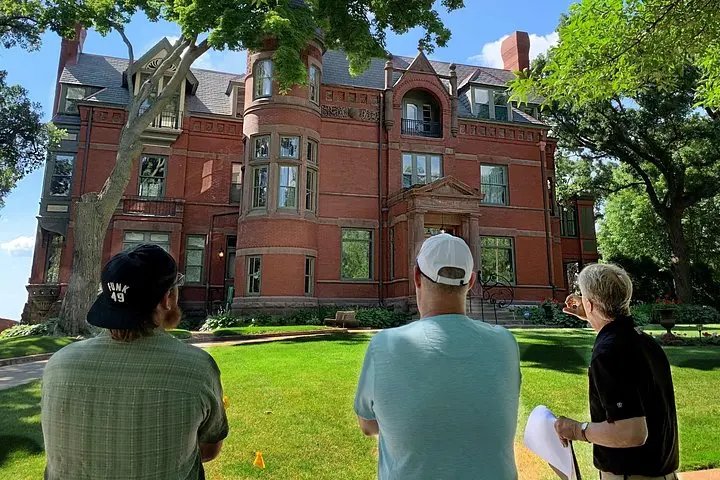
You start on the broad sidewalk in front of the James J. Hill House, the city’s brick-and-stone answer to Gilded Age ambition, and the boulevard opens before you—trees arcing over flagstone steps, carriage-house facades, and columns that dare you to look closer.
You start on the broad sidewalk in front of the James J. Hill House, the city’s brick-and-stone answer to Gilded Age ambition, and the boulevard opens before you—trees arcing over flagstone steps, carriage-house facades, and columns that dare you to look closer.
Summit Avenue is one of the longest contiguous stretches of Victorian residential architecture in the United States. Built during the late 19th and early 20th centuries by railroad and lumber barons, the homes display Queen Anne, Italianate, Georgian Revival, Romanesque and Beaux-Arts flourishes. Geologically the avenue sits atop glacially smoothed bedrock and bluffs that slope toward the Mississippi—an urban ridge that helped determine the city’s wealthy developments.
Culturally, the street reads like a neighborhood biography: churches, private clubs and schools punctuate the grand houses, while modern residents maintain old parcels as lived-in museums. Guides highlight stories of builders, adaptive reuse of carriage houses, and a former alley that’s now a charming, narrow residential lane.
Practical guidance is simple: the private loop runs about 1.5–2 miles and takes roughly two hours at an easy pace. Sidewalks are generally wide and mostly level; the route is suitable for most fitness levels and is wheelchair accessible. Wear comfortable walking shoes, bring a camera and water, and allow time to pause at details—the masonry, ironwork and era-accurate porches reward a slow eye. Respect private property, keep noise measured in residential blocks, and consider pairing this walk with a separately booked tour of the Hill House for interior context.
This is an urban stroll that reads like a field guide to architecture and social history—quiet, observant, and grounded in the city's physical and human landscape.