THE ADVENTURE COLLECTIVE® · Independent discovery and booking for outdoor travel

Climb from the basilica floor to the cupola and move through centuries of art, tombs and architectural invention. This guided tour blends licensed narration with skip‑ahead access and a rooftop panorama of Rome.
Climb from the basilica floor to the cupola and move through centuries of art, tombs and architectural invention. This guided tour blends licensed narration with skip‑ahead access and a rooftop panorama of Rome.
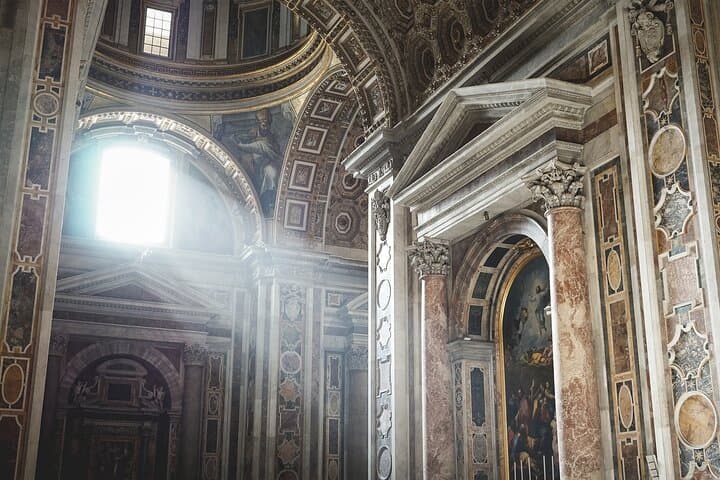
You step out of the press of St. Peter's Square and into cool shadow: marble underfoot, vaults arching like a held breath. Guides move through the light with headsets and an easy authority, pointing out a Pietà that still arrests the eye and mosaics that hold color where paint would have long since faded.
Verified experiences and guided adventures in the surrounding area.
Operated by Italy Pass tours · Vatican City, Lazio
You step out of the press of St. Peter's Square and into cool shadow: marble underfoot, vaults arching like a held breath. Guides move through the light with headsets and an easy authority, pointing out a Pietà that still arrests the eye and mosaics that hold color where paint would have long since faded.
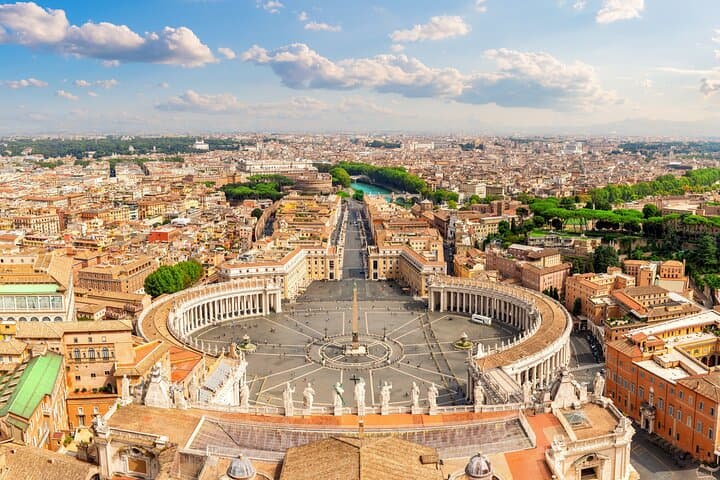
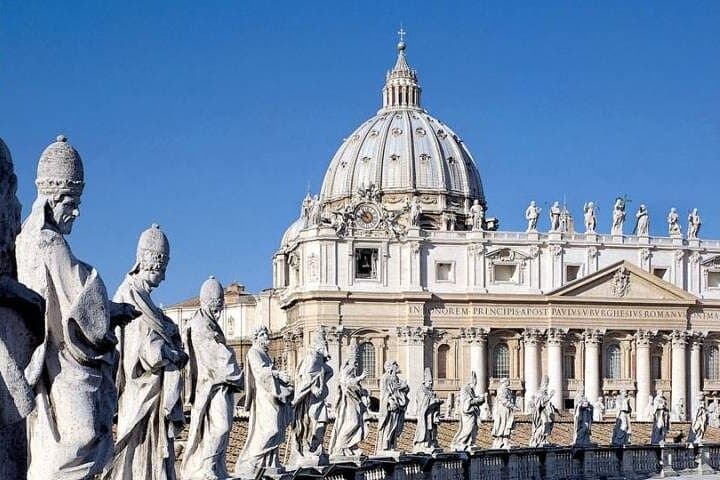
This is a walk through history and power. The basilica grew from Constantine's 4th‑century church and was rebuilt in the Renaissance by Bramante, Michelangelo and Carlo Maderno; Bernini later shaped the piazza so pilgrims arrive under a sweeping embrace of colonnades. The dome—Michelangelo's crowning geometry—rises roughly 130 meters above the basilica floor and offers a 360° sweep of Rome's rooflines, domes and distant hills.
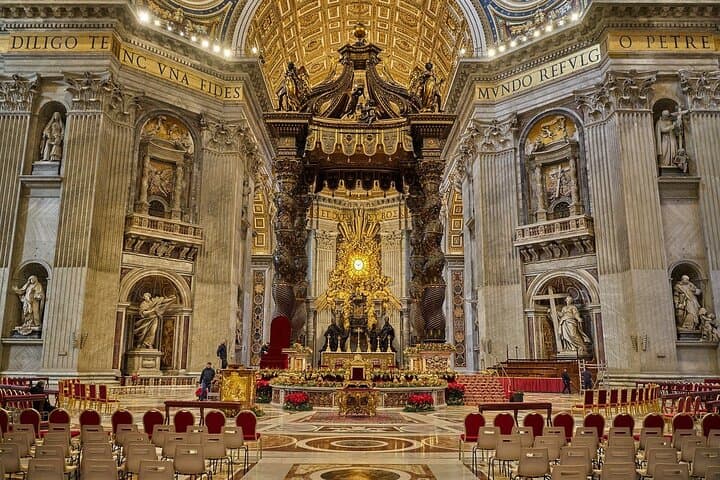
Expect layered experiences: the carved tombs of popes and the quieter Vatican Grottoes below the nave, the ornate baldachin by Bernini, and the climb to the cupola where the city opens outward like a map. The ascent varies by route—several hundred steps if you skip the elevator—and tight, steep stairs demand steady footing.
Practical edge: dress respectfully (shoulders and knees covered), carry a small water bottle, and arrive early to clear security queues. Radios and headsets keep commentary crisp in crowded spaces. If mobility is limited, note the cupola climb is not fully accessible. Bring a camera with a wide lens for interior shots and save time afterwards for the piazza—the view from the steps at sunset is a low-effort reward.
This guided tour includes admission to the cupola and access coordinated with guides to reduce waiting at entry; expect standard security screening.
Depending on elevator use you can face roughly 330–551 steps; the final passages are narrow and require steady footing.
The main basilica floor is reachable, but the cupola climb is not wheelchair accessible and involves steep, tight stairs.
Conservative attire is required—cover shoulders and knees; hats should be removed when entering.
Italy Pass tours operates guided outdoor trips and adventures with an emphasis on safety, stewardship, and memorable experiences.
You step out of the press of St. Peter's Square and into cool shadow: marble underfoot, vaults arching like a held breath. Guides move through the light with headsets and an easy authority, pointing out a Pietà that still arrests the eye and mosaics that hold color where paint would have long since faded.
You step out of the press of St. Peter's Square and into cool shadow: marble underfoot, vaults arching like a held breath. Guides move through the light with headsets and an easy authority, pointing out a Pietà that still arrests the eye and mosaics that hold color where paint would have long since faded.
This is a walk through history and power. The basilica grew from Constantine's 4th‑century church and was rebuilt in the Renaissance by Bramante, Michelangelo and Carlo Maderno; Bernini later shaped the piazza so pilgrims arrive under a sweeping embrace of colonnades. The dome—Michelangelo's crowning geometry—rises roughly 130 meters above the basilica floor and offers a 360° sweep of Rome's rooflines, domes and distant hills.
Expect layered experiences: the carved tombs of popes and the quieter Vatican Grottoes below the nave, the ornate baldachin by Bernini, and the climb to the cupola where the city opens outward like a map. The ascent varies by route—several hundred steps if you skip the elevator—and tight, steep stairs demand steady footing.
Practical edge: dress respectfully (shoulders and knees covered), carry a small water bottle, and arrive early to clear security queues. Radios and headsets keep commentary crisp in crowded spaces. If mobility is limited, note the cupola climb is not fully accessible. Bring a camera with a wide lens for interior shots and save time afterwards for the piazza—the view from the steps at sunset is a low-effort reward.