THE ADVENTURE COLLECTIVE® · Independent discovery and booking for outdoor travel

Launch from Crane Cove Park and learn to stand-up paddle board on the calmer waters of the San Francisco Bay. This 90-minute lesson teaches strokes, safety, and how to read tides, with close-in views of the city’s industrial waterfront.
Launch from Crane Cove Park and learn to stand-up paddle board on the calmer waters of the San Francisco Bay. This 90-minute lesson teaches strokes, safety, and how to read tides, with close-in views of the city’s industrial waterfront.
You push off from a small concrete beach at Crane Cove Park, the board settling under your feet as the city’s metalwork and cranes watch. The Bay opens ahead — a patchwork of glassy water, shipping channels, and the occasional ferry wake pushing at your balance. Wind brushes across the water, smelling faintly of salt and diesel, while the Bay Bridge and Treasure Island frame your route.
Verified experiences and guided adventures in the surrounding area.
Operated by Dogpatch Paddle · San Francisco, CA
You push off from a small concrete beach at Crane Cove Park, the board settling under your feet as the city’s metalwork and cranes watch. The Bay opens ahead — a patchwork of glassy water, shipping channels, and the occasional ferry wake pushing at your balance. Wind brushes across the water, smelling faintly of salt and diesel, while the Bay Bridge and Treasure Island frame your route.
Dogpatch owes its edge to shipyards and warehouses; the reclaimed waterfront is recent, a deliberate change from heavy industry to recreation. Geologically the Bay sits in a tectonic bowl where currents funnel through narrow channels; that creates variable tides and localized winds you’ll learn to read. Culturally, this stretch mixes working waterfront grit with an emerging outdoor scene — paddleboarders, kayakers and anglers share the lanes.
On a typical 90-minute session expect 1–3 miles of paddling on mostly flat water with occasional chop from boat traffic; elevation gain is zero but balance and core engagement are constant. Instructors cover stroke mechanics, safe re-entry, basic route planning and how tides and wind affect your line. Wildlife is present — seals and seabirds will inspect you at a distance, and currents will nudge your pace.
Practicalities: arrive 10–15 minutes early to get fitted; small groups (max 5) mean focused coaching. Dress in layers, bring a towel and change of clothes, and lock belongings in the shop. Mornings are best for calmer water and lighter winds; check the forecast and cancel policy in case of strong winds or fog. This is an approachable intro to Bay paddling with real-world skills you can use elsewhere.
Yes — the program is designed for new paddlers, covering stance, stroke, turning and how to safely fall and re-enter the board.
Wear quick-dry layers or a wetsuit, bring a towel and change of clothes, water, and sun protection; the shop provides boards, paddles, leashes and dry bags.
High wind, heavy fog or dangerous currents can lead to cancellation; mornings tend to be calmer and are the best bet for flat water.
Outfitters commonly ask for age and weight during booking to match equipment; check the operator’s specific limits when you reserve.
Dogpatch Paddle operates guided outdoor trips and adventures with an emphasis on safety, stewardship, and memorable experiences.
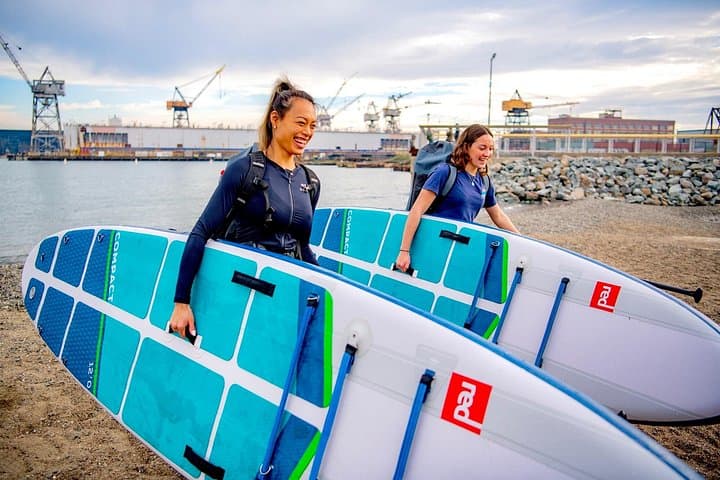
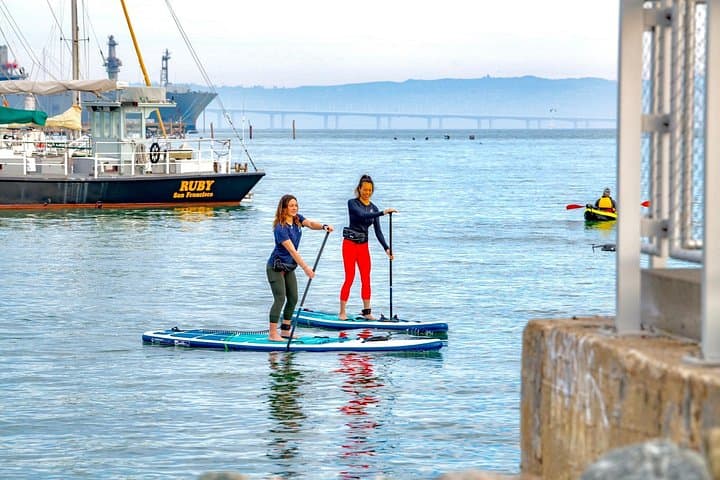
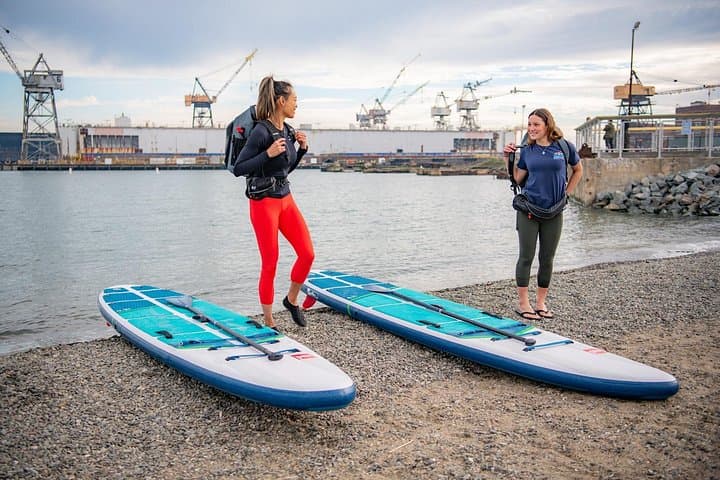
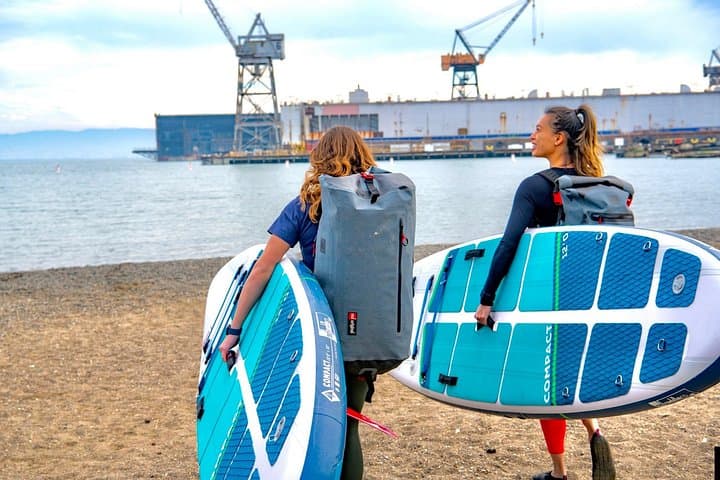
You push off from a small concrete beach at Crane Cove Park, the board settling under your feet as the city’s metalwork and cranes watch. The Bay opens ahead — a patchwork of glassy water, shipping channels, and the occasional ferry wake pushing at your balance. Wind brushes across the water, smelling faintly of salt and diesel, while the Bay Bridge and Treasure Island frame your route.
You push off from a small concrete beach at Crane Cove Park, the board settling under your feet as the city’s metalwork and cranes watch. The Bay opens ahead — a patchwork of glassy water, shipping channels, and the occasional ferry wake pushing at your balance. Wind brushes across the water, smelling faintly of salt and diesel, while the Bay Bridge and Treasure Island frame your route.
Dogpatch owes its edge to shipyards and warehouses; the reclaimed waterfront is recent, a deliberate change from heavy industry to recreation. Geologically the Bay sits in a tectonic bowl where currents funnel through narrow channels; that creates variable tides and localized winds you’ll learn to read. Culturally, this stretch mixes working waterfront grit with an emerging outdoor scene — paddleboarders, kayakers and anglers share the lanes.
On a typical 90-minute session expect 1–3 miles of paddling on mostly flat water with occasional chop from boat traffic; elevation gain is zero but balance and core engagement are constant. Instructors cover stroke mechanics, safe re-entry, basic route planning and how tides and wind affect your line. Wildlife is present — seals and seabirds will inspect you at a distance, and currents will nudge your pace.
Practicalities: arrive 10–15 minutes early to get fitted; small groups (max 5) mean focused coaching. Dress in layers, bring a towel and change of clothes, and lock belongings in the shop. Mornings are best for calmer water and lighter winds; check the forecast and cancel policy in case of strong winds or fog. This is an approachable intro to Bay paddling with real-world skills you can use elsewhere.