THE ADVENTURE COLLECTIVE® · Independent discovery and booking for outdoor travel

A full-day, private DMZ tour from Seoul that combines history, borderland views and an 850‑meter crystal cable car crossing. Expect security checks, light hiking on Gamaksan, and up-close observation points at Dora Observatory and the Third Tunnel.
A full-day, private DMZ tour from Seoul that combines history, borderland views and an 850‑meter crystal cable car crossing. Expect security checks, light hiking on Gamaksan, and up-close observation points at Dora Observatory and the Third Tunnel.
The morning air in northern Gyeonggi carries a different weight—steel-gray roads give way to guarded checkpoints and the low, steady hum of an air-conditioned van rolling toward the Demilitarized Zone. By midmorning you stand at Imjingak, among war relics and the Bridge of Freedom, the landscape alternating between folded hills and the slow, deliberate current of the Imjin River daring you to look across.
Verified experiences and guided adventures in the surrounding area.
Operated by Youus Tours Korea · Paju, Gyeonggi-do
The morning air in northern Gyeonggi carries a different weight—steel-gray roads give way to guarded checkpoints and the low, steady hum of an air-conditioned van rolling toward the Demilitarized Zone. By midmorning you stand at Imjingak, among war relics and the Bridge of Freedom, the landscape alternating between folded hills and the slow, deliberate current of the Imjin River daring you to look across.
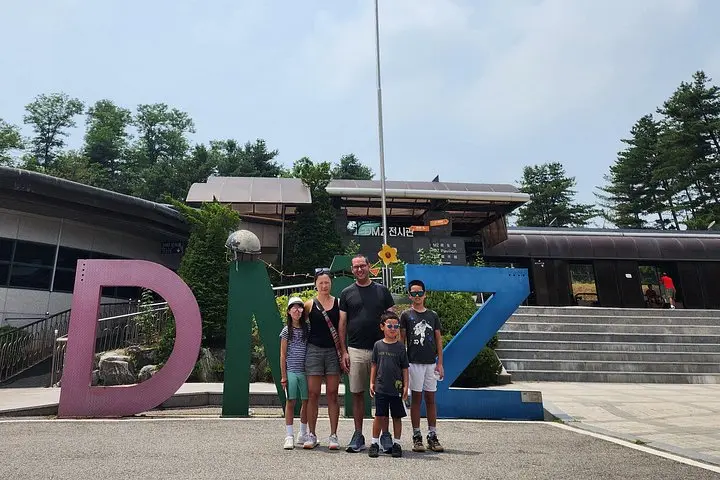
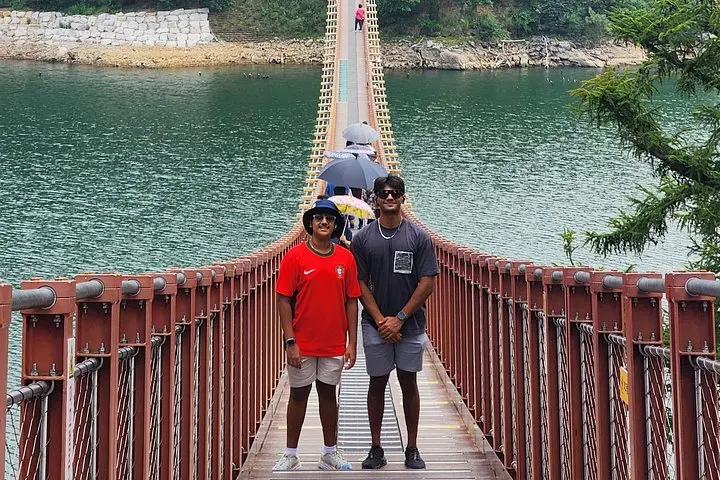
This route threads modern Korean history and the peninsula’s physical geography: the DMZ follows a line fixed at the 1953 armistice, carving through low mountains and agricultural plains. The tour stitches together human stories—refugee memorials at Imjingak, the Third Tunnel’s narrow concrete throat, and the Dora Observatory’s binoculars trained on Kaesong and distant rooftops. Culture appears in small, local touches—bean-based sweets in the Unification Village and mountain-side snacks at Gamaksan, where the Chulleong suspension bridge adds a brisk, camera-ready thrill.
The itinerary is practical: expect guided entry to the Third Tunnel, a transparent-floor crystal cable car that crosses the Civilian Control Line (about 850 meters), and roughly 9–10 hours round-trip with hotel pickup and drop-off in Seoul. Security checks, ID and modest walking—including a light hike on Gamaksan—are standard. Bring your passport, dress in layers for wind and shade, and plan for limited connectivity at times. Guides handle admissions and local logistics, so focus on observing, asking informed questions, and leaving no trace—this is a politically sensitive landscape as much as a historical one.
Yes—valid government-issued ID or passport is required for all visitors and will be checked at security checkpoints.
Yes, the transparent-floor (crystal) cable car ride across the Imjin River is included in this private tour with no additional charge.
Photography is allowed at most stops, but some zones have restrictions; follow your guide’s instructions and posted signage to avoid prohibited areas.
This tour is not recommended for pregnant travelers or people with serious cardiovascular conditions due to security screening and physically confined spaces like the tunnel.
Youus Tours Korea operates guided outdoor trips and adventures with an emphasis on safety, stewardship, and memorable experiences.

The morning air in northern Gyeonggi carries a different weight—steel-gray roads give way to guarded checkpoints and the low, steady hum of an air-conditioned van rolling toward the Demilitarized Zone. By midmorning you stand at Imjingak, among war relics and the Bridge of Freedom, the landscape alternating between folded hills and the slow, deliberate current of the Imjin River daring you to look across.
The morning air in northern Gyeonggi carries a different weight—steel-gray roads give way to guarded checkpoints and the low, steady hum of an air-conditioned van rolling toward the Demilitarized Zone. By midmorning you stand at Imjingak, among war relics and the Bridge of Freedom, the landscape alternating between folded hills and the slow, deliberate current of the Imjin River daring you to look across.
This route threads modern Korean history and the peninsula’s physical geography: the DMZ follows a line fixed at the 1953 armistice, carving through low mountains and agricultural plains. The tour stitches together human stories—refugee memorials at Imjingak, the Third Tunnel’s narrow concrete throat, and the Dora Observatory’s binoculars trained on Kaesong and distant rooftops. Culture appears in small, local touches—bean-based sweets in the Unification Village and mountain-side snacks at Gamaksan, where the Chulleong suspension bridge adds a brisk, camera-ready thrill.
The itinerary is practical: expect guided entry to the Third Tunnel, a transparent-floor crystal cable car that crosses the Civilian Control Line (about 850 meters), and roughly 9–10 hours round-trip with hotel pickup and drop-off in Seoul. Security checks, ID and modest walking—including a light hike on Gamaksan—are standard. Bring your passport, dress in layers for wind and shade, and plan for limited connectivity at times. Guides handle admissions and local logistics, so focus on observing, asking informed questions, and leaving no trace—this is a politically sensitive landscape as much as a historical one.