THE ADVENTURE COLLECTIVE® · Independent discovery and booking for outdoor travel

A compact, small-group day tour from Glasgow that threads ancient standing stones, Clan Campbell history at Inveraray, and the ruined drama of Kilchurn Castle along the lochs and glens of the western Highlands. Ideal for travelers who want deep history without a long drive.
A compact, small-group day tour from Glasgow that threads ancient standing stones, Clan Campbell history at Inveraray, and the ruined drama of Kilchurn Castle along the lochs and glens of the western Highlands. Ideal for travelers who want deep history without a long drive.
The van slips out of Glasgow just after dawn, streetlights folding back into the rearview as hills appear on the horizon. You feel the city unwind: ten people in an eight-seat minibus, a guide with a map of stories, and the road that climbs toward Loch Lomond. By the time the bus curves around the loch the air has a clean edge and the first views of water and ruin demand attention.
Verified experiences and guided adventures in the surrounding area.
Operated by Experience Scotland's Wild · Glasgow, Scotland
The van slips out of Glasgow just after dawn, streetlights folding back into the rearview as hills appear on the horizon. You feel the city unwind: ten people in an eight-seat minibus, a guide with a map of stories, and the road that climbs toward Loch Lomond. By the time the bus curves around the loch the air has a clean edge and the first views of water and ruin demand attention.
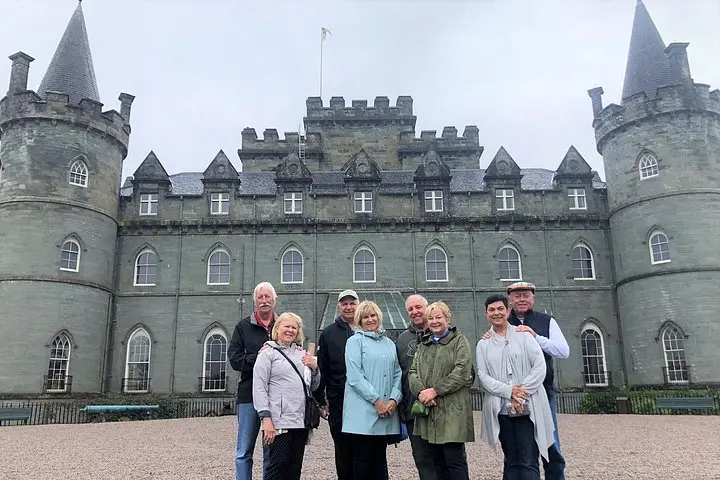
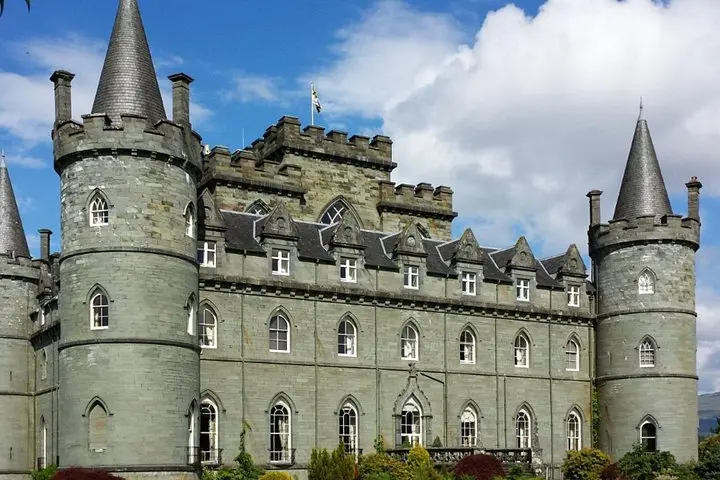
This is a day made of contrasting eras. Clan Campbell's Inveraray Castle, with its neat Georgian façade and 16-acre gardens, sits like a statement of recorded history—armour and rifles that hint at civil wars and Jacobite strife. Hours later you’ll stand beside rock art and a ring of stones older than written time: cup-and-ring markings and burial cairns that date back roughly 5,000 years, when coastal peoples of the Neolithic and Bronze Age marked the landscape with carved stone.
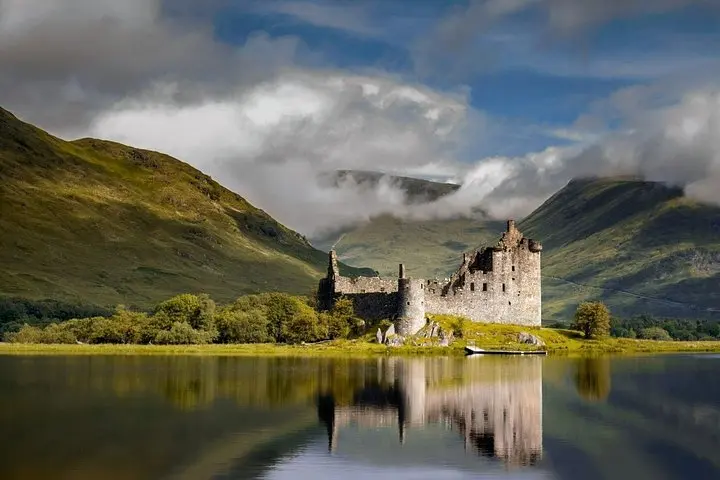
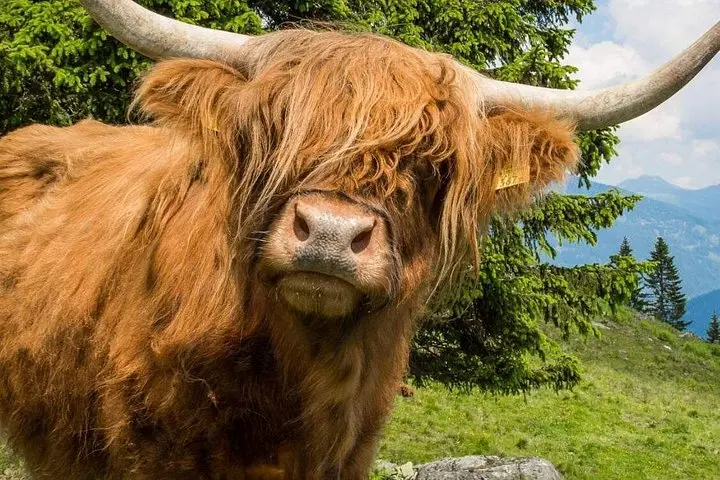
Geology explains the horizontals and the drama. The Highlands rise where ancient bedrock buckled and glaciers carved deep lochs; freshwater seas retreated and left ribboned valleys. Kilchurn Castle, ruined and leaning into Loch Awe, reads like a cross-section of that history: medieval fortress, later garrison, then a structure struck by lightning and time. The white-faced Highland cows you pass are as much a part of the scene as the basalt ribs and glacial corries.
Culturally the day moves from clan politics to local lore. Dunadd Fort’s carved footprints recall Dal Riata kingship and maritime links to Ireland. In small towns like Luss and Tarbet you’ll see both Victorian visitor culture and the rural economy that endures—sheep, small boats, stone cottages.
Practicalities matter on a nine-hour loop. The tour meets at Buchanan Bus Station, Glasgow—check-in 07:45 for an 08:00 departure—and keeps groups intentionally small (maximum eight). Expect several short walks: gravel paths to castle ruins, a field approach to standing stones, and modest elevation changes. Inveraray Castle interior may be closed in low season (closed 1 Nov–31 Mar); however, gardens and exteriors are still viewable. The operator runs in all weather, so layers, waterproofs, and sturdy footwear make the trip comfortable.
If you want sharper photos, aim for lake reflections at Kilchurn mid-morning or the long light on Inveraray’s façade later in the afternoon. Carry snacks, but not anything with nuts—minibuses are nut-free zones. Finally, take time to listen: the guide will stitch history and myth into the landscape, but the real story is under your feet—the stone carvings, the castle stones, and the lochs that keep Scotland’s past in motion.
Meet at the taxi rank on the north side of Buchanan Bus Station, Glasgow; check-in is 07:45 for an 08:00 departure.
Tours are for ages 12 and up. Contact the operator if you have younger children to discuss options.
Admissions are generally not included; Inveraray Castle has its own entry fees and may be closed for interior visits from 1 Nov to 31 Mar.
This tour is not suitable for wheelchairs. Contact the operator for alternative accessible options and bespoke arrangements.
There are scheduled stops in towns for food and toilets; bring snacks and water but avoid bringing nuts due to the nut-free policy on vehicles.
For a full refund cancel at least 24 hours before departure. The operator may cancel for safety or insufficient travelers and will notify you in advance.
Experience Scotland's Wild operates guided outdoor trips and adventures with an emphasis on safety, stewardship, and memorable experiences.
The van slips out of Glasgow just after dawn, streetlights folding back into the rearview as hills appear on the horizon. You feel the city unwind: ten people in an eight-seat minibus, a guide with a map of stories, and the road that climbs toward Loch Lomond. By the time the bus curves around the loch the air has a clean edge and the first views of water and ruin demand attention.
The van slips out of Glasgow just after dawn, streetlights folding back into the rearview as hills appear on the horizon. You feel the city unwind: ten people in an eight-seat minibus, a guide with a map of stories, and the road that climbs toward Loch Lomond. By the time the bus curves around the loch the air has a clean edge and the first views of water and ruin demand attention.
This is a day made of contrasting eras. Clan Campbell's Inveraray Castle, with its neat Georgian façade and 16-acre gardens, sits like a statement of recorded history—armour and rifles that hint at civil wars and Jacobite strife. Hours later you’ll stand beside rock art and a ring of stones older than written time: cup-and-ring markings and burial cairns that date back roughly 5,000 years, when coastal peoples of the Neolithic and Bronze Age marked the landscape with carved stone.
Geology explains the horizontals and the drama. The Highlands rise where ancient bedrock buckled and glaciers carved deep lochs; freshwater seas retreated and left ribboned valleys. Kilchurn Castle, ruined and leaning into Loch Awe, reads like a cross-section of that history: medieval fortress, later garrison, then a structure struck by lightning and time. The white-faced Highland cows you pass are as much a part of the scene as the basalt ribs and glacial corries.
Culturally the day moves from clan politics to local lore. Dunadd Fort’s carved footprints recall Dal Riata kingship and maritime links to Ireland. In small towns like Luss and Tarbet you’ll see both Victorian visitor culture and the rural economy that endures—sheep, small boats, stone cottages.
Practicalities matter on a nine-hour loop. The tour meets at Buchanan Bus Station, Glasgow—check-in 07:45 for an 08:00 departure—and keeps groups intentionally small (maximum eight). Expect several short walks: gravel paths to castle ruins, a field approach to standing stones, and modest elevation changes. Inveraray Castle interior may be closed in low season (closed 1 Nov–31 Mar); however, gardens and exteriors are still viewable. The operator runs in all weather, so layers, waterproofs, and sturdy footwear make the trip comfortable.
If you want sharper photos, aim for lake reflections at Kilchurn mid-morning or the long light on Inveraray’s façade later in the afternoon. Carry snacks, but not anything with nuts—minibuses are nut-free zones. Finally, take time to listen: the guide will stitch history and myth into the landscape, but the real story is under your feet—the stone carvings, the castle stones, and the lochs that keep Scotland’s past in motion.