THE ADVENTURE COLLECTIVE® · Independent discovery and booking for outdoor travel

In a single day from Balloch, this small-group tour moves from Loch Lomond’s shores to Kilchurn Castle and 5,000-year-old standing stones. Expect short guided hikes, Clan Campbell history, and sweeping Highland vistas.
In a single day from Balloch, this small-group tour moves from Loch Lomond’s shores to Kilchurn Castle and 5,000-year-old standing stones. Expect short guided hikes, Clan Campbell history, and sweeping Highland vistas.
Morning mist lifts off Loch Lomond as the minibus eases out of Balloch, and the guide’s voice threads local legend into the road map. In eight hours you travel from the parkland edges of Loch Lomond into the wind-carved geometry of the western Highlands: a compact loop of history that moves from clan strongholds to Bronze Age stones and the ruined silhouette of Kilchurn Castle standing guard over Loch Awe.
Verified experiences and guided adventures in the surrounding area.
Operated by Experience Scotland's Wild · Balloch, Scotland
Morning mist lifts off Loch Lomond as the minibus eases out of Balloch, and the guide’s voice threads local legend into the road map. In eight hours you travel from the parkland edges of Loch Lomond into the wind-carved geometry of the western Highlands: a compact loop of history that moves from clan strongholds to Bronze Age stones and the ruined silhouette of Kilchurn Castle standing guard over Loch Awe.
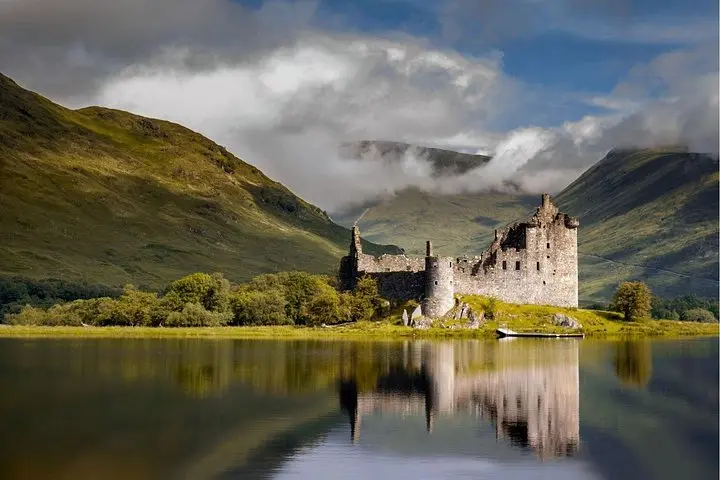
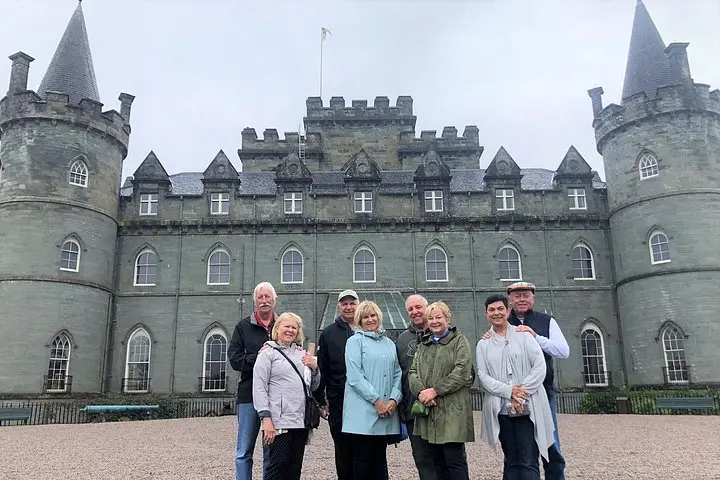
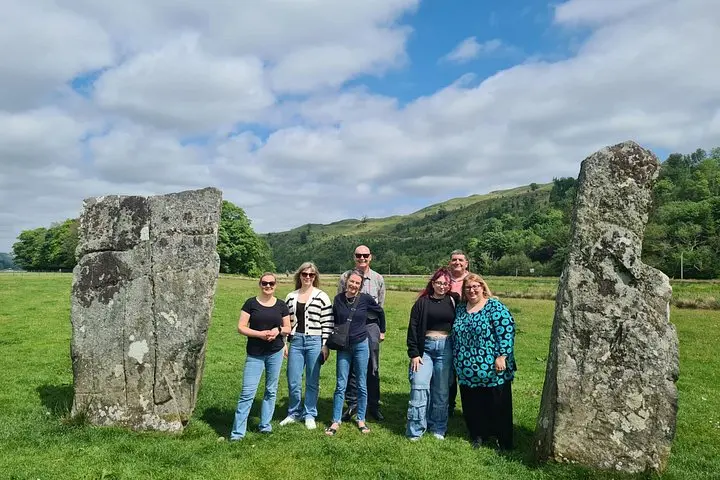
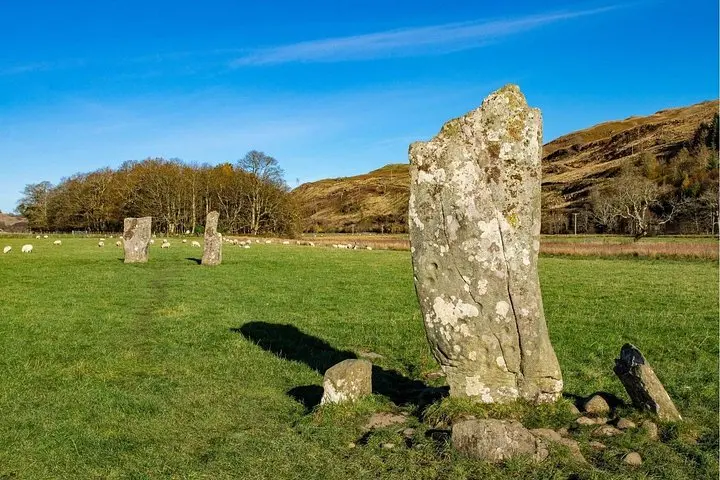
The tour stitches together three distinct chapters of Scottish landscape and culture. Inveraray Castle, a Gothic revival seat of Clan Campbell, introduces 18th–19th century aristocratic life and the clan’s complex role through the Wars of Scottish Independence and the Jacobite era. Further west, the low, deliberate geometry of 5,000-year-old standing stones and burial cairns offers a quieter, older human presence — communities who raised stone circles long before pyramids dominated minds elsewhere. Kilchurn Castle, by contrast, is a ruined military and domestic site repeatedly rebuilt and finally abandoned after a lightning strike; its basalt-and-slate bones read as a ledger of changing Scottish priorities and weather.
Geology here is legible if you know where to look: glacial troughs carved deep lochs, leaving steep-sided valleys and deposits that collected into fertile deltas. The rock underfoot alternates between metamorphic schist and igneous intrusions, which created defensible promontories where castles later sat. Cultural textures remain vivid — Highland cattle graze field margins while Gaelic place-names linger on maps and road signs.
Practical notes are simple and decisive. The tour departs from the VisitScotland Information Centre in Balloch; the group is intentionally small (maximum eight), which keeps stops efficient and walking sections intimate. Expect several short guided hikes—uneven ground and a few rocky approaches—so wear sturdy footwear and waterproof outer layers. Admission to Inveraray’s interior and gardens may be separate; check timings with your operator if you plan longer exploration. The operator runs in most weather, so plan for wind and rain even on sunny mornings.
Timing and logistics favor photographers and slow walkers: early light on Loch Awe sharpens Kilchurn’s reflection; Luss offers sheltered lochfront viewpoints for detail shots and quick cultural immersion. Respect heritage sites by staying on marked paths around standing stones and cairns; peat and archeological soils are fragile. The guide’s storytelling ties these places together — from clan politics to Neolithic ritual — while the landscape insists on its own pace: wind, water and stone daring you to pay attention.
If you’re after a single-day, high-density primer on Highland history and geology with short walks, small groups and approachable logistics, this Balloch-based tour delivers a layered, walkable portrait of western Scotland.
Meet at the VisitScotland Information Centre, Balloch Road (G83 8SS); check-in 15 minutes before departure and look for the van with the Experience Scotland's Wild logo.
Yes—small-group format is family-friendly, but there are short uneven walks; those with limited mobility may find some sites challenging.
Admissions to some interiors or formal gardens may not be included—confirm with the operator and bring cash or card if you plan to enter paid exhibits.
The tour operates in most weather; guides adapt stops and walking times. For full refund, cancel at least 24 hours before departure per the operator policy.
Yes, but the vehicle is a strict nut-free zone due to severe allergies—avoid any nut-containing products.
This itinerary is not fully wheelchair accessible because of uneven surfaces at historic sites; contact the operator for tailored accessible options.
Experience Scotland's Wild operates guided outdoor trips and adventures with an emphasis on safety, stewardship, and memorable experiences.
Morning mist lifts off Loch Lomond as the minibus eases out of Balloch, and the guide’s voice threads local legend into the road map. In eight hours you travel from the parkland edges of Loch Lomond into the wind-carved geometry of the western Highlands: a compact loop of history that moves from clan strongholds to Bronze Age stones and the ruined silhouette of Kilchurn Castle standing guard over Loch Awe.
Morning mist lifts off Loch Lomond as the minibus eases out of Balloch, and the guide’s voice threads local legend into the road map. In eight hours you travel from the parkland edges of Loch Lomond into the wind-carved geometry of the western Highlands: a compact loop of history that moves from clan strongholds to Bronze Age stones and the ruined silhouette of Kilchurn Castle standing guard over Loch Awe.
The tour stitches together three distinct chapters of Scottish landscape and culture. Inveraray Castle, a Gothic revival seat of Clan Campbell, introduces 18th–19th century aristocratic life and the clan’s complex role through the Wars of Scottish Independence and the Jacobite era. Further west, the low, deliberate geometry of 5,000-year-old standing stones and burial cairns offers a quieter, older human presence — communities who raised stone circles long before pyramids dominated minds elsewhere. Kilchurn Castle, by contrast, is a ruined military and domestic site repeatedly rebuilt and finally abandoned after a lightning strike; its basalt-and-slate bones read as a ledger of changing Scottish priorities and weather.
Geology here is legible if you know where to look: glacial troughs carved deep lochs, leaving steep-sided valleys and deposits that collected into fertile deltas. The rock underfoot alternates between metamorphic schist and igneous intrusions, which created defensible promontories where castles later sat. Cultural textures remain vivid — Highland cattle graze field margins while Gaelic place-names linger on maps and road signs.
Practical notes are simple and decisive. The tour departs from the VisitScotland Information Centre in Balloch; the group is intentionally small (maximum eight), which keeps stops efficient and walking sections intimate. Expect several short guided hikes—uneven ground and a few rocky approaches—so wear sturdy footwear and waterproof outer layers. Admission to Inveraray’s interior and gardens may be separate; check timings with your operator if you plan longer exploration. The operator runs in most weather, so plan for wind and rain even on sunny mornings.
Timing and logistics favor photographers and slow walkers: early light on Loch Awe sharpens Kilchurn’s reflection; Luss offers sheltered lochfront viewpoints for detail shots and quick cultural immersion. Respect heritage sites by staying on marked paths around standing stones and cairns; peat and archeological soils are fragile. The guide’s storytelling ties these places together — from clan politics to Neolithic ritual — while the landscape insists on its own pace: wind, water and stone daring you to pay attention.
If you’re after a single-day, high-density primer on Highland history and geology with short walks, small groups and approachable logistics, this Balloch-based tour delivers a layered, walkable portrait of western Scotland.