THE ADVENTURE COLLECTIVE® · Independent discovery and booking for outdoor travel

Experience the southern sky from Martinborough in the Wairarapa Dark Sky Reserve. A 90-minute guided session pairs two large telescopes with an astrophysicist and an astrobiologist to teach you the constellations, deep-sky objects and practical observing skills.
Experience the southern sky from Martinborough in the Wairarapa Dark Sky Reserve. A 90-minute guided session pairs two large telescopes with an astrophysicist and an astrobiologist to teach you the constellations, deep-sky objects and practical observing skills.
The night arrives over the Wairarapa with a cool, dry clarity that makes the southern sky feel within reach. On the lawn by the Moon Garden, blankets and jackets line the gravel as hosts set up two 16" telescopes; the Milky Way folds overhead and satellites stitch slow, bright trails across it. An astrophysicist and an astrobiologist move between viewers, pointing laser-guided constellations and answering persistent questions about planets, nebulae and the mechanics of night.
Verified experiences and guided adventures in the surrounding area.
Operated by Star Safari · Martinborough, Wellington Region
The night arrives over the Wairarapa with a cool, dry clarity that makes the southern sky feel within reach. On the lawn by the Moon Garden, blankets and jackets line the gravel as hosts set up two 16" telescopes; the Milky Way folds overhead and satellites stitch slow, bright trails across it. An astrophysicist and an astrobiologist move between viewers, pointing laser-guided constellations and answering persistent questions about planets, nebulae and the mechanics of night.
Martinborough sits on the edge of the Wairarapa International Dark Sky Reserve, one of the southern hemisphere’s clearest urban-adjacent skyscapes. The geology here is low rolling plains drained toward Palliser Bay; the lack of heavy industry and strict lighting controls help preserve long views of the cosmos. Locally, winegrowers and Māori settler history shape the small-town rhythms—visit during the day to sample vineyards, then return at night when the sky becomes the main attraction.
Expect a 90-minute guided session that blends hands-on telescope viewing, binocular observing and an e-astronomy VR option if clouds close in. Sessions run for groups up to ten; telescopes are manual so hosts will coach beginners and accommodate experienced observers with observing lists.
Practical tips: dress in insulated layers, bring a headlamp with a red filter, and arrive early to acclimatize your eyes. Weather-dependent cancellations are standard; if clouds block the sky, the hosts will switch to planetarium software and VR so the learning continues. For photographers, discuss tripod placement ahead of time—the site is compact and shared telescope time is prioritized.
If weather prevents live viewing, the experience switches to e-astronomy with planetarium software and VR so you still tour the sky and learn observing skills.
Yes—children 15 and younger are free (max two per paying adult); the program is family-friendly but dress kids warmly and prepare them for standing and waiting.
Yes—the venue indicates wheelchair accessibility and staff can assist; contact hosts ahead of time for specific arrangements.
Personal gear may be allowed, but space is limited; coordinate with the hosts before arrival to arrange placement and avoid disrupting shared telescope time.
Star Safari operates guided outdoor trips and adventures with an emphasis on safety, stewardship, and memorable experiences.
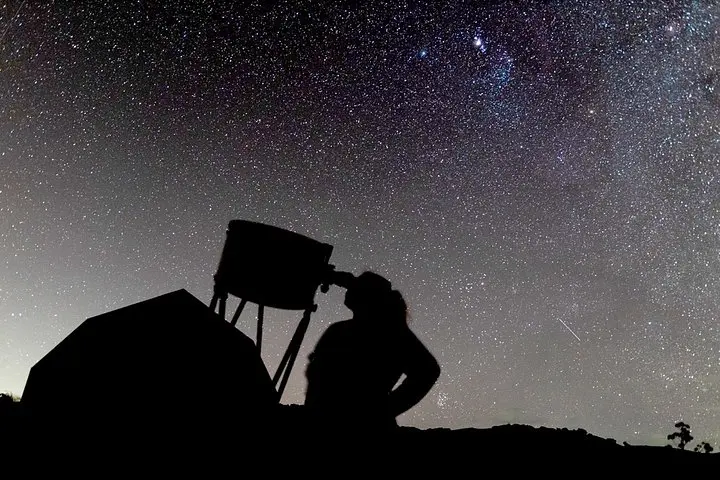
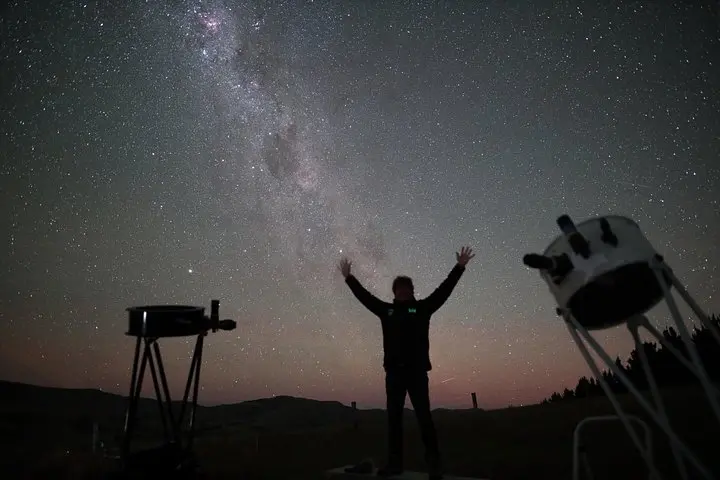
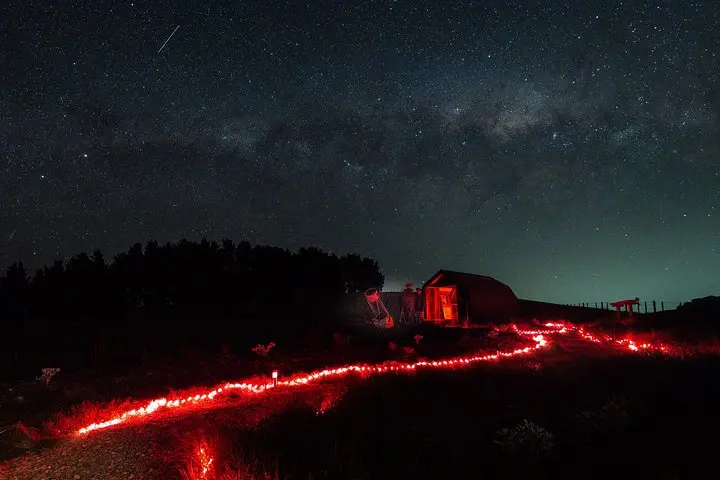
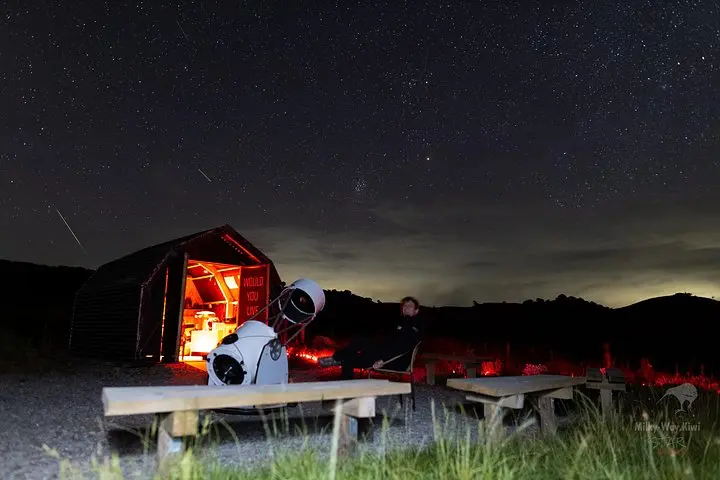
The night arrives over the Wairarapa with a cool, dry clarity that makes the southern sky feel within reach. On the lawn by the Moon Garden, blankets and jackets line the gravel as hosts set up two 16" telescopes; the Milky Way folds overhead and satellites stitch slow, bright trails across it. An astrophysicist and an astrobiologist move between viewers, pointing laser-guided constellations and answering persistent questions about planets, nebulae and the mechanics of night.
The night arrives over the Wairarapa with a cool, dry clarity that makes the southern sky feel within reach. On the lawn by the Moon Garden, blankets and jackets line the gravel as hosts set up two 16" telescopes; the Milky Way folds overhead and satellites stitch slow, bright trails across it. An astrophysicist and an astrobiologist move between viewers, pointing laser-guided constellations and answering persistent questions about planets, nebulae and the mechanics of night.
Martinborough sits on the edge of the Wairarapa International Dark Sky Reserve, one of the southern hemisphere’s clearest urban-adjacent skyscapes. The geology here is low rolling plains drained toward Palliser Bay; the lack of heavy industry and strict lighting controls help preserve long views of the cosmos. Locally, winegrowers and Māori settler history shape the small-town rhythms—visit during the day to sample vineyards, then return at night when the sky becomes the main attraction.
Expect a 90-minute guided session that blends hands-on telescope viewing, binocular observing and an e-astronomy VR option if clouds close in. Sessions run for groups up to ten; telescopes are manual so hosts will coach beginners and accommodate experienced observers with observing lists.
Practical tips: dress in insulated layers, bring a headlamp with a red filter, and arrive early to acclimatize your eyes. Weather-dependent cancellations are standard; if clouds block the sky, the hosts will switch to planetarium software and VR so the learning continues. For photographers, discuss tripod placement ahead of time—the site is compact and shared telescope time is prioritized.