THE ADVENTURE COLLECTIVE® · Independent discovery and booking for outdoor travel

Spend a night under the Milky Way in a private Bedouin cave 12 km into Wadi Rum. This 18‑hour overnight pairs a short 4x4 into desert canyons with an authentic dinner, stargazing, and a simple bed beneath an open sky.
Spend a night under the Milky Way in a private Bedouin cave 12 km into Wadi Rum. This 18‑hour overnight pairs a short 4x4 into desert canyons with an authentic dinner, stargazing, and a simple bed beneath an open sky.
The Jeep eases to a stop and the desert opens like a slow breath. A low red cliff throws its shadow across fine wind-polished sand; above it, the Milky Way is already thickening into a spilled ribbon. You haul your bag into the mouth of a shallow cave and find a low double bed waiting—soft blankets, a small lantern, and the hush of a place that has offered shelter for centuries.
Verified experiences and guided adventures in the surrounding area.
Operated by Wadi Rum Cave Camping · Wadi Rum Village, Aqaba Governorate
The Jeep eases to a stop and the desert opens like a slow breath. A low red cliff throws its shadow across fine wind-polished sand; above it, the Milky Way is already thickening into a spilled ribbon. You haul your bag into the mouth of a shallow cave and find a low double bed waiting—soft blankets, a small lantern, and the hush of a place that has offered shelter for centuries.
This is Wadi Rum, a geological page ripped open by wind and water. The sandstone and granite towers here are the product of deep-time erosion; their faces hold striations and pockets that catch the light at sunset. The Bedouin people have read and responded to this landscape for generations—cave sites were used seasonally for shelter and hospitality long before tourism arrived. The Sunset Lovers Cave, roughly 12 km from Wadi Rum Village, is both a private overnight and a living cultural encounter: dinner by campfire, traditional tea at dusk, and stories of desert life carried on the breeze.
The terrain is straightforward: sandy floor, scattered dunes, and paved only by the tracks of 4x4s and the occasional camel. Elevation change is minimal (under 100 m), but the geology creates cliffs and small ledges that reward cautious exploration. Wildlife is adapted to extremes—foxes and lizards move in the margins, and migratory birds cut the horizon in shoulder seasons.
Practical side: the tour is about 18 hours from meet-up to drop-off. You’ll meet at the Rest House in Wadi Rum Village (8 km past the Visitor Center), then take a 25-minute 4x4 into the heart of the protected area. The stay includes private transport, dinner, snacks, bottled water, tea/coffee, and breakfast. There’s minimal walking required; this is an accessible overnight experience rather than a technical caving trip.
Timing matters. Arrive with a phone signal to confirm pickup and bring a headlamp and warm layers—the desert cools fast after sunset. Respect Bedouin customs: ask before photographing people, accept hospitality with modesty, and leave no trace—this is a fragile protected area.
For photographers, shoot the canyon mouths at golden hour and the bedrock silhouettes at sunset; after dark, the sky is a jewel box—use a wide-angle lens and a stable tripod. If you want quiet and stars, pick a moonless night; if you want warmer evenings, late spring or early fall are ideal.
Starfall Cave Camping is simple by design: a private cave, a bed under open sky, and a chance to sleep with the desert’s cadence. It’s not glamorized glamping or a rugged climb; it’s a deliberate, low-impact way to meet Wadi Rum on its own terms.
The private 4x4 transfer is about 25 minutes into the protected area, roughly 12 km from the village rest house.
Facilities are basic: expect minimal amenities at the cave itself; drinking water and simple overnight comforts are provided.
Yes—this experience is family-friendly and physically easy, though guests with serious spinal problems are not recommended.
You’ll have a bed and blankets; bring thermal sleep layers if you run cold—night temperatures can be low.
Electricity is limited; bring power banks. Some hosts may offer charging but don’t rely on constant access.
This is a private cave booking—your group will have exclusive use of the cave and its immediate camp area for the night.
Wadi Rum Cave Camping operates guided outdoor trips and adventures with an emphasis on safety, stewardship, and memorable experiences.

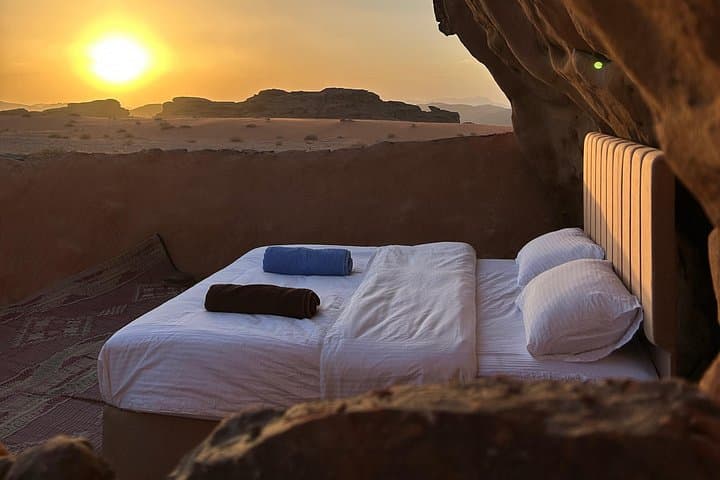


The Jeep eases to a stop and the desert opens like a slow breath. A low red cliff throws its shadow across fine wind-polished sand; above it, the Milky Way is already thickening into a spilled ribbon. You haul your bag into the mouth of a shallow cave and find a low double bed waiting—soft blankets, a small lantern, and the hush of a place that has offered shelter for centuries.
The Jeep eases to a stop and the desert opens like a slow breath. A low red cliff throws its shadow across fine wind-polished sand; above it, the Milky Way is already thickening into a spilled ribbon. You haul your bag into the mouth of a shallow cave and find a low double bed waiting—soft blankets, a small lantern, and the hush of a place that has offered shelter for centuries.
This is Wadi Rum, a geological page ripped open by wind and water. The sandstone and granite towers here are the product of deep-time erosion; their faces hold striations and pockets that catch the light at sunset. The Bedouin people have read and responded to this landscape for generations—cave sites were used seasonally for shelter and hospitality long before tourism arrived. The Sunset Lovers Cave, roughly 12 km from Wadi Rum Village, is both a private overnight and a living cultural encounter: dinner by campfire, traditional tea at dusk, and stories of desert life carried on the breeze.
The terrain is straightforward: sandy floor, scattered dunes, and paved only by the tracks of 4x4s and the occasional camel. Elevation change is minimal (under 100 m), but the geology creates cliffs and small ledges that reward cautious exploration. Wildlife is adapted to extremes—foxes and lizards move in the margins, and migratory birds cut the horizon in shoulder seasons.
Practical side: the tour is about 18 hours from meet-up to drop-off. You’ll meet at the Rest House in Wadi Rum Village (8 km past the Visitor Center), then take a 25-minute 4x4 into the heart of the protected area. The stay includes private transport, dinner, snacks, bottled water, tea/coffee, and breakfast. There’s minimal walking required; this is an accessible overnight experience rather than a technical caving trip.
Timing matters. Arrive with a phone signal to confirm pickup and bring a headlamp and warm layers—the desert cools fast after sunset. Respect Bedouin customs: ask before photographing people, accept hospitality with modesty, and leave no trace—this is a fragile protected area.
For photographers, shoot the canyon mouths at golden hour and the bedrock silhouettes at sunset; after dark, the sky is a jewel box—use a wide-angle lens and a stable tripod. If you want quiet and stars, pick a moonless night; if you want warmer evenings, late spring or early fall are ideal.
Starfall Cave Camping is simple by design: a private cave, a bed under open sky, and a chance to sleep with the desert’s cadence. It’s not glamorized glamping or a rugged climb; it’s a deliberate, low-impact way to meet Wadi Rum on its own terms.