THE ADVENTURE COLLECTIVE® · Independent discovery and booking for outdoor travel

Spend 90–120 minutes under one of the clearest skies in the Canaries—on a guided stargazing tour that uses the Corralejo dunes as dramatic foregrounds for telescopic sights. Practical, accessible, and photographer‑friendly, the sessions highlight planets, clusters, and the Milky Way when conditions allow.
Spend 90–120 minutes under one of the clearest skies in the Canaries—on a guided stargazing tour that uses the Corralejo dunes as dramatic foregrounds for telescopic sights. Practical, accessible, and photographer‑friendly, the sessions highlight planets, clusters, and the Milky Way when conditions allow.
Night falls across the Corralejo sand sea and the dunes begin to take a shape of their own—ridges of pale sand catching the last light while the ocean breathes faintly at the edge. You settle on a provided blanket, telescopes align, and a guide points a laser at constellations that seem to slide into view; the dunes become a dark foreground that makes the Milky Way jump into focus.
Verified experiences and guided adventures in the surrounding area.
Operated by Stars by Night · Corralejo, Las Palmas
Night falls across the Corralejo sand sea and the dunes begin to take a shape of their own—ridges of pale sand catching the last light while the ocean breathes faintly at the edge. You settle on a provided blanket, telescopes align, and a guide points a laser at constellations that seem to slide into view; the dunes become a dark foreground that makes the Milky Way jump into focus.
Geologically, Corralejo’s dunes are wind‑sculpted marine sands that washed off volcanic terraces from Pleistocene eruptions, then migrated inland. The island’s volcanic bones—black lava ridges and low peaks—frame the horizon and remind you this is a young landscape in geological terms. Culturally, northern Fuerteventura has long been a crossroads for fishermen and small farming communities; tonight’s skywatch links those maritime rhythms with classical navigation by stars.
Expect 90–120 minutes on site with telescopes and binoculars provided; the location is a five‑minute walk over loose sand from the meeting point. Guides are accredited by local astrophysics institutes and tailor the session to what’s visible—planets, star clusters, and occasional meteors if luck favors you.
Practical tips: wear windproof layers and closed shoes for sand, bring a red‑light headlamp and water, and arrive early to sync with the guide. Tours can be canceled for bad weather or bright moon phases; check schedules and alternative nearby observation points if mobility is a concern. The experience is low‑impact but leave no trace—these dunes are fragile, and respectful viewing keeps the sky dark for everyone.
Yes—guides bring professional telescopes and binoculars; guests can also use their own cameras and tripods.
The standard Corralejo dune site requires about a five‑minute walk on loose sand; there are alternative observation points with no walking for those with mobility concerns.
Tours are often not scheduled on full‑moon nights because the sky is too bright; excursions may be canceled or rescheduled for bad weather—check the provider’s policy.
Yes—families with children are welcome but small kids should be supervised on dunes and kept warm after sunset.
Stars by Night operates guided outdoor trips and adventures with an emphasis on safety, stewardship, and memorable experiences.
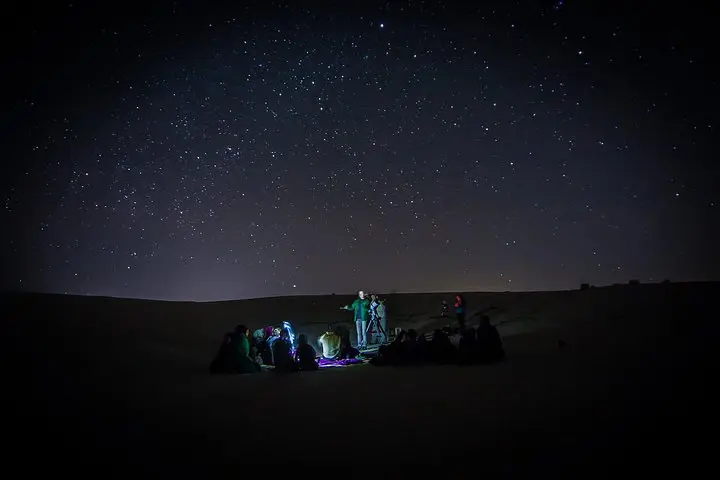
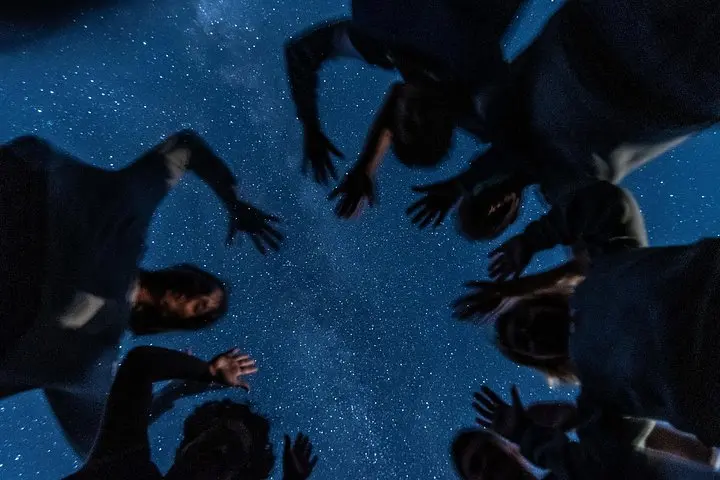
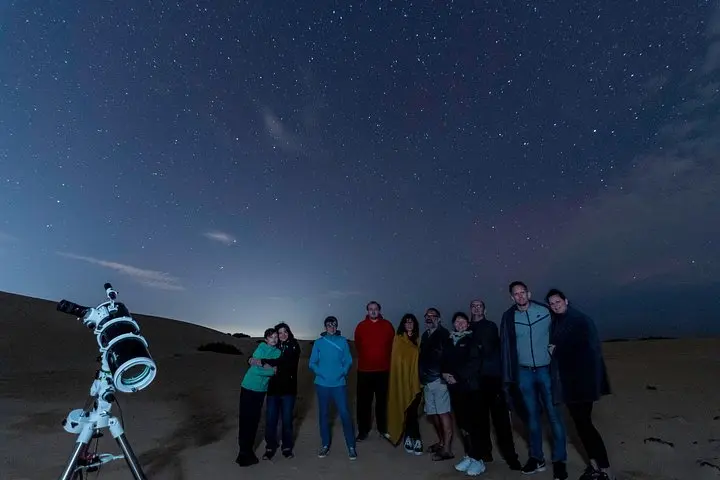
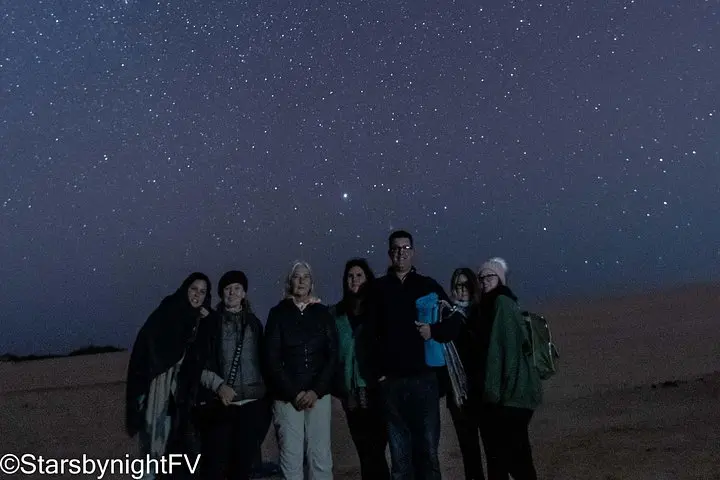
Night falls across the Corralejo sand sea and the dunes begin to take a shape of their own—ridges of pale sand catching the last light while the ocean breathes faintly at the edge. You settle on a provided blanket, telescopes align, and a guide points a laser at constellations that seem to slide into view; the dunes become a dark foreground that makes the Milky Way jump into focus.
Night falls across the Corralejo sand sea and the dunes begin to take a shape of their own—ridges of pale sand catching the last light while the ocean breathes faintly at the edge. You settle on a provided blanket, telescopes align, and a guide points a laser at constellations that seem to slide into view; the dunes become a dark foreground that makes the Milky Way jump into focus.
Geologically, Corralejo’s dunes are wind‑sculpted marine sands that washed off volcanic terraces from Pleistocene eruptions, then migrated inland. The island’s volcanic bones—black lava ridges and low peaks—frame the horizon and remind you this is a young landscape in geological terms. Culturally, northern Fuerteventura has long been a crossroads for fishermen and small farming communities; tonight’s skywatch links those maritime rhythms with classical navigation by stars.
Expect 90–120 minutes on site with telescopes and binoculars provided; the location is a five‑minute walk over loose sand from the meeting point. Guides are accredited by local astrophysics institutes and tailor the session to what’s visible—planets, star clusters, and occasional meteors if luck favors you.
Practical tips: wear windproof layers and closed shoes for sand, bring a red‑light headlamp and water, and arrive early to sync with the guide. Tours can be canceled for bad weather or bright moon phases; check schedules and alternative nearby observation points if mobility is a concern. The experience is low‑impact but leave no trace—these dunes are fragile, and respectful viewing keeps the sky dark for everyone.