THE ADVENTURE COLLECTIVE® · Independent discovery and booking for outdoor travel

Spend an evening under some of the darkest skies on Earth with a guided astronomy tour from San Pedro de Atacama. Learn telescope basics, observe planets and deep-sky objects, and hear how Andean cultures interpreted the heavens.
Spend an evening under some of the darkest skies on Earth with a guided astronomy tour from San Pedro de Atacama. Learn telescope basics, observe planets and deep-sky objects, and hear how Andean cultures interpreted the heavens.
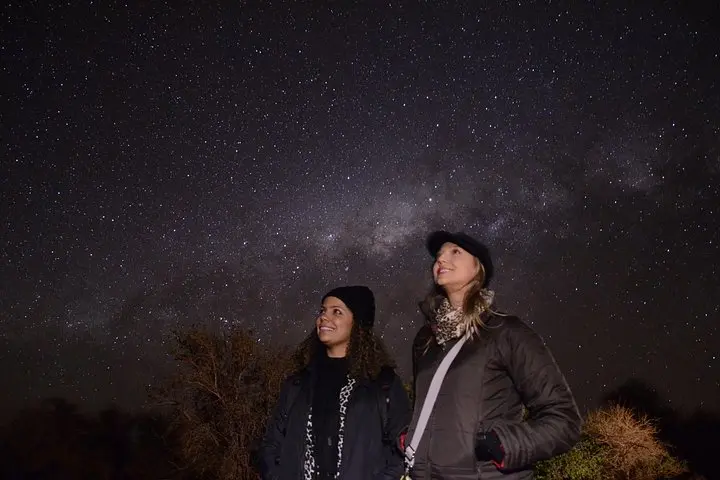
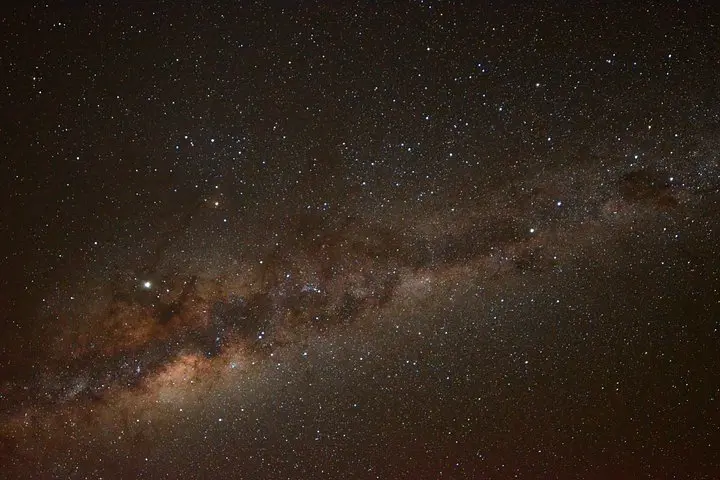
Night descends early over the salt flats and scrub outside San Pedro de Atacama, and the desert exhales a dry, chill air that sharpens the stars into an impossible clarity. Participants board a short drive away from town, spread blankets, and lift their heads as a guide aims a telescope toward the Milky Way — a bright river running overhead that seems to tug the eye.
Verified experiences and guided adventures in the surrounding area.
Operated by Observatorio Etno-Astronomico Licanantay · San Pedro de Atacama, Antofagasta
Night descends early over the salt flats and scrub outside San Pedro de Atacama, and the desert exhales a dry, chill air that sharpens the stars into an impossible clarity. Participants board a short drive away from town, spread blankets, and lift their heads as a guide aims a telescope toward the Milky Way — a bright river running overhead that seems to tug the eye.
The Atacama is one of the driest places on Earth, its thin air and high altitude (San Pedro sits around 2,400 m / 7,900 ft) stripping atmospheric haze and making deep-sky viewing unusually good. Guides typically split the evening between western astronomy — planets, star clusters, nebulae and galaxies visible through telescopes — and indigenous Andean cosmology, explaining how pre-Columbian communities read the sky for seasons and ceremony.
Expect clear, practical commentary rather than lecture: guides point out seasonal constellations, demonstrate telescope use, and time observations to lunar phase. Sessions last about two to two-and-a-half hours and commonly include hot drinks, blankets, and a photo opportunity under the stars.
For planning: check the lunar calendar (a full moon can wash out faint objects), layer clothing for cold desert nights, and bring a headlamp with a red filter for minimal light pollution. The tour is accessible for most fitness levels and offers hotel pickup in San Pedro; rough gravel at viewing sites means steady footwear is advisable. Whether you’re chasing a planetary conjunction or an introduction to sky lore, this is an efficient, outdoors-first way to learn the southern sky.
Most tours include hotel pickup and drive 10–30 minutes outside town to reduce light pollution while keeping travel time short.
Yes—depending on the season and lunar phase you can see the Milky Way clearly and often planets like Jupiter, Saturn or Mars through the guide’s telescope.
The tour is advertised as accessible and suitable for all fitness levels; there may be uneven ground at the site, so contact the operator if mobility is a concern.
Dress in warm layers, bring a red-filter flashlight or headlamp, and carry any necessary medications; avoid bright screens that impair night vision.
Observatorio Etno-Astronomico Licanantay operates guided outdoor trips and adventures with an emphasis on safety, stewardship, and memorable experiences.
Night descends early over the salt flats and scrub outside San Pedro de Atacama, and the desert exhales a dry, chill air that sharpens the stars into an impossible clarity. Participants board a short drive away from town, spread blankets, and lift their heads as a guide aims a telescope toward the Milky Way — a bright river running overhead that seems to tug the eye.
Night descends early over the salt flats and scrub outside San Pedro de Atacama, and the desert exhales a dry, chill air that sharpens the stars into an impossible clarity. Participants board a short drive away from town, spread blankets, and lift their heads as a guide aims a telescope toward the Milky Way — a bright river running overhead that seems to tug the eye.
The Atacama is one of the driest places on Earth, its thin air and high altitude (San Pedro sits around 2,400 m / 7,900 ft) stripping atmospheric haze and making deep-sky viewing unusually good. Guides typically split the evening between western astronomy — planets, star clusters, nebulae and galaxies visible through telescopes — and indigenous Andean cosmology, explaining how pre-Columbian communities read the sky for seasons and ceremony.
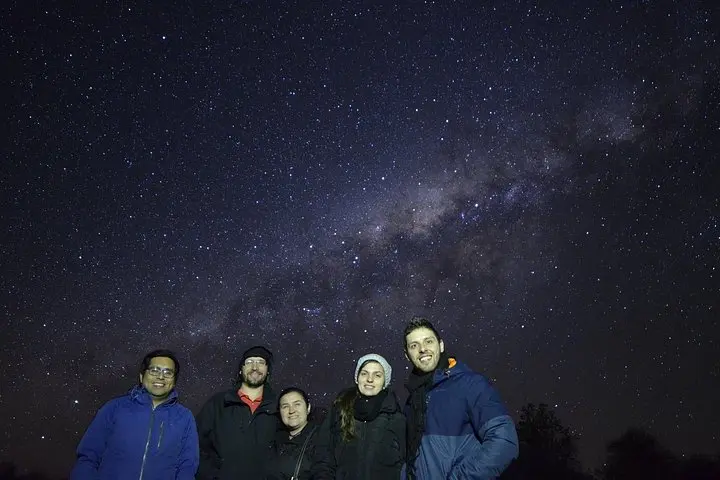
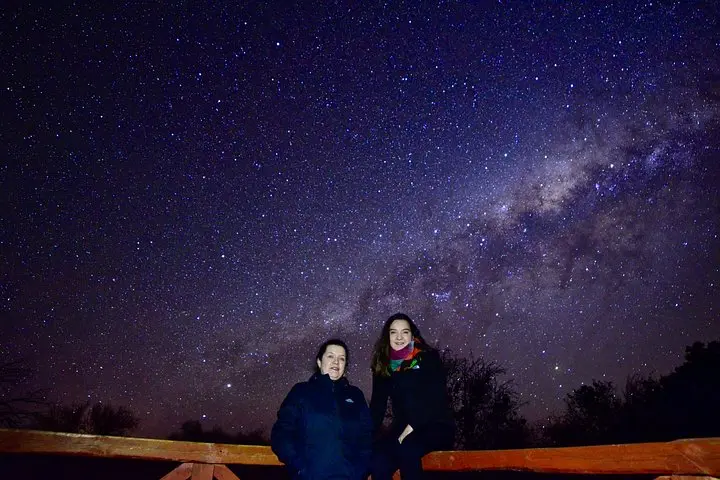
Expect clear, practical commentary rather than lecture: guides point out seasonal constellations, demonstrate telescope use, and time observations to lunar phase. Sessions last about two to two-and-a-half hours and commonly include hot drinks, blankets, and a photo opportunity under the stars.
For planning: check the lunar calendar (a full moon can wash out faint objects), layer clothing for cold desert nights, and bring a headlamp with a red filter for minimal light pollution. The tour is accessible for most fitness levels and offers hotel pickup in San Pedro; rough gravel at viewing sites means steady footwear is advisable. Whether you’re chasing a planetary conjunction or an introduction to sky lore, this is an efficient, outdoors-first way to learn the southern sky.