THE ADVENTURE COLLECTIVE® · Independent discovery and booking for outdoor travel

Watch the Milky Way spill across the sky and then watch it surrender to a cold, blazing sunrise on the Salar de Uyuni. This private starlight-to-sunrise tour pairs minimal hiking with maximum photographic payoff — and practical comforts like hot drinks and hotel pickup.
Watch the Milky Way spill across the sky and then watch it surrender to a cold, blazing sunrise on the Salar de Uyuni. This private starlight-to-sunrise tour pairs minimal hiking with maximum photographic payoff — and practical comforts like hot drinks and hotel pickup.
The sky above the Salar de Uyuni feels like a low ceiling you can lean against — an unbroken dome of stars that seems to press down and reward you for looking up. On this private starlight-and-sunrise run you ride out from Uyuni in an air-conditioned vehicle at dusk, sip hot tea as constellations arc overhead, and wait on the white that will ignite with the first light.
Verified experiences and guided adventures in the surrounding area.
Operated by Joker Expedition, Bolivia. · Uyuni, Potosí
The sky above the Salar de Uyuni feels like a low ceiling you can lean against — an unbroken dome of stars that seems to press down and reward you for looking up. On this private starlight-and-sunrise run you ride out from Uyuni in an air-conditioned vehicle at dusk, sip hot tea as constellations arc overhead, and wait on the white that will ignite with the first light.
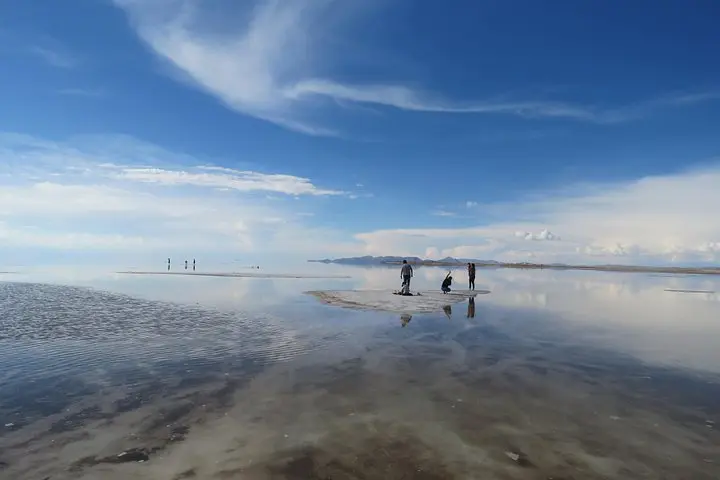
Geologically the salar is a relic: a giant evaporated basin left by prehistoric lakes, now a hard crust of salt that stretches to the horizon. Culturally the flats sit at the crossroads of Aymara and Quechua highland life; nearby communities harvest salt and maintain llama and alpaca herds. The tour often threads past the surreal Train Cemetery and the cactus-dotted mound of Incahuasi, reminders of human stories etched into a stark landscape.
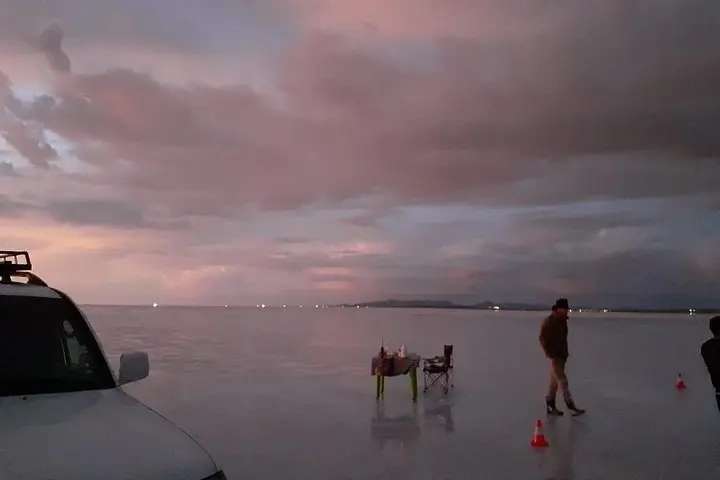
Practical notes: the trip runs about 4–5 hours with private hotel pickup (many operators list a 3:00 AM pickup). Altitude sits above 3,600 m — mild acclimatization reduces headaches. Temperatures swing widely; nights are cold and mornings breezy. Drivers know where to park for unobstructed views and will serve hot drinks while you wait for the Milky Way to dip and for sunrise to burn into the salt.
Expect minimal walking, easy terrain on compact salt, and excellent photo opportunities; bring a tripod, warm layers, sun protection, and plenty of water. Operators commonly permit cancellations up to 24 hours before departure and accommodate small private groups. For first-timers, plan on extra rest the day before and treat the salar with care — the surface is fragile where wet and vehicles should stick to established tracks.
Yes — on clear nights away from artificial light you can see the Milky Way vividly; visibility depends on lunar phase and weather.
The salar sits above 3,500–3,700 m; mild altitude symptoms are common — drink water, rest beforehand, and inform the operator of concerns.
Operators typically pick up around 3:00 AM with a 4–5 hour window covering stargazing and sunrise return.
Facilities are limited; operators usually plan short stops at basic facilities before or after the salar visit — bring hand sanitizer and be prepared for minimal services.
Joker Expedition, Bolivia. operates guided outdoor trips and adventures with an emphasis on safety, stewardship, and memorable experiences.
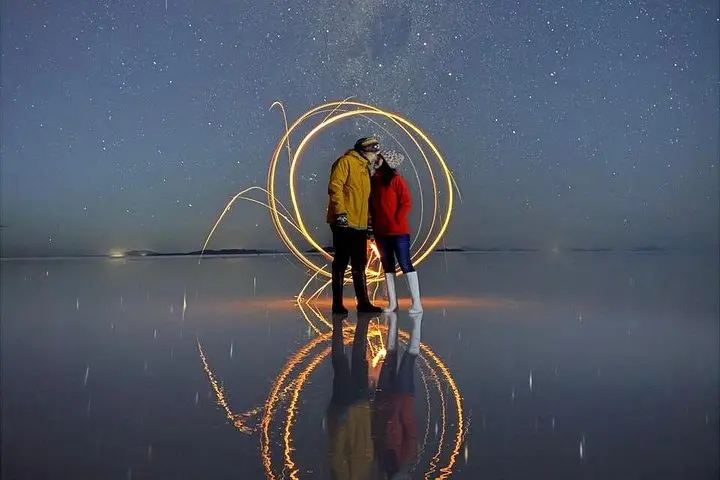
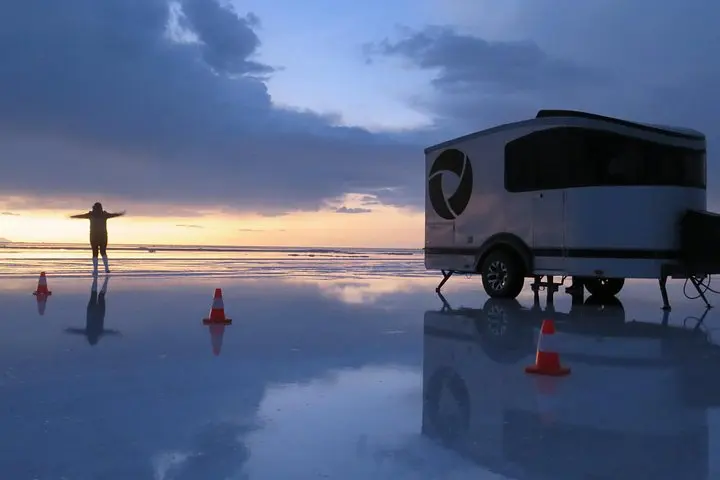
The sky above the Salar de Uyuni feels like a low ceiling you can lean against — an unbroken dome of stars that seems to press down and reward you for looking up. On this private starlight-and-sunrise run you ride out from Uyuni in an air-conditioned vehicle at dusk, sip hot tea as constellations arc overhead, and wait on the white that will ignite with the first light.
The sky above the Salar de Uyuni feels like a low ceiling you can lean against — an unbroken dome of stars that seems to press down and reward you for looking up. On this private starlight-and-sunrise run you ride out from Uyuni in an air-conditioned vehicle at dusk, sip hot tea as constellations arc overhead, and wait on the white that will ignite with the first light.
Geologically the salar is a relic: a giant evaporated basin left by prehistoric lakes, now a hard crust of salt that stretches to the horizon. Culturally the flats sit at the crossroads of Aymara and Quechua highland life; nearby communities harvest salt and maintain llama and alpaca herds. The tour often threads past the surreal Train Cemetery and the cactus-dotted mound of Incahuasi, reminders of human stories etched into a stark landscape.
Practical notes: the trip runs about 4–5 hours with private hotel pickup (many operators list a 3:00 AM pickup). Altitude sits above 3,600 m — mild acclimatization reduces headaches. Temperatures swing widely; nights are cold and mornings breezy. Drivers know where to park for unobstructed views and will serve hot drinks while you wait for the Milky Way to dip and for sunrise to burn into the salt.
Expect minimal walking, easy terrain on compact salt, and excellent photo opportunities; bring a tripod, warm layers, sun protection, and plenty of water. Operators commonly permit cancellations up to 24 hours before departure and accommodate small private groups. For first-timers, plan on extra rest the day before and treat the salar with care — the surface is fragile where wet and vehicles should stick to established tracks.