THE ADVENTURE COLLECTIVE® · Independent discovery and booking for outdoor travel

Ride a steam-hauled train from Cape Town across Sir Lowry’s Pass to the Elgin Railway Market — a daylong blend of vintage rail romance, fynbos views and farm-to-table food. Here’s how to make the most of the journey.
Ride a steam-hauled train from Cape Town across Sir Lowry’s Pass to the Elgin Railway Market — a daylong blend of vintage rail romance, fynbos views and farm-to-table food. Here’s how to make the most of the journey.
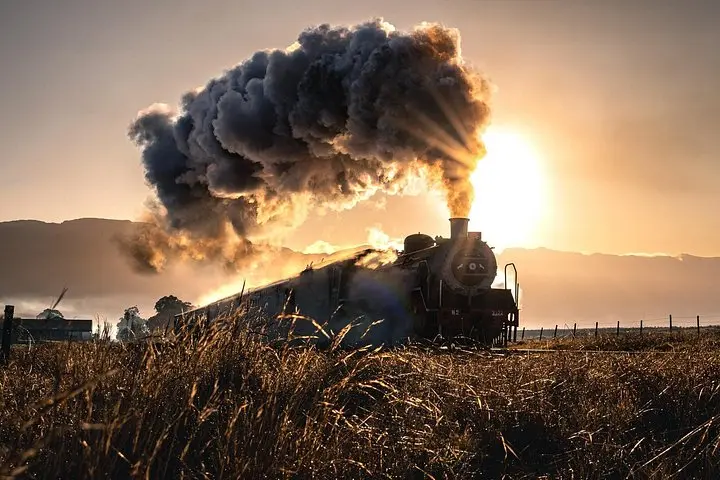
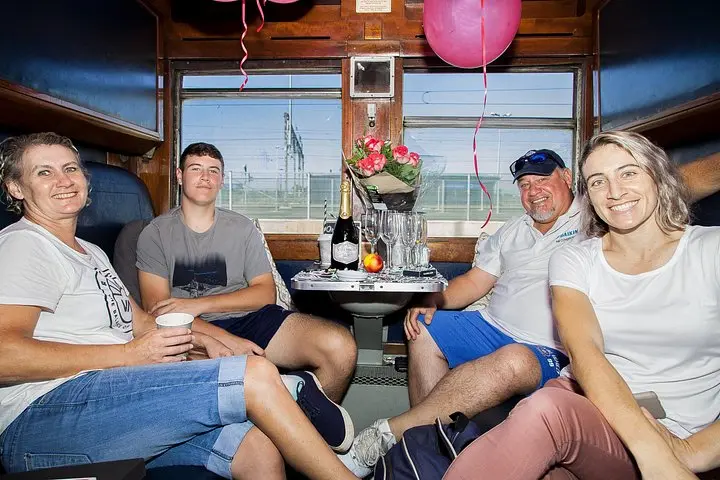
The whistle cuts across the yard like a bell calling people to shore. You step onto the polished wooden carriage and the world outside compresses into a moving frame: Table Mountain slumps into the distance, False Bay flashes silver, and the countryside unfurls into orchards and low mountains as the steam train pulls a slow, deliberate arc toward the Elgin Valley.
Verified experiences and guided adventures in the surrounding area.
Operated by Ceres Rail Company · Grabouw, Western Cape
The whistle cuts across the yard like a bell calling people to shore. You step onto the polished wooden carriage and the world outside compresses into a moving frame: Table Mountain slumps into the distance, False Bay flashes silver, and the countryside unfurls into orchards and low mountains as the steam train pulls a slow, deliberate arc toward the Elgin Valley.
This is not a commuter ride. It’s a deliberate undoing of haste — a steam-hauled pilgrimage through a landscape shaped by geology and fruit-farming. The rails trace an old transport corridor that once hauled apples and pears to Cape Town’s docks; today the same route is a theatrical line through the Cape Fold Belt, climbing toward Sir Lowry’s Pass where granite ridges peer over fynbos-strewn slopes.
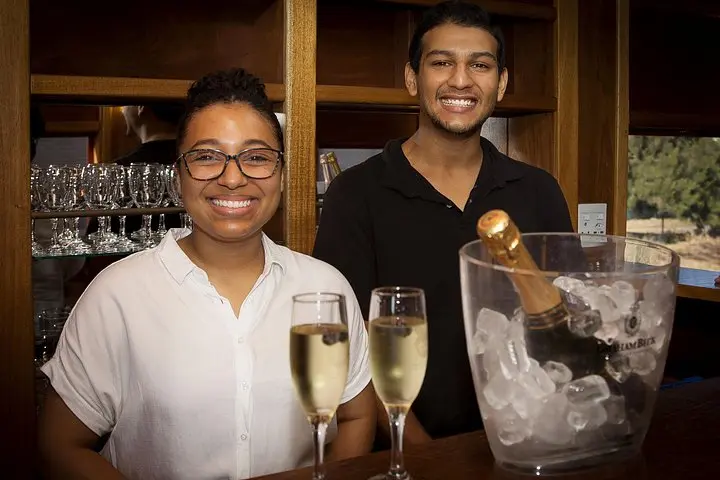
The train itself feels like a character: valves huff, metal breathes, wheels set a steady heartbeat. Passengers drift between the observation car and the bar carriage, trading small talk for long views. As you crest Sir Lowry’s Pass the valley opens, a patchwork of orchards, vineyards and river channels. The sea keeps time on the horizon; Table Mountain stands like a distant landmark you keep meeting in the window.
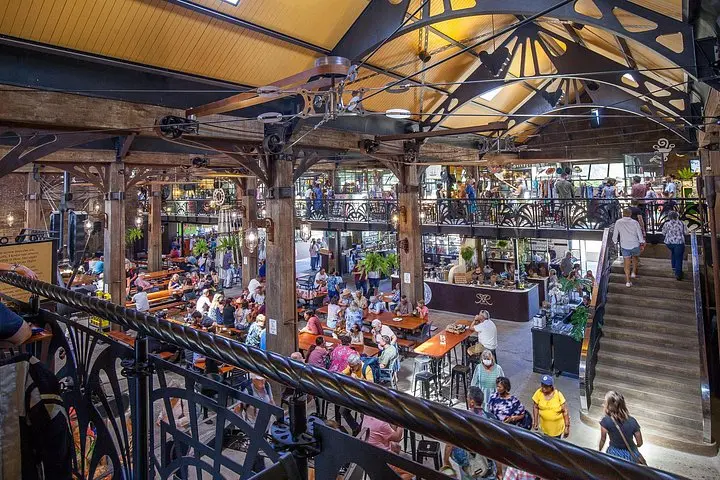
At Elgin Railway Market the mood shifts from travel to local life. The market occupies an art-deco–tinged station warmed by roaring fires in winter and cooled by oversize fans in summer. Vendors lay out charcuterie, farm cheeses, wood-fired breads, seasonal fruit and craft stalls; it’s a compact showcase for the Elgin Valley’s terroir and small-scale makers.
Plan like a traveler who wants to savor time. The round-trip rail journey takes most of the day and includes on-board restrooms and a relaxed schedule that encourages lingering. Mobile tickets are accepted; the meeting point is the rail platform alongside Dockrail Road in Cape Town. Weather can shift quickly over the pass — bring layers and a windproof outer shell. If you’re photographing landscapes, aim for morning or late-afternoon light for the best tonal range.
Cultural notes: the rail line echoes the region’s agricultural history and the Elgin market is part modern artisan hub, part revival of railway heritage. Ecologically the route runs through sensitive fynbos habitat — stick to marked areas at market and don’t feed wildlife. The experience is accessible to most fitness levels; the pleasure comes from sitting back, watching the terrain change, and getting off the train to walk through a market that tastes of place.
Practical: arrive 20–30 minutes early to board, carry a small daypack for purchases, and bring cash for smaller vendors (many accept cards but not all). Whether you come for the steam, the valley, or the food, the trip feels like a slow exhale — a day measured in landscapes and small local flavors rather than miles.
The meeting point is the rail platform running alongside Dockrail Road in Cape Town; the tour returns to the same platform.
Expect a full-day excursion of roughly 6–7 hours round trip, including time at the Elgin Railway Market.
Yes — the train has on-board restrooms and comfortable seating across multiple carriages.
Yes — infants and small children can ride in prams or strollers; infants must sit on an adult’s lap.
Service animals are allowed; general pets are not specified—check with the operator in advance if you need clarification.
You can cancel for a full refund if you cancel at least 24 hours before departure; cancellations within 24 hours are non-refundable.
Ceres Rail Company operates guided outdoor trips and adventures with an emphasis on safety, stewardship, and memorable experiences.
The whistle cuts across the yard like a bell calling people to shore. You step onto the polished wooden carriage and the world outside compresses into a moving frame: Table Mountain slumps into the distance, False Bay flashes silver, and the countryside unfurls into orchards and low mountains as the steam train pulls a slow, deliberate arc toward the Elgin Valley.
The whistle cuts across the yard like a bell calling people to shore. You step onto the polished wooden carriage and the world outside compresses into a moving frame: Table Mountain slumps into the distance, False Bay flashes silver, and the countryside unfurls into orchards and low mountains as the steam train pulls a slow, deliberate arc toward the Elgin Valley.
This is not a commuter ride. It’s a deliberate undoing of haste — a steam-hauled pilgrimage through a landscape shaped by geology and fruit-farming. The rails trace an old transport corridor that once hauled apples and pears to Cape Town’s docks; today the same route is a theatrical line through the Cape Fold Belt, climbing toward Sir Lowry’s Pass where granite ridges peer over fynbos-strewn slopes.
The train itself feels like a character: valves huff, metal breathes, wheels set a steady heartbeat. Passengers drift between the observation car and the bar carriage, trading small talk for long views. As you crest Sir Lowry’s Pass the valley opens, a patchwork of orchards, vineyards and river channels. The sea keeps time on the horizon; Table Mountain stands like a distant landmark you keep meeting in the window.
At Elgin Railway Market the mood shifts from travel to local life. The market occupies an art-deco–tinged station warmed by roaring fires in winter and cooled by oversize fans in summer. Vendors lay out charcuterie, farm cheeses, wood-fired breads, seasonal fruit and craft stalls; it’s a compact showcase for the Elgin Valley’s terroir and small-scale makers.
Plan like a traveler who wants to savor time. The round-trip rail journey takes most of the day and includes on-board restrooms and a relaxed schedule that encourages lingering. Mobile tickets are accepted; the meeting point is the rail platform alongside Dockrail Road in Cape Town. Weather can shift quickly over the pass — bring layers and a windproof outer shell. If you’re photographing landscapes, aim for morning or late-afternoon light for the best tonal range.
Cultural notes: the rail line echoes the region’s agricultural history and the Elgin market is part modern artisan hub, part revival of railway heritage. Ecologically the route runs through sensitive fynbos habitat — stick to marked areas at market and don’t feed wildlife. The experience is accessible to most fitness levels; the pleasure comes from sitting back, watching the terrain change, and getting off the train to walk through a market that tastes of place.
Practical: arrive 20–30 minutes early to board, carry a small daypack for purchases, and bring cash for smaller vendors (many accept cards but not all). Whether you come for the steam, the valley, or the food, the trip feels like a slow exhale — a day measured in landscapes and small local flavors rather than miles.