THE ADVENTURE COLLECTIVE® · Independent discovery and booking for outdoor travel

Trade Cape Town traffic for open-air tractor lanes and vineyard views on a hop-on, hop-off Stellenbosch wine safari. Ride through the vines, visit 3–5 estates, and pair tasting room insights with on-the-ground vineyard commentary.
Trade Cape Town traffic for open-air tractor lanes and vineyard views on a hop-on, hop-off Stellenbosch wine safari. Ride through the vines, visit 3–5 estates, and pair tasting room insights with on-the-ground vineyard commentary.
The tractor eases away from the tasting yard with a low, steady rumble; vineyard rows pass like green corridors, and the Simonsberg and Helderberg ridgelines pin the horizon. Air tastes faintly of ferment and sun-warmed earth. This is not a bus tour — it’s an open-air safari that lets you ride the vine roads and step straight into cellar doors.
Verified experiences and guided adventures in the surrounding area.
Operated by City Sightseeing South Africa · Stellenbosch, Western Cape
The tractor eases away from the tasting yard with a low, steady rumble; vineyard rows pass like green corridors, and the Simonsberg and Helderberg ridgelines pin the horizon. Air tastes faintly of ferment and sun-warmed earth. This is not a bus tour — it’s an open-air safari that lets you ride the vine roads and step straight into cellar doors.
Stellenbosch traces its viticultural roots to the 17th century, where Cape Dutch farms established the vineyards that shaped South Africa’s wine identity. Geologically, the valley sits on weathered granite and shale soils that give many estates their mineral lift. The region’s Cape Dutch homesteads and oak-lined streets reflect a layered cultural history: Dutch, Malay and local influences converge in food, architecture and winemaking technique.
On this hop-on, hop-off tractor route you can visit three to five estates at your own pace, joining cellar tours, tasting rooms and casual lunches. Expect farm tracks, short walking sections across gravel and lawns, and panoramic vineyard lookouts rather than steep hikes or technical terrain. Live commentary from a guide covers grape varieties, soil types and estate stories — practical context for what you taste.
Plan for sun, variable winery schedules and moderate walking between tasting stations. Carry water, wear closed-toe shoes for gravel and sensible layers for afternoon breezes. If you’re coming from Cape Town, allow the transfer time in both directions and avoid driving after tastings. The day is built for relaxed discovery: sip deliberately, learn where the flavors come from, and step off the tractor to explore a cellar or linger on a shaded terrace.
The tour includes return transfer from Cape Town, a welcome tasting and hop-on hop-off tractor transport; additional tastings, meals and cellar tours at estates may have extra fees.
Yes—there are pickup options in Stellenbosch; check departure points and times when you book to coordinate your arrival.
You can visit between three and five estates depending on schedules and how long you linger—plan for at least three to allow for a relaxed tasting and possibly a cellar tour.
The open-air tractor can accommodate strollers and is rated easy for most fitness levels, but check accessibility details with the operator if you have specific mobility needs.
City Sightseeing South Africa operates guided outdoor trips and adventures with an emphasis on safety, stewardship, and memorable experiences.
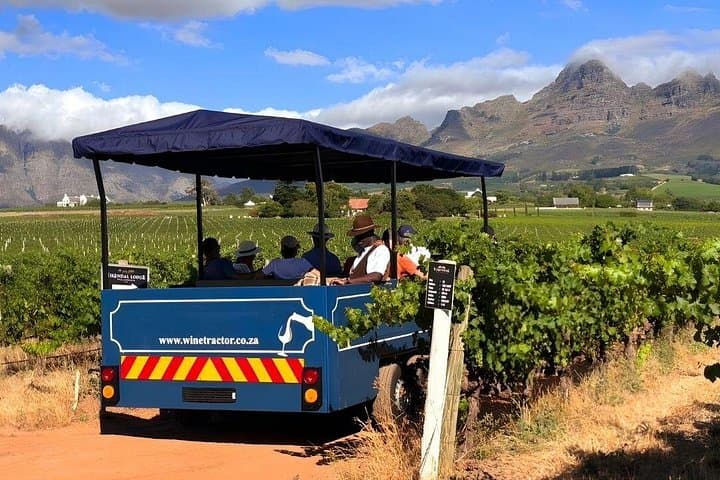
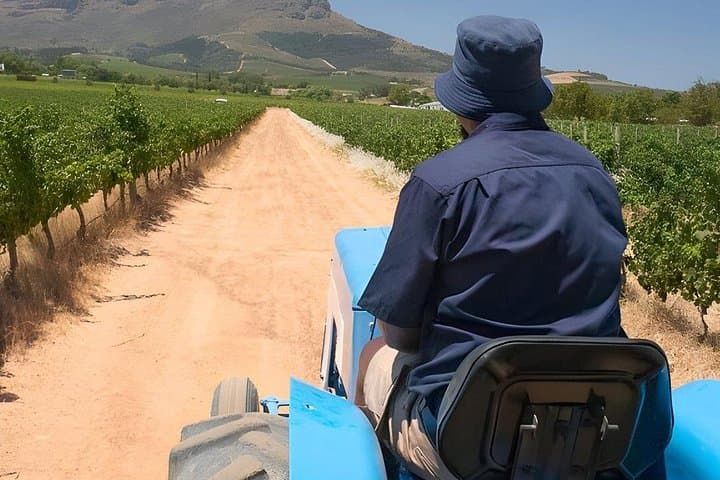
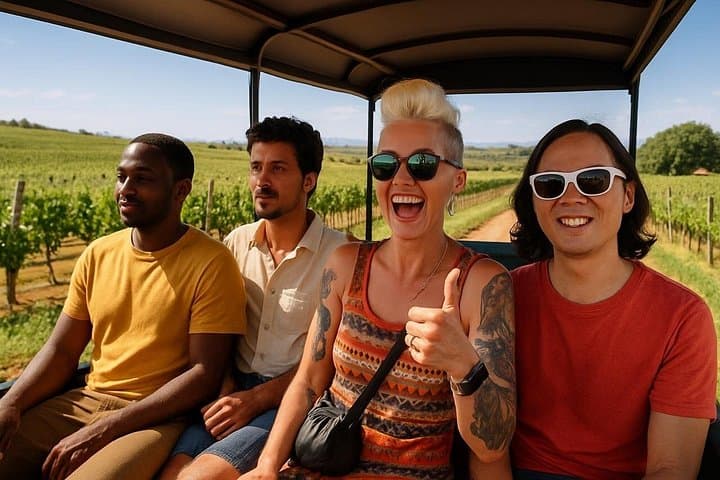
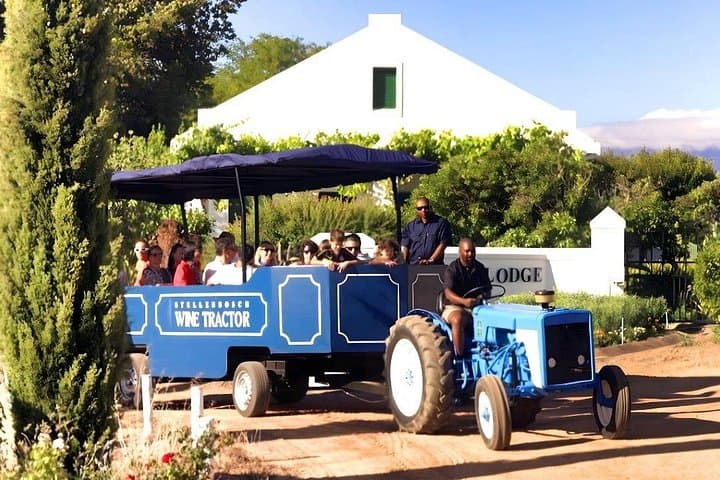
The tractor eases away from the tasting yard with a low, steady rumble; vineyard rows pass like green corridors, and the Simonsberg and Helderberg ridgelines pin the horizon. Air tastes faintly of ferment and sun-warmed earth. This is not a bus tour — it’s an open-air safari that lets you ride the vine roads and step straight into cellar doors.
The tractor eases away from the tasting yard with a low, steady rumble; vineyard rows pass like green corridors, and the Simonsberg and Helderberg ridgelines pin the horizon. Air tastes faintly of ferment and sun-warmed earth. This is not a bus tour — it’s an open-air safari that lets you ride the vine roads and step straight into cellar doors.
Stellenbosch traces its viticultural roots to the 17th century, where Cape Dutch farms established the vineyards that shaped South Africa’s wine identity. Geologically, the valley sits on weathered granite and shale soils that give many estates their mineral lift. The region’s Cape Dutch homesteads and oak-lined streets reflect a layered cultural history: Dutch, Malay and local influences converge in food, architecture and winemaking technique.
On this hop-on, hop-off tractor route you can visit three to five estates at your own pace, joining cellar tours, tasting rooms and casual lunches. Expect farm tracks, short walking sections across gravel and lawns, and panoramic vineyard lookouts rather than steep hikes or technical terrain. Live commentary from a guide covers grape varieties, soil types and estate stories — practical context for what you taste.
Plan for sun, variable winery schedules and moderate walking between tasting stations. Carry water, wear closed-toe shoes for gravel and sensible layers for afternoon breezes. If you’re coming from Cape Town, allow the transfer time in both directions and avoid driving after tastings. The day is built for relaxed discovery: sip deliberately, learn where the flavors come from, and step off the tractor to explore a cellar or linger on a shaded terrace.