THE ADVENTURE COLLECTIVE® · Independent discovery and booking for outdoor travel

Walk the stones where siege stories were made: a two‑hour guided tour on Mont‑Saint‑Michel led by a costumed man‑at‑arms. Expect narrow staircases, ramparts, and first‑hand accounts of the 1434 siege alongside practical tips for timing and footwear.
Walk the stones where siege stories were made: a two‑hour guided tour on Mont‑Saint‑Michel led by a costumed man‑at‑arms. Expect narrow staircases, ramparts, and first‑hand accounts of the 1434 siege alongside practical tips for timing and footwear.
The causeway hums underfoot, gulls wheel above, and your guide—clad in period mail—reads the ramparts like a battlefield map. You step from the exposed flats onto the island’s compact streets; stone stairs rise sharply, towers loom, and the tide of the bay seems to hold the whole place in suspense.
Verified experiences and guided adventures in the surrounding area.
Operated by Epok'Tour · Mont-Saint-Michel, Normandy
The causeway hums underfoot, gulls wheel above, and your guide—clad in period mail—reads the ramparts like a battlefield map. You step from the exposed flats onto the island’s compact streets; stone stairs rise sharply, towers loom, and the tide of the bay seems to hold the whole place in suspense.
This two‑hour immersion centers on the siege of 1434 during the Hundred Years’ War, when Mont‑Saint‑Michel’s fortifications and monastic community resisted English pressure. The island itself is a granite outcrop crowned by a medieval abbey whose construction reflects both religious ambition and strategic necessity. Narrow alleyways funnel wind and voices; salt marshes around the mount, shaped by tidal currents, create wide, flat plains where people and sea meet.
Culturally, the abbey was a pilgrimage hub and a military stronghold—expect stories about monks, local smugglers, and the garrison’s daily routines. Guides in armor replay watchtower drills, point out sling and arrow placements, and lead you through portions of the ramparts and the Porte du Roy.
Practically, the tour is light on distance but heavy on stairs and cobbles—good footwear and steady footing matter. Arrive at the Jerusalem Cross meeting point, consider tide times for dramatic views, and know the island can be windy and exposed. Photography windows are short in crowded seasons, so plan to move deliberately.
This is a walking, historical encounter: tactile, sensory, and immediate—history told where it happened, accessible to most visitors who can manage stairs and uneven stone.
The tour lasts about two hours and covers short distances across cobbled streets with several flights of stairs; it’s more stair‑intensive than distance‑intensive.
Children are welcome, and small strollers can be used in flatter areas, but many sections include stairs where you’ll need to carry a stroller or use infant seats.
Meet in front of the Jerusalem Cross at the foot of the abbey; the guide will be in a 15th‑century man‑at‑arms costume for easy identification.
Admission to the abbey itself is not included with this guided walk; the tour focuses on the ramparts, streets, and external history sites described by the guide.
Epok'Tour operates guided outdoor trips and adventures with an emphasis on safety, stewardship, and memorable experiences.
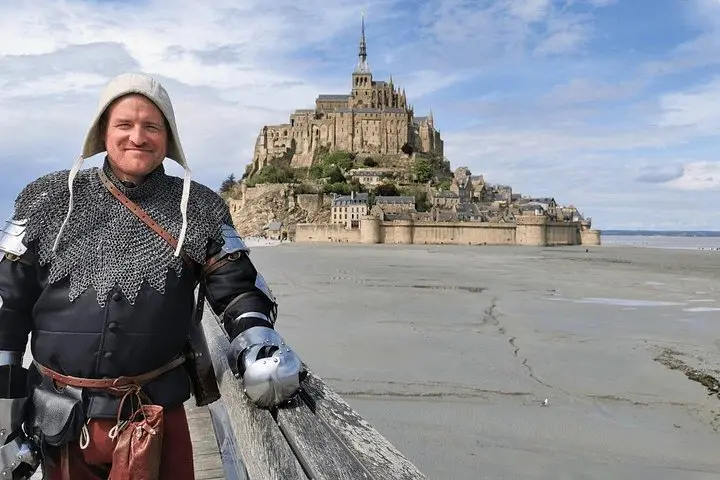
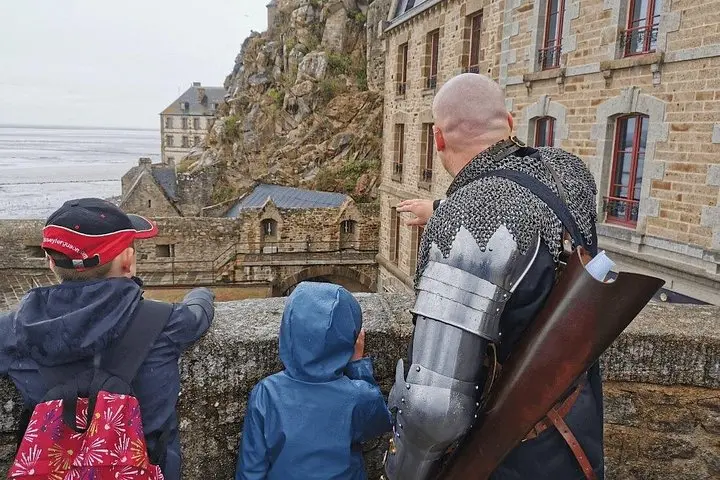
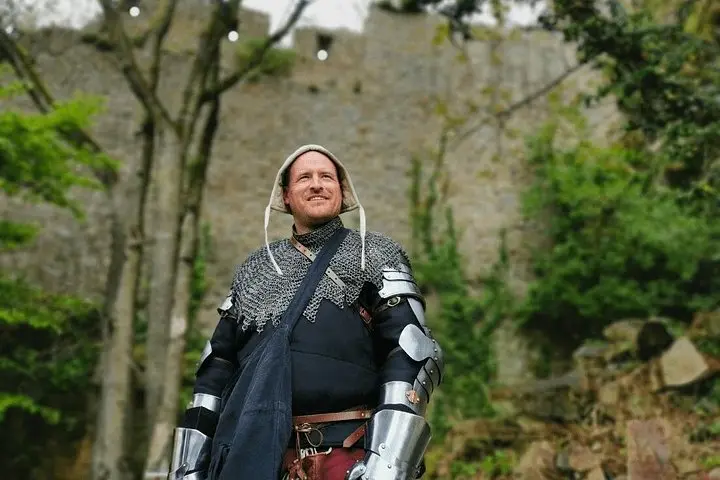
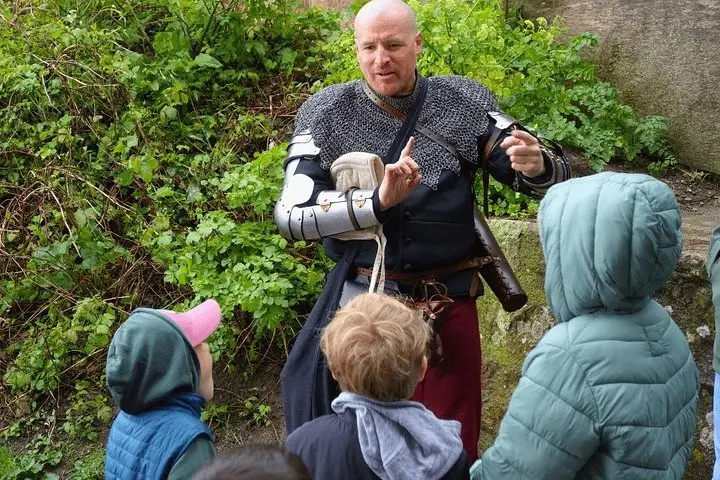
The causeway hums underfoot, gulls wheel above, and your guide—clad in period mail—reads the ramparts like a battlefield map. You step from the exposed flats onto the island’s compact streets; stone stairs rise sharply, towers loom, and the tide of the bay seems to hold the whole place in suspense.
The causeway hums underfoot, gulls wheel above, and your guide—clad in period mail—reads the ramparts like a battlefield map. You step from the exposed flats onto the island’s compact streets; stone stairs rise sharply, towers loom, and the tide of the bay seems to hold the whole place in suspense.
This two‑hour immersion centers on the siege of 1434 during the Hundred Years’ War, when Mont‑Saint‑Michel’s fortifications and monastic community resisted English pressure. The island itself is a granite outcrop crowned by a medieval abbey whose construction reflects both religious ambition and strategic necessity. Narrow alleyways funnel wind and voices; salt marshes around the mount, shaped by tidal currents, create wide, flat plains where people and sea meet.
Culturally, the abbey was a pilgrimage hub and a military stronghold—expect stories about monks, local smugglers, and the garrison’s daily routines. Guides in armor replay watchtower drills, point out sling and arrow placements, and lead you through portions of the ramparts and the Porte du Roy.
Practically, the tour is light on distance but heavy on stairs and cobbles—good footwear and steady footing matter. Arrive at the Jerusalem Cross meeting point, consider tide times for dramatic views, and know the island can be windy and exposed. Photography windows are short in crowded seasons, so plan to move deliberately.
This is a walking, historical encounter: tactile, sensory, and immediate—history told where it happened, accessible to most visitors who can manage stairs and uneven stone.