THE ADVENTURE COLLECTIVE® · Independent discovery and booking for outdoor travel

Lift off over Stockholm’s islands and cross into the inner archipelago on a private 30-minute helicopter circuit that takes you close to Vaxholm Castle. Fast, dramatic, and photo-rich—this flight frames the city’s geography and maritime history from above.
Lift off over Stockholm’s islands and cross into the inner archipelago on a private 30-minute helicopter circuit that takes you close to Vaxholm Castle. Fast, dramatic, and photo-rich—this flight frames the city’s geography and maritime history from above.
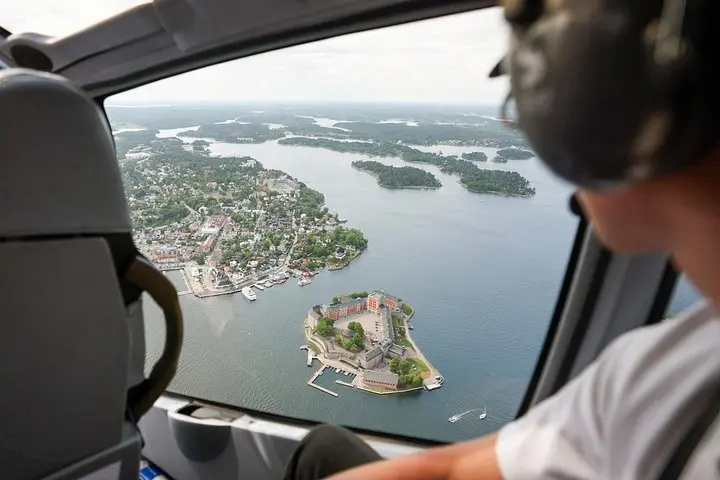
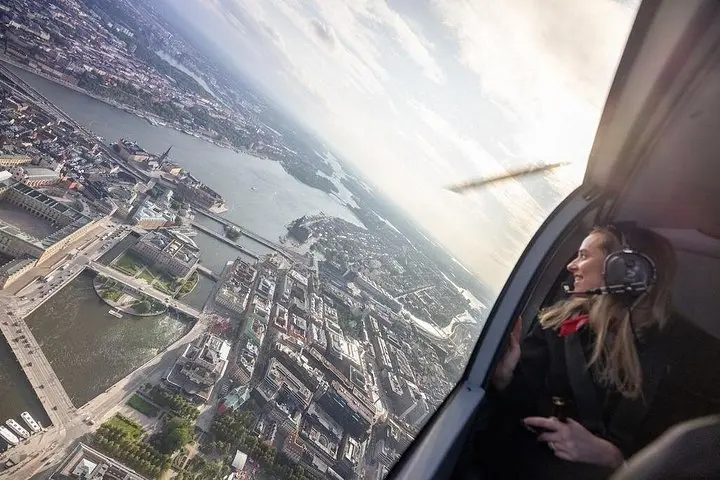
The rotor wash lifts you just above the slate roofs of Stockholm, and the city unravels beneath — narrow channels threading islands, bridges carving clean lines, and the sea pushing light into every inlet. Within minutes the dense urban grid gives way to the archipelago: low rocky skerries, pines clinging to granite, and Vaxholm Castle turning like a watchful crown in the water.
Verified experiences and guided adventures in the surrounding area.
Operated by Fly Over Stockholm · Stockholm, Stockholm County
The rotor wash lifts you just above the slate roofs of Stockholm, and the city unravels beneath — narrow channels threading islands, bridges carving clean lines, and the sea pushing light into every inlet. Within minutes the dense urban grid gives way to the archipelago: low rocky skerries, pines clinging to granite, and Vaxholm Castle turning like a watchful crown in the water.
Stockholm sits where the Baltic meets freshwater rivers, formed by post-glacial rebound that left a scattered collection of islands and deep channels. Vaxholm itself has guarded the approach to the city since the 16th century; its fortress was part of a chain of defenses when timber and tar were the backbone of Sweden’s sea trade. From the helicopter you see both human history — quays, wooden boathouses, the geometry of city planning — and the geology: glacial grooves and bedrock outcrops that shape navigation and settlement.
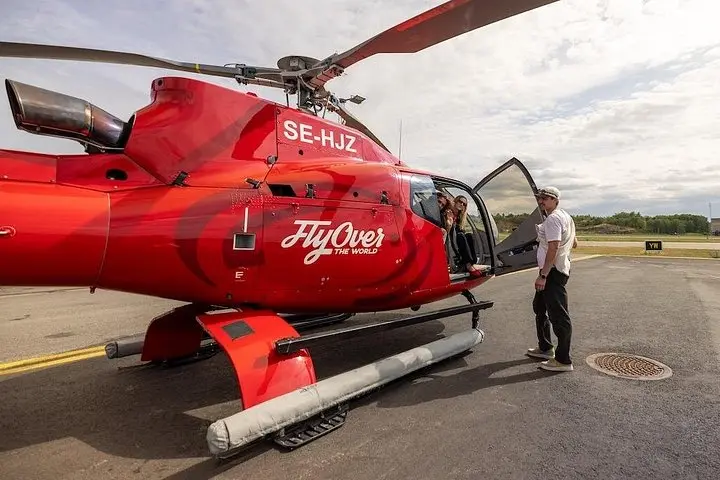
Expect a concise, sensory ride: the advertised 30-minute flight (bookings typically block about 60 minutes for check-in and briefing) focuses on Stockholm’s historic center, Djurgården, and a dramatic circuit over Vaxholm Castle. Photographers should plan lens choices to manage reflections; pilots will point out landmarks but there’s little time for long stops.
Practically, arrive early, bring a securely fastened camera, and wear a windproof layer—the archipelago can feel several degrees colder than the city. Flights can be canceled for weather; operators often require passenger weight info for balance. For a short window you gain a unique survey of Stockholm’s islands, where the sea dares you to remember how connected land and water always were.
The advertised flight time is about 30 minutes; operators typically reserve roughly 60 minutes for check-in, briefing, and boarding.
Yes—booking requires passenger weights for balance and may have age rules for infants; check the operator’s booking questions before confirming.
Flights are often canceled for unsafe weather; most operators offer a full refund or rebooking if the pilot deems conditions unsuitable.
Many providers list accessibility for boarding areas, but helicopter boarding can still require steps; contact the operator with specific needs before booking.
Fly Over Stockholm operates guided outdoor trips and adventures with an emphasis on safety, stewardship, and memorable experiences.
The rotor wash lifts you just above the slate roofs of Stockholm, and the city unravels beneath — narrow channels threading islands, bridges carving clean lines, and the sea pushing light into every inlet. Within minutes the dense urban grid gives way to the archipelago: low rocky skerries, pines clinging to granite, and Vaxholm Castle turning like a watchful crown in the water.
The rotor wash lifts you just above the slate roofs of Stockholm, and the city unravels beneath — narrow channels threading islands, bridges carving clean lines, and the sea pushing light into every inlet. Within minutes the dense urban grid gives way to the archipelago: low rocky skerries, pines clinging to granite, and Vaxholm Castle turning like a watchful crown in the water.
Stockholm sits where the Baltic meets freshwater rivers, formed by post-glacial rebound that left a scattered collection of islands and deep channels. Vaxholm itself has guarded the approach to the city since the 16th century; its fortress was part of a chain of defenses when timber and tar were the backbone of Sweden’s sea trade. From the helicopter you see both human history — quays, wooden boathouses, the geometry of city planning — and the geology: glacial grooves and bedrock outcrops that shape navigation and settlement.
Expect a concise, sensory ride: the advertised 30-minute flight (bookings typically block about 60 minutes for check-in and briefing) focuses on Stockholm’s historic center, Djurgården, and a dramatic circuit over Vaxholm Castle. Photographers should plan lens choices to manage reflections; pilots will point out landmarks but there’s little time for long stops.
Practically, arrive early, bring a securely fastened camera, and wear a windproof layer—the archipelago can feel several degrees colder than the city. Flights can be canceled for weather; operators often require passenger weight info for balance. For a short window you gain a unique survey of Stockholm’s islands, where the sea dares you to remember how connected land and water always were.