THE ADVENTURE COLLECTIVE® · Independent discovery and booking for outdoor travel

Walk Stone Town’s narrow lanes with a local guide and feel the history in carved doors, the House of Wonders and the former slave market. This three-hour tour blends architecture, culture and candid local stories—ideal for first-time visitors looking for context and practical local tips.
Walk Stone Town’s narrow lanes with a local guide and feel the history in carved doors, the House of Wonders and the former slave market. This three-hour tour blends architecture, culture and candid local stories—ideal for first-time visitors looking for context and practical local tips.
The walk begins at the Old Fort, where the sea breeze pushes through narrow alleys and the call to prayer threads the air. Under Mohamed’s guidance you move between carved wooden doors and shaded courtyards, the stones at your feet still warm from the sun, while vendors haggle in the distance and the scent of spices lingers like a constant reminder of history.
Verified experiences and guided adventures in the surrounding area.
Operated by Africa’s Home Tours & Safaris · Zanzibar City, Zanzibar
The walk begins at the Old Fort, where the sea breeze pushes through narrow alleys and the call to prayer threads the air. Under Mohamed’s guidance you move between carved wooden doors and shaded courtyards, the stones at your feet still warm from the sun, while vendors haggle in the distance and the scent of spices lingers like a constant reminder of history.
Stone Town’s streets map centuries of commerce: Omani sultans, Persian merchants and Indian traders all left marks in coral-limestone walls and intricately carved doors. The House of Wonders—once the sultan’s palace and the island’s first electrified building—stands near the Arab Fort and the site of the former slave market, places that narrate Zanzibar’s role in Indian Ocean trade and the slave routes that scarred the region.
Geologically, Stone Town is built on uplifted coral rag and alluvial deposits, the porous rock shaping foundations and streets that drain quickly in the rains. Culturally, the city is a living crossroads: Swahili rhythms, Arabic calligraphy, and Indian textiles meet modern cafés and the plaque marking Freddie Mercury’s birthplace.
Practical guidance: plan for about three hours on foot; wear sturdy shoes for uneven cobbles, bring sun protection and a reusable water bottle—the tour provides a small water bottle but you’ll want more in warm months. Morning or late-afternoon departures avoid the midday heat and deliver better light for photographs. Mohamed’s stories move at a steady pace—have cash handy for small purchases, and allow time after the tour to explore the spice market and the waterfront at Forodhani Gardens.
Meet at the Old Fort near the House of Wonders in Stone Town; the tour starts and finishes at this point.
The operator lists wheelchair accessibility, but some alleys and historic sites have uneven surfaces—contact the provider ahead to confirm suitable routes.
Admission to most landmarks is not included; the itinerary notes sites and brief stops—bring cash for museum entry if you plan to go inside.
Yes—strollers are acceptable and infants may sit on laps, but narrow lanes and crowds can make navigation slow.
Africa’s Home Tours & Safaris operates guided outdoor trips and adventures with an emphasis on safety, stewardship, and memorable experiences.


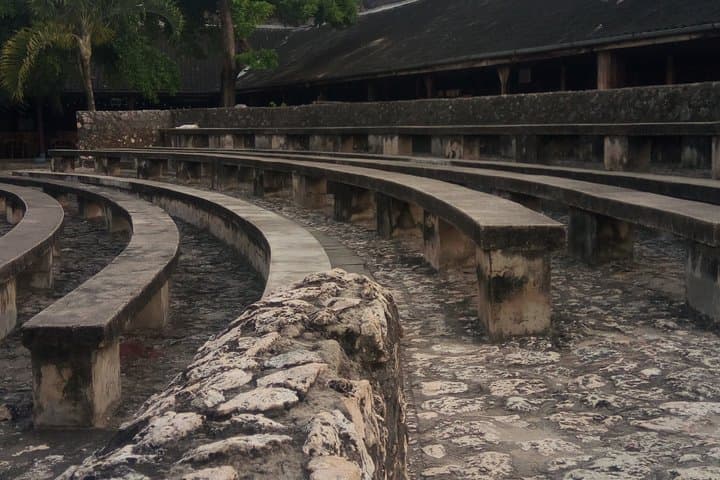

The walk begins at the Old Fort, where the sea breeze pushes through narrow alleys and the call to prayer threads the air. Under Mohamed’s guidance you move between carved wooden doors and shaded courtyards, the stones at your feet still warm from the sun, while vendors haggle in the distance and the scent of spices lingers like a constant reminder of history.
The walk begins at the Old Fort, where the sea breeze pushes through narrow alleys and the call to prayer threads the air. Under Mohamed’s guidance you move between carved wooden doors and shaded courtyards, the stones at your feet still warm from the sun, while vendors haggle in the distance and the scent of spices lingers like a constant reminder of history.
Stone Town’s streets map centuries of commerce: Omani sultans, Persian merchants and Indian traders all left marks in coral-limestone walls and intricately carved doors. The House of Wonders—once the sultan’s palace and the island’s first electrified building—stands near the Arab Fort and the site of the former slave market, places that narrate Zanzibar’s role in Indian Ocean trade and the slave routes that scarred the region.
Geologically, Stone Town is built on uplifted coral rag and alluvial deposits, the porous rock shaping foundations and streets that drain quickly in the rains. Culturally, the city is a living crossroads: Swahili rhythms, Arabic calligraphy, and Indian textiles meet modern cafés and the plaque marking Freddie Mercury’s birthplace.
Practical guidance: plan for about three hours on foot; wear sturdy shoes for uneven cobbles, bring sun protection and a reusable water bottle—the tour provides a small water bottle but you’ll want more in warm months. Morning or late-afternoon departures avoid the midday heat and deliver better light for photographs. Mohamed’s stories move at a steady pace—have cash handy for small purchases, and allow time after the tour to explore the spice market and the waterfront at Forodhani Gardens.