THE ADVENTURE COLLECTIVE® · Independent discovery and booking for outdoor travel

Walk Stone Town’s coral-stone alleys with an accredited guide and see the Old Fort, House of Wonders, Freddie Mercury’s birthplace, and the former slave market in a focused 2–3 hour tour. Expect cobbles, spice stalls, and layered history guided by local storytellers.
Walk Stone Town’s coral-stone alleys with an accredited guide and see the Old Fort, House of Wonders, Freddie Mercury’s birthplace, and the former slave market in a focused 2–3 hour tour. Expect cobbles, spice stalls, and layered history guided by local storytellers.
You step off the ferry into a lane where the ocean breeze pushes through coral-stone alleys and the air smells faintly of cloves and frying fish. The guide waits by the Cape Town Fish Market entry gate; the city hums, doors painted in carved Swahili motifs facing narrow streets that open into sunlit squares.
Verified experiences and guided adventures in the surrounding area.
Operated by Nouman Tour Guide · Stone Town, Zanzibar
You step off the ferry into a lane where the ocean breeze pushes through coral-stone alleys and the air smells faintly of cloves and frying fish. The guide waits by the Cape Town Fish Market entry gate; the city hums, doors painted in carved Swahili motifs facing narrow streets that open into sunlit squares.
Stone Town grew where Indian Ocean trade routes met Omani sultans and African merchants. Buildings of coral rag and lime bear weathered carved doors, evidence of centuries of commerce and cultural blending. The Old Fort and House of Wonders tell stories of 19th-century power; the former’s battlements offer a compact panorama while the latter demonstrates Sultanate architecture. The former slave market site and Anglican Church confront the tangled legacies of colonialism and slavery, framed by local oral histories and museum exhibits.
Expect 2–3 hours of mostly flat walking on cobbles and uneven pavement, frequent stops for explanation, and short queues for paid entrances (old fort, slave market). Guides point out spice trade ties, colonial-era renovations, and the birthplace of Freddie Mercury—a small museum visit if timed into the route.
Practical notes: wear supportive shoes for cobbles, carry hydration (bottled water is included), and dress for sun and modest local customs—shoulders and knees covered in religious or market areas. Morning departures are cooler and less crowded; late afternoons bring long light perfect for photos. The tour is private and wheelchair-accessible in parts, but expect some narrow passages. Bring a camera, small local currency for souvenirs, and patience for busy market traffic.
The tour lasts about 2–3 hours and covers roughly 1.5–3 kilometers depending on stops and detours through markets and alleys.
Parts of the route and several attractions are wheelchair-accessible, but narrow alleys and some uneven surfaces may limit access in places—check with the operator for specific needs.
Entrance fees for the Old Fort and slave market are included; some small museums or donations may require additional payment.
Guides typically speak English; confirm availability of other languages when booking for private-language requests.
Nouman Tour Guide operates guided outdoor trips and adventures with an emphasis on safety, stewardship, and memorable experiences.

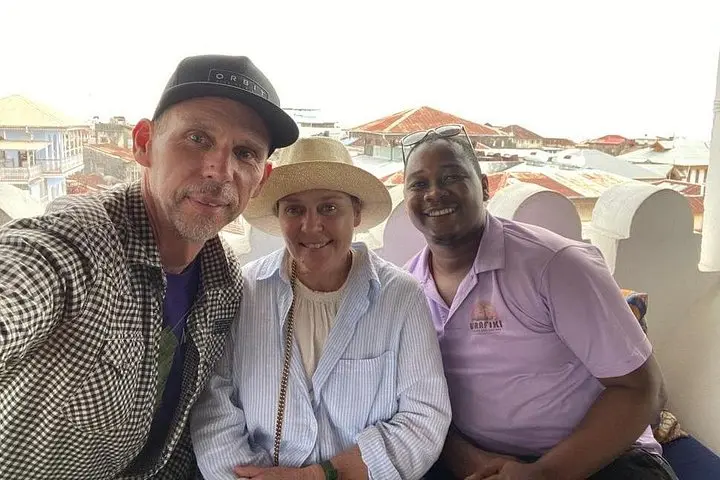


You step off the ferry into a lane where the ocean breeze pushes through coral-stone alleys and the air smells faintly of cloves and frying fish. The guide waits by the Cape Town Fish Market entry gate; the city hums, doors painted in carved Swahili motifs facing narrow streets that open into sunlit squares.
You step off the ferry into a lane where the ocean breeze pushes through coral-stone alleys and the air smells faintly of cloves and frying fish. The guide waits by the Cape Town Fish Market entry gate; the city hums, doors painted in carved Swahili motifs facing narrow streets that open into sunlit squares.
Stone Town grew where Indian Ocean trade routes met Omani sultans and African merchants. Buildings of coral rag and lime bear weathered carved doors, evidence of centuries of commerce and cultural blending. The Old Fort and House of Wonders tell stories of 19th-century power; the former’s battlements offer a compact panorama while the latter demonstrates Sultanate architecture. The former slave market site and Anglican Church confront the tangled legacies of colonialism and slavery, framed by local oral histories and museum exhibits.
Expect 2–3 hours of mostly flat walking on cobbles and uneven pavement, frequent stops for explanation, and short queues for paid entrances (old fort, slave market). Guides point out spice trade ties, colonial-era renovations, and the birthplace of Freddie Mercury—a small museum visit if timed into the route.
Practical notes: wear supportive shoes for cobbles, carry hydration (bottled water is included), and dress for sun and modest local customs—shoulders and knees covered in religious or market areas. Morning departures are cooler and less crowded; late afternoons bring long light perfect for photos. The tour is private and wheelchair-accessible in parts, but expect some narrow passages. Bring a camera, small local currency for souvenirs, and patience for busy market traffic.