THE ADVENTURE COLLECTIVE® · Independent discovery and booking for outdoor travel

Explore Stone Town on a guided five-hour walking tour through Darajani Market, narrow alleys, and landmark sites like the Anglican slave chamber, Freddie Mercury’s house and the Old Fort. Expect coral-stone streets, carved doors, and local stories woven into every turn.
Explore Stone Town on a guided five-hour walking tour through Darajani Market, narrow alleys, and landmark sites like the Anglican slave chamber, Freddie Mercury’s house and the Old Fort. Expect coral-stone streets, carved doors, and local stories woven into every turn.
You step from the tuk-tuk into a narrow ribbon of sunlight cutting between coral-stone buildings; spice-scented air nudges you toward the buzz of Darajani Market. Traders call prices, mangoes gleam, and a guide folds history into each alleyway as you begin a five-hour walk through Stone Town’s living archive.
Verified experiences and guided adventures in the surrounding area.
Operated by Zanzibar Eco-Friendly Tours · Stone Town, Zanzibar Urban/West
You step from the tuk-tuk into a narrow ribbon of sunlight cutting between coral-stone buildings; spice-scented air nudges you toward the buzz of Darajani Market. Traders call prices, mangoes gleam, and a guide folds history into each alleyway as you begin a five-hour walk through Stone Town’s living archive.
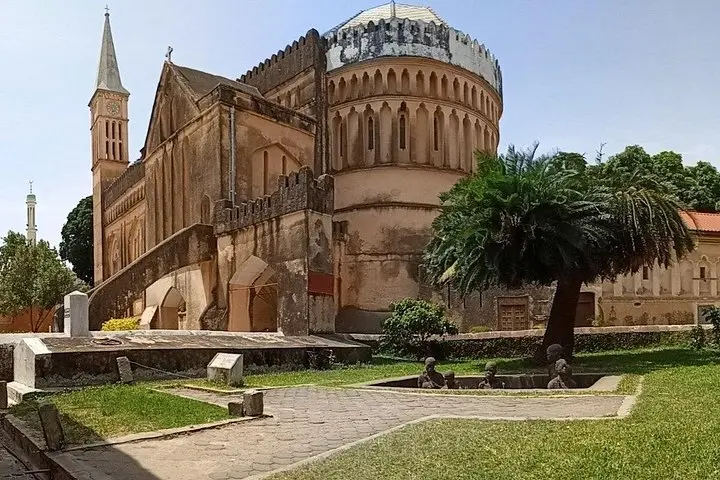
Stone Town grew where monsoon routes met the East African coast—coral rag walls, Omani-style balconies and magnificent carved doors chart centuries of Swahili trade, Omani rule and the grim legacy of the slave trade. The Anglican Church and its adjacent slave chamber are sober anchors to that history; the Old Fort and the exterior of the House of Wonders punctuate eras of defense and colonial modernity. Geologically the town sits on uplifted coral limestone and mangrove sediments, which gives the streets their soft, weathered stone and makes conservation an ongoing challenge.
Practicalities sit close to the surface: expect uneven cobbles, tight staircases and shaded courtyards that cool you between sunlit squares. Wear sturdy shoes, carry water (bottled water is typically provided), and bring modest clothing for religious sites. Start early if you want cooler light and quieter lanes; late afternoon brings the Forodhani waterfront to life with seafood grills and locals sampling sugarcane juice.
The tour blends sensory discovery with context—architecture, commerce and culture—so you walk away with maps of memory and usable tips: haggle politely at markets, ask before photographing people, and tip guides when they’ve opened doors to local stories.
This tour typically visits exteriors and key public sites; specific museum admissions are usually not included—ask when booking.
Stone Town’s narrow, uneven streets and staircases make accessibility limited; travelers with mobility concerns should notify the operator and consider a private vehicle-assisted option.
Yes—guides usually allow time to browse spices, fruits and textiles; carry cash for purchases and small bills for easier transactions.
Tipping is customary for good service; a modest tip at the end of a full-day private tour is appreciated by local guides.
Zanzibar Eco-Friendly Tours operates guided outdoor trips and adventures with an emphasis on safety, stewardship, and memorable experiences.

You step from the tuk-tuk into a narrow ribbon of sunlight cutting between coral-stone buildings; spice-scented air nudges you toward the buzz of Darajani Market. Traders call prices, mangoes gleam, and a guide folds history into each alleyway as you begin a five-hour walk through Stone Town’s living archive.
You step from the tuk-tuk into a narrow ribbon of sunlight cutting between coral-stone buildings; spice-scented air nudges you toward the buzz of Darajani Market. Traders call prices, mangoes gleam, and a guide folds history into each alleyway as you begin a five-hour walk through Stone Town’s living archive.
Stone Town grew where monsoon routes met the East African coast—coral rag walls, Omani-style balconies and magnificent carved doors chart centuries of Swahili trade, Omani rule and the grim legacy of the slave trade. The Anglican Church and its adjacent slave chamber are sober anchors to that history; the Old Fort and the exterior of the House of Wonders punctuate eras of defense and colonial modernity. Geologically the town sits on uplifted coral limestone and mangrove sediments, which gives the streets their soft, weathered stone and makes conservation an ongoing challenge.
Practicalities sit close to the surface: expect uneven cobbles, tight staircases and shaded courtyards that cool you between sunlit squares. Wear sturdy shoes, carry water (bottled water is typically provided), and bring modest clothing for religious sites. Start early if you want cooler light and quieter lanes; late afternoon brings the Forodhani waterfront to life with seafood grills and locals sampling sugarcane juice.
The tour blends sensory discovery with context—architecture, commerce and culture—so you walk away with maps of memory and usable tips: haggle politely at markets, ask before photographing people, and tip guides when they’ve opened doors to local stories.