THE ADVENTURE COLLECTIVE® · Independent discovery and booking for outdoor travel

A long day out of London that pairs the prehistoric gravitas of Stonehenge with Bath’s Roman Baths and Georgian streets. Expect coach transfers, on-site audio guides, two focused visits and free time for lunch and exploration in Bath.
A long day out of London that pairs the prehistoric gravitas of Stonehenge with Bath’s Roman Baths and Georgian streets. Expect coach transfers, on-site audio guides, two focused visits and free time for lunch and exploration in Bath.
You step off an air-conditioned coach as roadside hedgerows open to a broad sweep of chalk downland; the stones sit ahead, squat and deliberate, daring you to slow down and listen. On this full-day run from London you trade the city's rhythm for two of southern England's most charged sites: the Neolithic stone circle at Stonehenge and the Roman-built thermal complex in Bath.
Verified experiences and guided adventures in the surrounding area.
Operated by Anderson Tours · Amesbury, Wiltshire
You step off an air-conditioned coach as roadside hedgerows open to a broad sweep of chalk downland; the stones sit ahead, squat and deliberate, daring you to slow down and listen. On this full-day run from London you trade the city's rhythm for two of southern England's most charged sites: the Neolithic stone circle at Stonehenge and the Roman-built thermal complex in Bath.
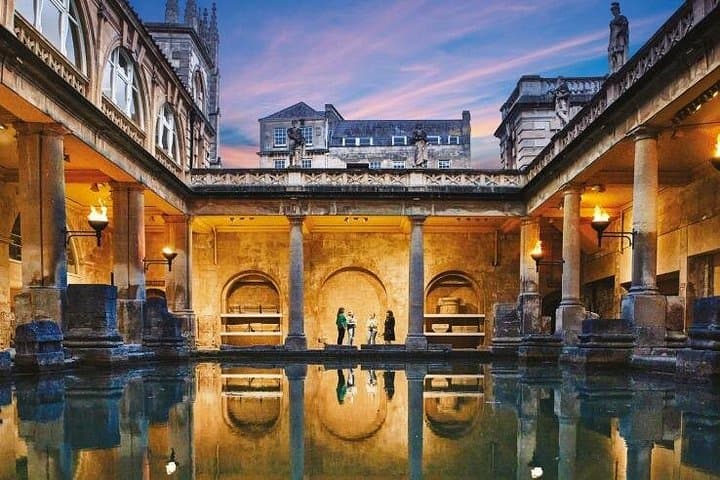
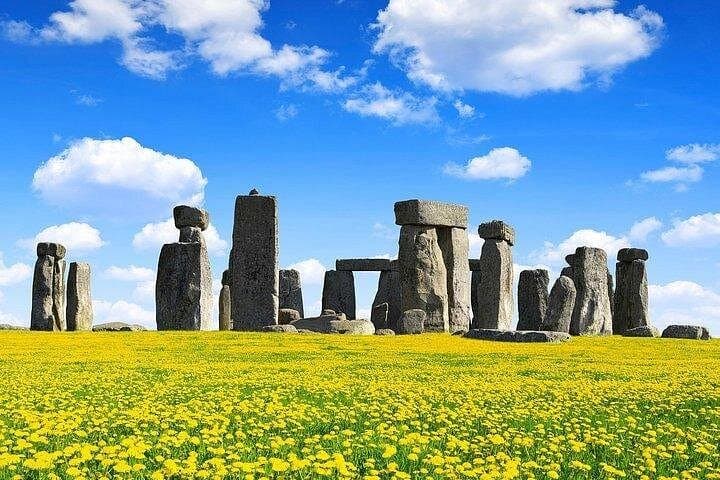
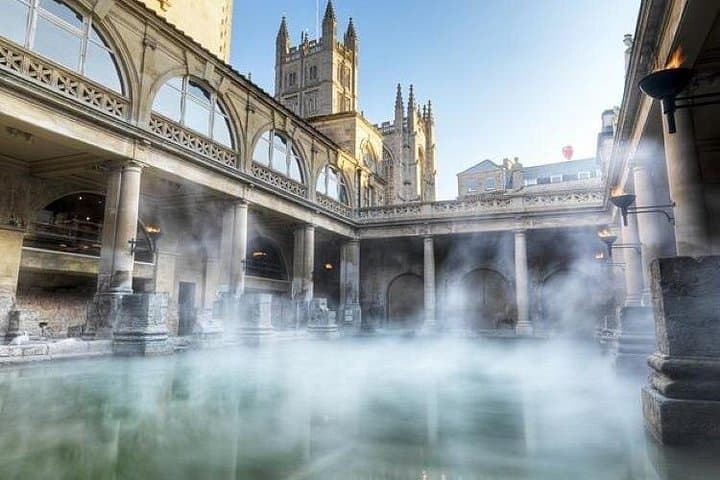
Stonehenge occupies a landscape of glacial-deposited chalk and flint whose stones were raised around 2500 BC. The visitor centre reconstructs Bronze Age life and the audio guide explains alignment theories while you walk the permitted paths. Bath, founded on natural hot springs and developed by the Romans from about 70 AD, layers Georgian stone facades over Roman foundations; the Roman Baths and the Temple of Sulis Minerva reveal civic bathing culture and engineering.
Culturally, the day links prehistoric ritual to Roman urban planning and 18th-century spa society — a compact lesson in Britain’s shifting uses of landscape and water.
Practical notes: expect an 11–12 hour day with roughly two hours on-site at Stonehenge and a similar window in Bath. Bring sturdy walking shoes, a weatherproof layer and a small daypack; lunches are usually on-your-own in Bath with plentiful tea rooms. Stonehenge limits close access to protect the stones, so follow signage and audio guidance. Check cancellation terms if weather affects travel, and allow extra time for brief walks between coach parking and each attraction.
The tour runs approximately 11–12 hours, departing London in the morning and returning late afternoon or early evening.
Stonehenge admission is included; Roman Baths admission is included only if you select that option when booking—check your ticket type before arrival.
Yes—there is free time in Bath for lunch, shopping, and short visits to local tea rooms; lunch is at your own expense.
Transport is by air-conditioned coach and shared-group sizes are typically up to 25 people, with live commentary on board.
Anderson Tours operates guided outdoor trips and adventures with an emphasis on safety, stewardship, and memorable experiences.

You step off an air-conditioned coach as roadside hedgerows open to a broad sweep of chalk downland; the stones sit ahead, squat and deliberate, daring you to slow down and listen. On this full-day run from London you trade the city's rhythm for two of southern England's most charged sites: the Neolithic stone circle at Stonehenge and the Roman-built thermal complex in Bath.
You step off an air-conditioned coach as roadside hedgerows open to a broad sweep of chalk downland; the stones sit ahead, squat and deliberate, daring you to slow down and listen. On this full-day run from London you trade the city's rhythm for two of southern England's most charged sites: the Neolithic stone circle at Stonehenge and the Roman-built thermal complex in Bath.
Stonehenge occupies a landscape of glacial-deposited chalk and flint whose stones were raised around 2500 BC. The visitor centre reconstructs Bronze Age life and the audio guide explains alignment theories while you walk the permitted paths. Bath, founded on natural hot springs and developed by the Romans from about 70 AD, layers Georgian stone facades over Roman foundations; the Roman Baths and the Temple of Sulis Minerva reveal civic bathing culture and engineering.
Culturally, the day links prehistoric ritual to Roman urban planning and 18th-century spa society — a compact lesson in Britain’s shifting uses of landscape and water.
Practical notes: expect an 11–12 hour day with roughly two hours on-site at Stonehenge and a similar window in Bath. Bring sturdy walking shoes, a weatherproof layer and a small daypack; lunches are usually on-your-own in Bath with plentiful tea rooms. Stonehenge limits close access to protect the stones, so follow signage and audio guidance. Check cancellation terms if weather affects travel, and allow extra time for brief walks between coach parking and each attraction.