THE ADVENTURE COLLECTIVE® · Independent discovery and booking for outdoor travel

Turn a post-cruise transfer into a focused encounter with Stonehenge. This shared coach trip from Southampton includes entry, the visitor centre shuttle, and enough time on-site to take in the stones and exhibits.
Turn a post-cruise transfer into a focused encounter with Stonehenge. This shared coach trip from Southampton includes entry, the visitor centre shuttle, and enough time on-site to take in the stones and exhibits.
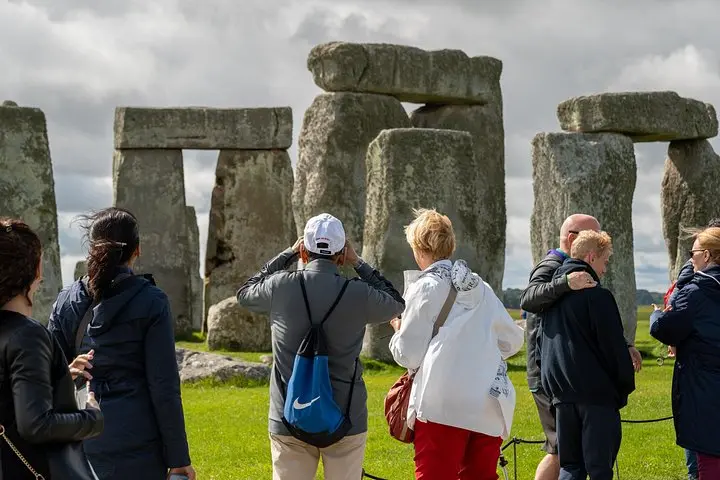
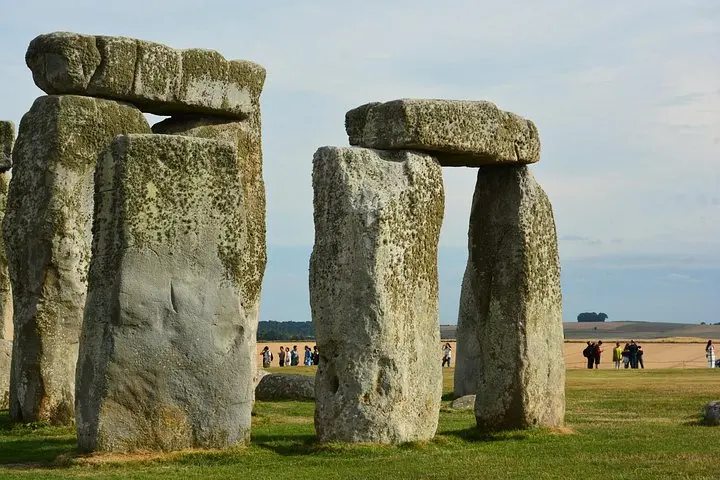
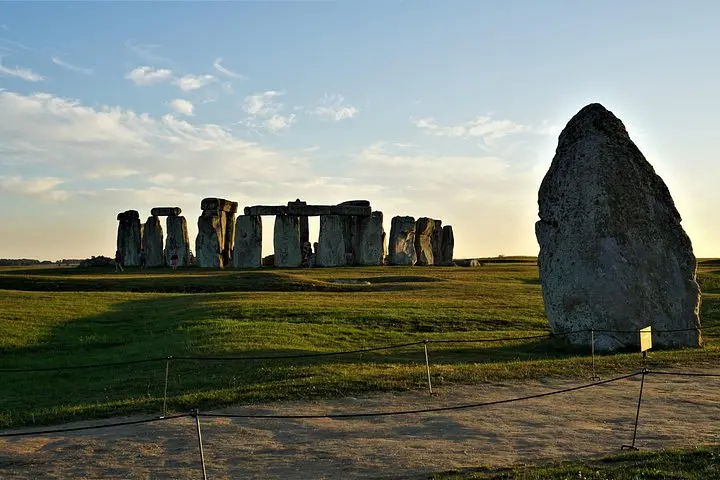
The coach uncoils from Southampton’s port and crosses the rolling chalk downland toward a low horizon punctuated by standing stones. By the time the visitor centre comes into view, the stones have already begun to assert themselves — hulking, weathered and aligned to the sun.
Verified experiences and guided adventures in the surrounding area.
Operated by International Friends · Amesbury, Wiltshire
The coach uncoils from Southampton’s port and crosses the rolling chalk downland toward a low horizon punctuated by standing stones. By the time the visitor centre comes into view, the stones have already begun to assert themselves — hulking, weathered and aligned to the sun.
Stonehenge sits on Salisbury Plain, a broad sweep of chalk formed in the Late Cretaceous and reworked by millennia of human activity. The monument itself dates to the Neolithic and Bronze Age; its sarsens and bluestones were arranged with astronomical alignments that still provoke debate. Nearby Salisbury and the hillfort of Old Sarum add medieval and prehistoric layers to the landscape.
On this shared transfer, travelers get roughly two hours at the site, including the shuttle from the visitor centre and access to exhibitions that explain excavations, burial mounds and the complex logistics behind moving massive stones. The environment is exposed: winds sweep across grassland, skylarks rise from the turf, and weather shifts quickly.
Practical guidance is straightforward. Arrive with layered clothing and sturdy shoes for short walks on turf; the shuttle shortens the walk to the stones but expect standing and brief uphill sections. Luggage limits are enforced on the coach so arrange excess bags in advance. Plan timing around cruise arrival to allow for security and embarkation windows in London or Heathrow. The visit balances awe with logistics — an efficient, outdoor-friendly way to convert a port transfer into a focused encounter with one of Britain’s oldest monuments.
The visit includes roughly two hours on site, which covers the visitor centre, shuttle to the stones, and time around the stone circle.
The service is wheelchair accessible; you should contact the operator in advance with dimensions and weight of any mobility aids so they can be accommodated.
Each person may bring up to two hold items (75x51x28 cm, 23kg) and one carry-on; excess luggage may not fit and must be transported separately.
Direct access to touch the stones is restricted; the shuttle drops you near the circle for close viewing from designated paths.
International Friends operates guided outdoor trips and adventures with an emphasis on safety, stewardship, and memorable experiences.

The coach uncoils from Southampton’s port and crosses the rolling chalk downland toward a low horizon punctuated by standing stones. By the time the visitor centre comes into view, the stones have already begun to assert themselves — hulking, weathered and aligned to the sun.
The coach uncoils from Southampton’s port and crosses the rolling chalk downland toward a low horizon punctuated by standing stones. By the time the visitor centre comes into view, the stones have already begun to assert themselves — hulking, weathered and aligned to the sun.
Stonehenge sits on Salisbury Plain, a broad sweep of chalk formed in the Late Cretaceous and reworked by millennia of human activity. The monument itself dates to the Neolithic and Bronze Age; its sarsens and bluestones were arranged with astronomical alignments that still provoke debate. Nearby Salisbury and the hillfort of Old Sarum add medieval and prehistoric layers to the landscape.
On this shared transfer, travelers get roughly two hours at the site, including the shuttle from the visitor centre and access to exhibitions that explain excavations, burial mounds and the complex logistics behind moving massive stones. The environment is exposed: winds sweep across grassland, skylarks rise from the turf, and weather shifts quickly.
Practical guidance is straightforward. Arrive with layered clothing and sturdy shoes for short walks on turf; the shuttle shortens the walk to the stones but expect standing and brief uphill sections. Luggage limits are enforced on the coach so arrange excess bags in advance. Plan timing around cruise arrival to allow for security and embarkation windows in London or Heathrow. The visit balances awe with logistics — an efficient, outdoor-friendly way to convert a port transfer into a focused encounter with one of Britain’s oldest monuments.