THE ADVENTURE COLLECTIVE® · Independent discovery and booking for outdoor travel

Turn a routine transfer into a short cultural expedition with a detour to Stonehenge. This private seven‑hour transfer from Southampton combines door‑to‑door logistics with a focused visit to one of Britain’s most evocative prehistoric sites.
Turn a routine transfer into a short cultural expedition with a detour to Stonehenge. This private seven‑hour transfer from Southampton combines door‑to‑door logistics with a focused visit to one of Britain’s most evocative prehistoric sites.
A gray English morning unfurls as the driver eases out of Southampton and onto the rolling chalklands that frame Salisbury Plain. The car slows; a distant ring of weathered sarsen stones punctuates the horizon. On this transfer, the practical act of getting from ship or airport to your next stop becomes a compact landscape immersion.
Verified experiences and guided adventures in the surrounding area.
Operated by Best UK Tours · Amesbury, Wiltshire
A gray English morning unfurls as the driver eases out of Southampton and onto the rolling chalklands that frame Salisbury Plain. The car slows; a distant ring of weathered sarsen stones punctuates the horizon. On this transfer, the practical act of getting from ship or airport to your next stop becomes a compact landscape immersion.
Stonehenge sits at the intersection of deep prehistory and modern visitor management. Built in phases from the late Neolithic into the Bronze Age (roughly 3000–1500 BCE), the monument’s stones record construction techniques and ritual priorities rather than a single story. Geologically the stones tell another tale: local sarsens and transported bluestones from Wales meet the low, wind-sculpted grass of the plain.
Culturally, the site is both archaeological resource and seasonal gathering place; solstice events continue to draw people while the visitor centre interprets astronomical alignments and burial landscapes.
Practically, expect a two-hour stop at Stonehenge integrated into a roughly seven-hour private transfer between Southampton and the airport or cruise terminal. Admission may be included; the Visitor Centre offers exhibits, replica tools and a short film. There is a 1–2 km easy walk across beaten paths to the monument; surfaces can be uneven and exposed to wind.
Pack a midlayer and weatherproof shoes, time your transfer to avoid mid-afternoon coach crowds, and allow extra time for security checks at ports or airports. This transfer converts transit time into purposeful exploration, leaving you at your destination with a clearer sense of place and a few hours of discovery behind you.
Typical itineraries allow around two hours at the visitor centre and monument area, enough for the displays and the walk to the stones.
The product listing notes that entry tickets can be included; confirm at booking to avoid on‑site purchases.
Yes — pickups from cruise terminals, hotels or the airport are standard; you’ll supply your pickup point and timings when booking.
The walk is short (about 1–2 km total) on firm paths but exposed to wind; it’s suitable for most visitors with moderate mobility.
Best UK Tours operates guided outdoor trips and adventures with an emphasis on safety, stewardship, and memorable experiences.
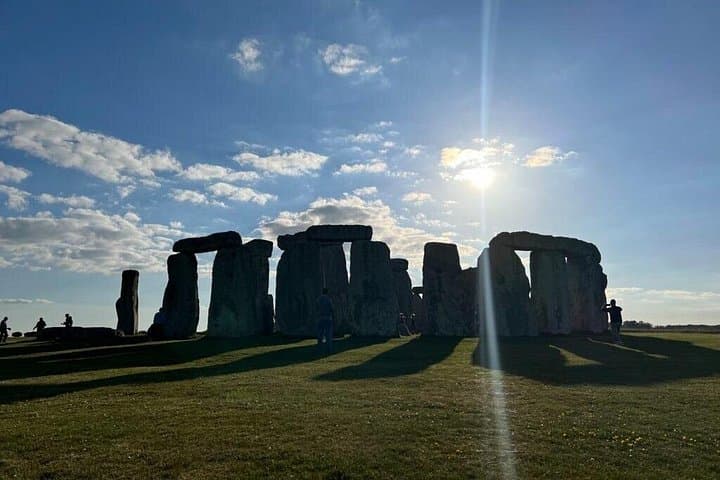
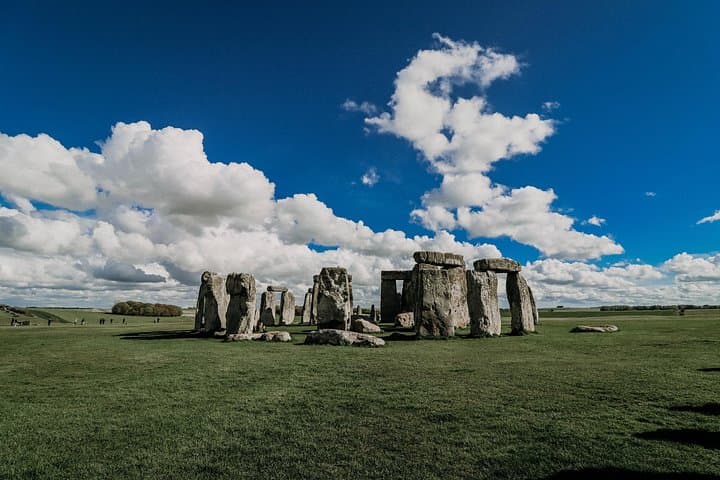


A gray English morning unfurls as the driver eases out of Southampton and onto the rolling chalklands that frame Salisbury Plain. The car slows; a distant ring of weathered sarsen stones punctuates the horizon. On this transfer, the practical act of getting from ship or airport to your next stop becomes a compact landscape immersion.
A gray English morning unfurls as the driver eases out of Southampton and onto the rolling chalklands that frame Salisbury Plain. The car slows; a distant ring of weathered sarsen stones punctuates the horizon. On this transfer, the practical act of getting from ship or airport to your next stop becomes a compact landscape immersion.
Stonehenge sits at the intersection of deep prehistory and modern visitor management. Built in phases from the late Neolithic into the Bronze Age (roughly 3000–1500 BCE), the monument’s stones record construction techniques and ritual priorities rather than a single story. Geologically the stones tell another tale: local sarsens and transported bluestones from Wales meet the low, wind-sculpted grass of the plain.
Culturally, the site is both archaeological resource and seasonal gathering place; solstice events continue to draw people while the visitor centre interprets astronomical alignments and burial landscapes.
Practically, expect a two-hour stop at Stonehenge integrated into a roughly seven-hour private transfer between Southampton and the airport or cruise terminal. Admission may be included; the Visitor Centre offers exhibits, replica tools and a short film. There is a 1–2 km easy walk across beaten paths to the monument; surfaces can be uneven and exposed to wind.
Pack a midlayer and weatherproof shoes, time your transfer to avoid mid-afternoon coach crowds, and allow extra time for security checks at ports or airports. This transfer converts transit time into purposeful exploration, leaving you at your destination with a clearer sense of place and a few hours of discovery behind you.