THE ADVENTURE COLLECTIVE® · Independent discovery and booking for outdoor travel

Spend a day moving from the wind-sculpted stones of Stonehenge to the honeyed college quads of Oxford. This full-day tour includes Stonehenge admission and a guided walking introduction to Oxford’s university precincts.
Spend a day moving from the wind-sculpted stones of Stonehenge to the honeyed college quads of Oxford. This full-day tour includes Stonehenge admission and a guided walking introduction to Oxford’s university precincts.
You step off the coach onto a windswept stretch of Salisbury Plain and the stones are immediate: hulking, weather-smoothed trilithons set against open sky. The air carries the faint tang of cut grass and the low hum of other visitors; the Stonehenge audio guide included with admission cuts through the noise and places each megalith in human time.
Verified experiences and guided adventures in the surrounding area.
Operated by Day Tours London · Amesbury, Wiltshire
You step off the coach onto a windswept stretch of Salisbury Plain and the stones are immediate: hulking, weather-smoothed trilithons set against open sky. The air carries the faint tang of cut grass and the low hum of other visitors; the Stonehenge audio guide included with admission cuts through the noise and places each megalith in human time.
Stonehenge sits on Salisbury Plain—an archaeological landscape scraped and probed for centuries—where Neolithic builders raised the monument around 2500 BCE. Some stones trace to the Preseli Hills in Wales, a geological journey that still excites researchers. Later, the tour moves northeast to Oxford, a compact city built of honey-colored stone, where university colleges from the 12th century onward crowd narrow lanes, chapel spires, and cloistered quads.
Culturally the day contrasts open rural ritual ground with academic urbanity: village lanes and West Country hamlets en route remind you why this part of England has long been a travel corridor. Guides typically narrate both archaeology and university lore, and the included walking segment in Oxford (about 45 minutes) highlights college facades and public squares.
Practically: expect a long day (roughly 10–11 hours) on an air-conditioned coach with two major stops—about two hours at Stonehenge including the visitor centre, and 2–3 hours in Oxford with free time. Wear sturdy shoes for mixed terrain, bring a waterproof layer, and allow time for queues at cafes and college entries. Photography is allowed at Stonehenge from the designated route; respect rope lines and archaeology signage. The tour is rated easy on fitness but involves standing and short walks; bring water and a charged phone for the audio guide.
Yes—this tour includes Stonehenge admission and the Stonehenge audio tour app as noted in the inclusions.
Expect about two hours at Stonehenge including the visitor centre and audio guide time—enough for the official route but not for extended fieldwork access.
The coach and visitor centre are accessible, but the Stonehenge path has some uneven surfaces; if you have specific mobility needs contact the operator ahead of booking to confirm accommodations.
The tour provides a 45-minute walking introduction and free time; some colleges have separate admission fees and limited visiting hours, so plan accordingly if you want to enter a specific college.
Day Tours London operates guided outdoor trips and adventures with an emphasis on safety, stewardship, and memorable experiences.
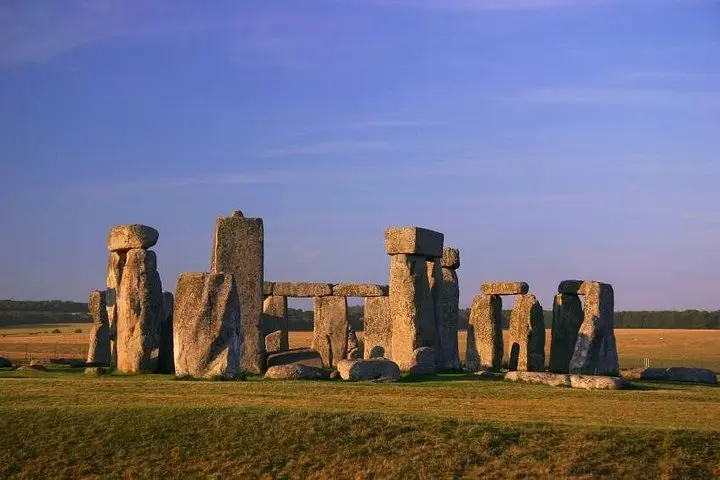



You step off the coach onto a windswept stretch of Salisbury Plain and the stones are immediate: hulking, weather-smoothed trilithons set against open sky. The air carries the faint tang of cut grass and the low hum of other visitors; the Stonehenge audio guide included with admission cuts through the noise and places each megalith in human time.
You step off the coach onto a windswept stretch of Salisbury Plain and the stones are immediate: hulking, weather-smoothed trilithons set against open sky. The air carries the faint tang of cut grass and the low hum of other visitors; the Stonehenge audio guide included with admission cuts through the noise and places each megalith in human time.
Stonehenge sits on Salisbury Plain—an archaeological landscape scraped and probed for centuries—where Neolithic builders raised the monument around 2500 BCE. Some stones trace to the Preseli Hills in Wales, a geological journey that still excites researchers. Later, the tour moves northeast to Oxford, a compact city built of honey-colored stone, where university colleges from the 12th century onward crowd narrow lanes, chapel spires, and cloistered quads.
Culturally the day contrasts open rural ritual ground with academic urbanity: village lanes and West Country hamlets en route remind you why this part of England has long been a travel corridor. Guides typically narrate both archaeology and university lore, and the included walking segment in Oxford (about 45 minutes) highlights college facades and public squares.
Practically: expect a long day (roughly 10–11 hours) on an air-conditioned coach with two major stops—about two hours at Stonehenge including the visitor centre, and 2–3 hours in Oxford with free time. Wear sturdy shoes for mixed terrain, bring a waterproof layer, and allow time for queues at cafes and college entries. Photography is allowed at Stonehenge from the designated route; respect rope lines and archaeology signage. The tour is rated easy on fitness but involves standing and short walks; bring water and a charged phone for the audio guide.