THE ADVENTURE COLLECTIVE® · Independent discovery and booking for outdoor travel

Walk the streets where modern LGBTQ Pride began: a focused 75-minute guided tour from Christopher Park to the Gay Liberation Monument that traces Stonewall and the movement that followed. Accessible, storytelling-driven, and tied to community fundraising.
Walk the streets where modern LGBTQ Pride began: a focused 75-minute guided tour from Christopher Park to the Gay Liberation Monument that traces Stonewall and the movement that followed. Accessible, storytelling-driven, and tied to community fundraising.
You meet in Christopher Park where the air carries the low hum of West Village traffic and the hush of a small, dedicated green. Guides unfurl the story here—at the bench-lined edge of the park—before leading you down narrow streets that watched a movement take shape.
Verified experiences and guided adventures in the surrounding area.
Operated by Pride Tours NYC · New York, New York
You meet in Christopher Park where the air carries the low hum of West Village traffic and the hush of a small, dedicated green. Guides unfurl the story here—at the bench-lined edge of the park—before leading you down narrow streets that watched a movement take shape.
This 75-minute walk follows concrete and cobblestone through sites that map the rise of modern LGBTQ rights: the Stonewall Inn, the Oscar Wilde Bookshop site, Gay Street, Julius Bar and the Gay Liberation Monument. The route is compact but dense with stories: police raids and late-night resistance, grassroots organizing, early pride marches, and the visual language of the rainbow flag. Geology is subtle—the island bedrock beneath Manhattan gives the Village its slightly raised, irregular streets, while rowhouse facades cue the neighborhood’s 19th- and early-20th-century growth.
Culturally, the tour situates Stonewall within broader U.S. LGBTQ history, connecting local actors like Craig Rodwell to national movements for visibility and rights. A portion of proceeds supports Heritage of Pride, linking tourism directly to ongoing community work.
Practical guidance: the walk is short and flat—suitable for most fitness levels and wheelchair accessible. Bring a bottle of water, comfortable shoes, and a light layer for breezy evenings. Aim for morning or late afternoon to avoid midday crowds and summer heat. Listen for the guide’s cues at each stop and leave time afterward to explore nearby cafes and archives. This is a civic walk—respectful curiosity and quiet listening sharpen the experience.
The tour lasts 75 minutes and starts at Christopher Park on West 4th Street between 7th Avenue South and Grove Street; look for the Pride Tours NYC flag.
Yes—sites on this route and park surfaces are wheelchair accessible; guides can accommodate mobility needs.
Yes—infants 2 and under are free; the narrative can be adapted for families but content covers historical conflict and activism.
Tours are offered in English only according to the listing, so non-English speakers may want to arrange translation in advance.
Pride Tours NYC operates guided outdoor trips and adventures with an emphasis on safety, stewardship, and memorable experiences.
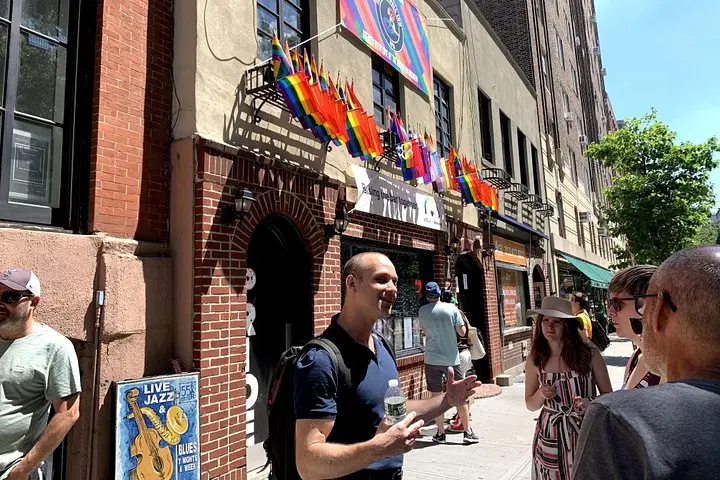
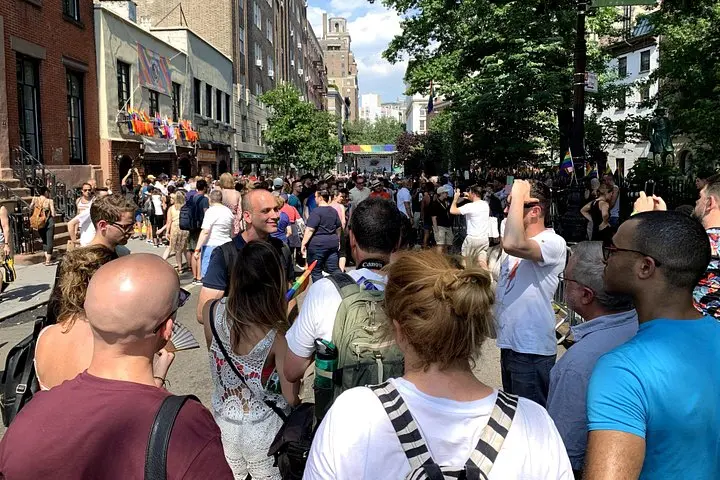
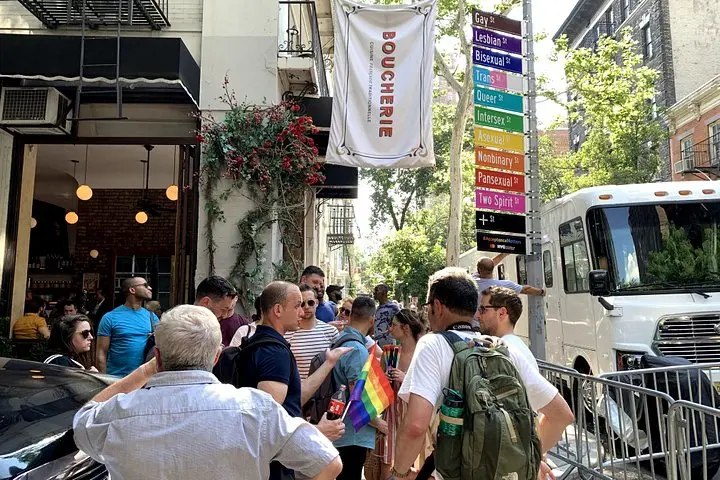
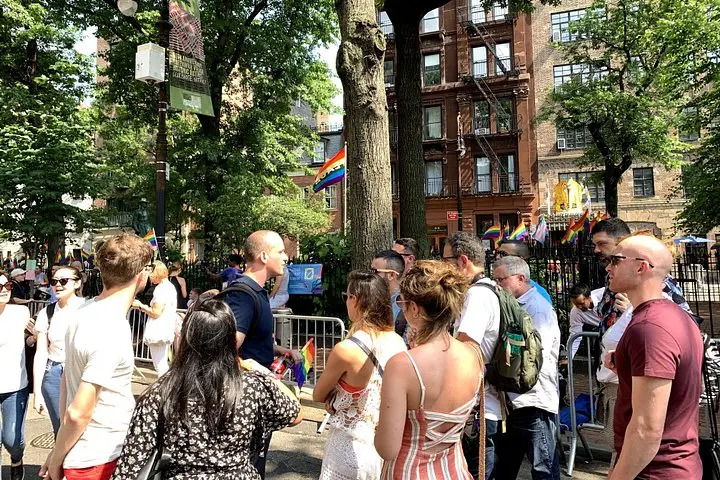
You meet in Christopher Park where the air carries the low hum of West Village traffic and the hush of a small, dedicated green. Guides unfurl the story here—at the bench-lined edge of the park—before leading you down narrow streets that watched a movement take shape.
You meet in Christopher Park where the air carries the low hum of West Village traffic and the hush of a small, dedicated green. Guides unfurl the story here—at the bench-lined edge of the park—before leading you down narrow streets that watched a movement take shape.
This 75-minute walk follows concrete and cobblestone through sites that map the rise of modern LGBTQ rights: the Stonewall Inn, the Oscar Wilde Bookshop site, Gay Street, Julius Bar and the Gay Liberation Monument. The route is compact but dense with stories: police raids and late-night resistance, grassroots organizing, early pride marches, and the visual language of the rainbow flag. Geology is subtle—the island bedrock beneath Manhattan gives the Village its slightly raised, irregular streets, while rowhouse facades cue the neighborhood’s 19th- and early-20th-century growth.
Culturally, the tour situates Stonewall within broader U.S. LGBTQ history, connecting local actors like Craig Rodwell to national movements for visibility and rights. A portion of proceeds supports Heritage of Pride, linking tourism directly to ongoing community work.
Practical guidance: the walk is short and flat—suitable for most fitness levels and wheelchair accessible. Bring a bottle of water, comfortable shoes, and a light layer for breezy evenings. Aim for morning or late afternoon to avoid midday crowds and summer heat. Listen for the guide’s cues at each stop and leave time afterward to explore nearby cafes and archives. This is a civic walk—respectful curiosity and quiet listening sharpen the experience.