THE ADVENTURE COLLECTIVE® · Independent discovery and booking for outdoor travel

Walk Strasbourg’s Grande Île with a local guide who grew up in Alsace. This private, two-hour tour pairs intimate architectural detail with the region’s layered Franco‑German history.
Walk Strasbourg’s Grande Île with a local guide who grew up in Alsace. This private, two-hour tour pairs intimate architectural detail with the region’s layered Franco‑German history.
You arrive at the cathedral plaza as the stone façade cools in the morning light, carvings casting small shadows over a steady stream of visitors. The river Ill moves through the city like a patient guide, nudging barges past half-timbered houses while a local guide waits at the corner of rue Mercière to begin a two-hour, fully private exploration.
Verified experiences and guided adventures in the surrounding area.
Operated by Happy Strasbourg · Strasbourg, Grand Est
You arrive at the cathedral plaza as the stone façade cools in the morning light, carvings casting small shadows over a steady stream of visitors. The river Ill moves through the city like a patient guide, nudging barges past half-timbered houses while a local guide waits at the corner of rue Mercière to begin a two-hour, fully private exploration.
Strasbourg sits on the Rhine plain where French and German histories meet; its Grande Île is a UNESCO World Heritage core whose Gothic cathedral and medieval streets tell stories of empire, trade, and craftsmanship. Geologically the city occupies alluvial ground shaped by the Rhine and its tributaries, which created the islands and canals that define Petite France and the Ponts Couverts. Culturally, Alsace carries a bilingual legacy—language, food like tarte flambée, and civic squares that shifted between sovereignties.
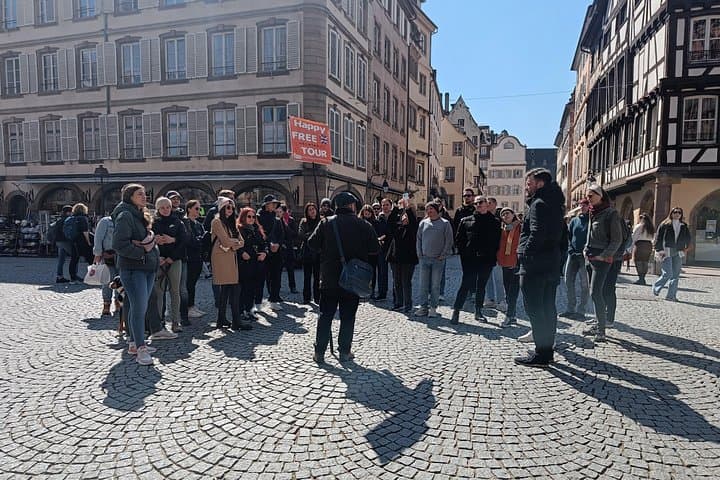
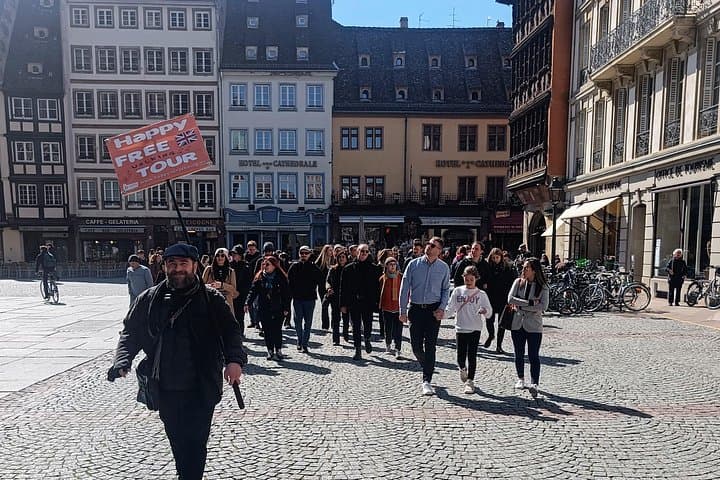
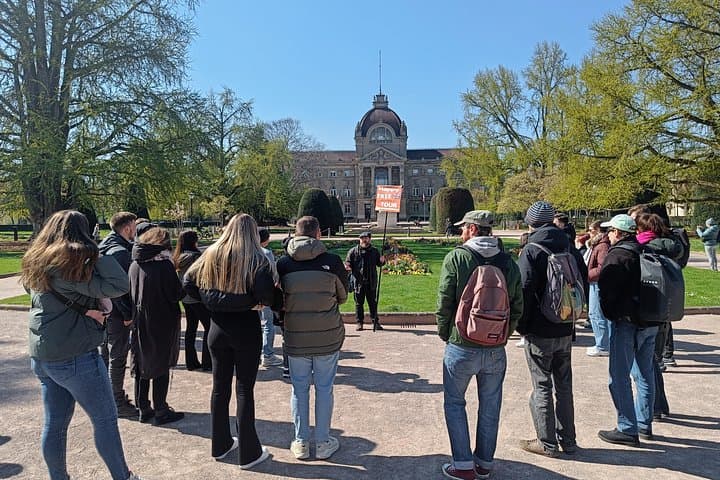
On this private tour expect guided stops at the cathedral, Broglie and Kléber squares, and République, with local commentary tailored to your interests—architecture, local customs, or regional history. The walk covers mostly cobbled streets and paved squares over about 2 kilometers and is wheelchair accessible with advance notice.
Practical tips: meet in front of Notre‑Dame at rue Mercière, allow two hours, bring comfortable shoes for uneven stone, and plan mornings for softer light and fewer crowds. A city map is included; ask your guide about where to linger for riverside cafés or the best place to photograph the cathedral without crowds. This mix of close-up details and broader context makes the tour both a primer and an efficient way to orient yourself in Strasbourg.
The meeting point is in front of Strasbourg Cathedral at the corner with rue Mercière; exact instructions and the guide's contact are sent after booking.
Yes—the tour notes indicate wheelchair accessibility, but operators ask you to flag any mobility needs when booking so the route can be adjusted.
Yes—this is a private tour and the guide can tailor stops and focus areas (architecture, history, food) based on your interests.
The tour lasts approximately two hours; it provides commentary and a city map, but entry fees for paid sites like the cathedral platform are not included unless specified.
Happy Strasbourg operates guided outdoor trips and adventures with an emphasis on safety, stewardship, and memorable experiences.
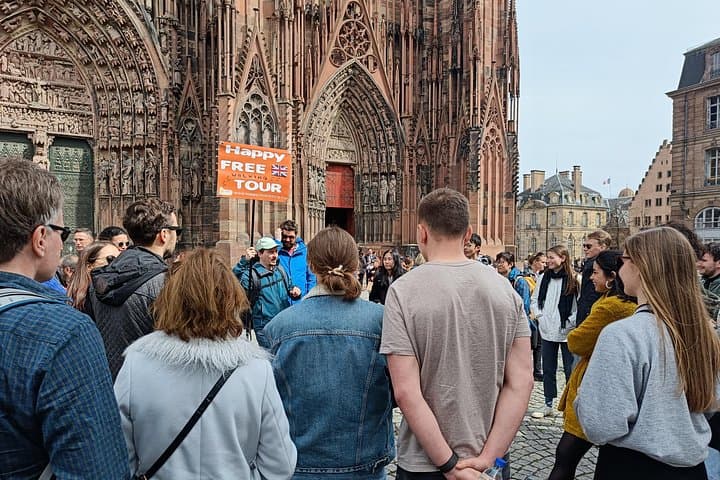
You arrive at the cathedral plaza as the stone façade cools in the morning light, carvings casting small shadows over a steady stream of visitors. The river Ill moves through the city like a patient guide, nudging barges past half-timbered houses while a local guide waits at the corner of rue Mercière to begin a two-hour, fully private exploration.
You arrive at the cathedral plaza as the stone façade cools in the morning light, carvings casting small shadows over a steady stream of visitors. The river Ill moves through the city like a patient guide, nudging barges past half-timbered houses while a local guide waits at the corner of rue Mercière to begin a two-hour, fully private exploration.
Strasbourg sits on the Rhine plain where French and German histories meet; its Grande Île is a UNESCO World Heritage core whose Gothic cathedral and medieval streets tell stories of empire, trade, and craftsmanship. Geologically the city occupies alluvial ground shaped by the Rhine and its tributaries, which created the islands and canals that define Petite France and the Ponts Couverts. Culturally, Alsace carries a bilingual legacy—language, food like tarte flambée, and civic squares that shifted between sovereignties.
On this private tour expect guided stops at the cathedral, Broglie and Kléber squares, and République, with local commentary tailored to your interests—architecture, local customs, or regional history. The walk covers mostly cobbled streets and paved squares over about 2 kilometers and is wheelchair accessible with advance notice.
Practical tips: meet in front of Notre‑Dame at rue Mercière, allow two hours, bring comfortable shoes for uneven stone, and plan mornings for softer light and fewer crowds. A city map is included; ask your guide about where to linger for riverside cafés or the best place to photograph the cathedral without crowds. This mix of close-up details and broader context makes the tour both a primer and an efficient way to orient yourself in Strasbourg.