THE ADVENTURE COLLECTIVE® · Independent discovery and booking for outdoor travel

In two hours on foot through the French Quarter you’ll cross river levees, enter Creole courtyards, and stand before buildings that recorded fires, floods and reinvention. This brisk guided tour pairs neighborhood atmosphere with clear historical context — perfect for first-time visitors who want depth without the marathon pace.
In two hours on foot through the French Quarter you’ll cross river levees, enter Creole courtyards, and stand before buildings that recorded fires, floods and reinvention. This brisk guided tour pairs neighborhood atmosphere with clear historical context — perfect for first-time visitors who want depth without the marathon pace.
You step off Royal Street and the city rearranges itself: balconies lean forward with ornate iron lace, a trumpet thread of brass slides out from under an arcade, and the Mississippi River broadens the sky into a silver slab. The guide waits by Royal Cafe Beignet, map tucked into a tablet like a navigator’s chart, then leads the group toward the levee. In two hours the French Quarter moves from riverfront commerce to interior courtyards, from colonial government houses to shadowed alleys that still keep their stories.
Verified experiences and guided adventures in the surrounding area.
Operated by Historic New Orleans Tours · New Orleans, Louisiana
You step off Royal Street and the city rearranges itself: balconies lean forward with ornate iron lace, a trumpet thread of brass slides out from under an arcade, and the Mississippi River broadens the sky into a silver slab. The guide waits by Royal Cafe Beignet, map tucked into a tablet like a navigator’s chart, then leads the group toward the levee. In two hours the French Quarter moves from riverfront commerce to interior courtyards, from colonial government houses to shadowed alleys that still keep their stories.
The Quarter is geology by proxy — built on the silt the river delivered, then raised with levees and engineering that literally rewrote the landscape. Architecture tells the rest of the story: Spanish and French layers, charred bricks from the great 1788 fire, and raised townhouses adapted to flooding and heat. Creole culture threads through everything here — language, foodways, and social systems such as placage that shaped families and fortunes. Your guide points out where Tennessee Williams lived, the house Faulkner visited, and the balcony where historic dramas played out, translating legend into urban fact.
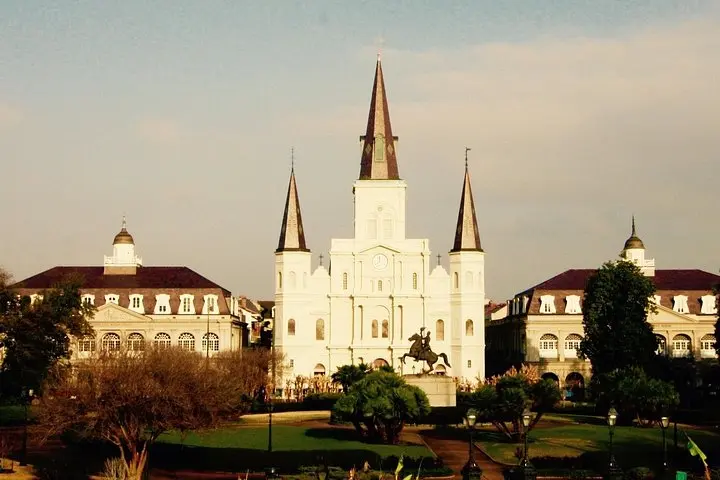
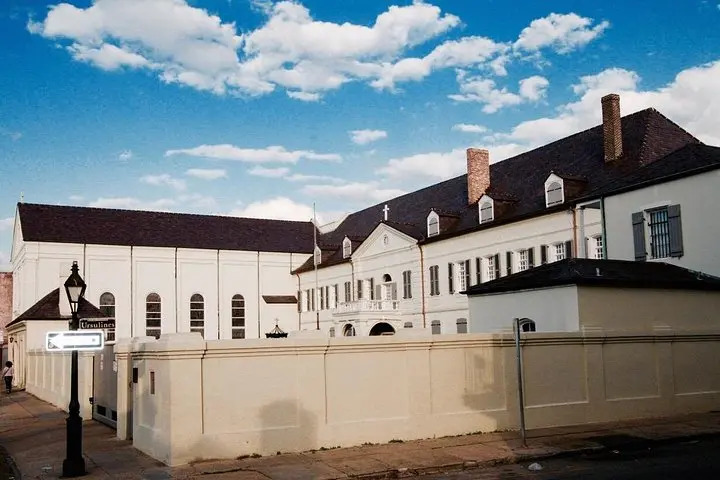
Walk through the French Market and you meet commerce as it has always been — spices, sweets, and voices bargaining under tin roofs. Pause in Jackson Square and the cathedral anchors the plaza: its façade is a record of adaptation, rebuilt after fires and storms. Pirate’s Alley keeps quieter stories, and a private Creole courtyard offers a rare pulse of domestic life preserved behind public facades. Along the river, the levee remarks on New Orleans’ ongoing relationship with water — a force that both enabled the city’s rise and constantly demands respect.
Practicality guides the pace: expect roughly two miles of mostly flat pavement with brief cobbled sections and narrow sidewalks. The tour is designed for a relaxed, accessible rhythm but brings history in layers — civic, architectural, and social — not a simple list of landmarks. Guides typically weave in local music, pointing to street performers and telling where to catch an evening brass band.
Timing matters: morning tours win cooler air and quieter streets; evenings deliver lamplight and buskers. Bring sun protection and a refillable bottle — shade is intermittent and humidity arrives fast. Wear shoes that handle both smooth flagstones and occasional uneven brick. If you want photos, aim for first light or the blue hour after sunset; Jackson Square’s perspective frames the cathedral against sky most cleanly then.
This walk is part history lesson, part urban stroll and part living neighborhood visit. It’s short enough to pair with a market breakfast or an afternoon at a museum, but full enough that, by the end, the Quarter feels less like a postcard and more like a palpably storied place you’ve begun to understand.
Meet at Royal Cafe Beignet, 334 Royal Street, next to the Police Station — guides arrive early to check in.
Much of the route is flat, but some sidewalks and cobbles may be uneven; contact the operator ahead to confirm accessibility accommodations.
Yes — the tour is family-friendly, but expect historical discussions and walking at a steady pace for two miles.
Public restrooms are limited; plan to use facilities at cafes or museums before or after the tour and ask your guide for nearby options if needed.
Standard tipping for guided walking tours is 10–20% of tour cost, or $5–$10 per person depending on service and group size.
No — the tour covers exterior visits and public spaces; any paid museum entries are at your own expense.
Historic New Orleans Tours operates guided outdoor trips and adventures with an emphasis on safety, stewardship, and memorable experiences.

You step off Royal Street and the city rearranges itself: balconies lean forward with ornate iron lace, a trumpet thread of brass slides out from under an arcade, and the Mississippi River broadens the sky into a silver slab. The guide waits by Royal Cafe Beignet, map tucked into a tablet like a navigator’s chart, then leads the group toward the levee. In two hours the French Quarter moves from riverfront commerce to interior courtyards, from colonial government houses to shadowed alleys that still keep their stories.
You step off Royal Street and the city rearranges itself: balconies lean forward with ornate iron lace, a trumpet thread of brass slides out from under an arcade, and the Mississippi River broadens the sky into a silver slab. The guide waits by Royal Cafe Beignet, map tucked into a tablet like a navigator’s chart, then leads the group toward the levee. In two hours the French Quarter moves from riverfront commerce to interior courtyards, from colonial government houses to shadowed alleys that still keep their stories.
The Quarter is geology by proxy — built on the silt the river delivered, then raised with levees and engineering that literally rewrote the landscape. Architecture tells the rest of the story: Spanish and French layers, charred bricks from the great 1788 fire, and raised townhouses adapted to flooding and heat. Creole culture threads through everything here — language, foodways, and social systems such as placage that shaped families and fortunes. Your guide points out where Tennessee Williams lived, the house Faulkner visited, and the balcony where historic dramas played out, translating legend into urban fact.
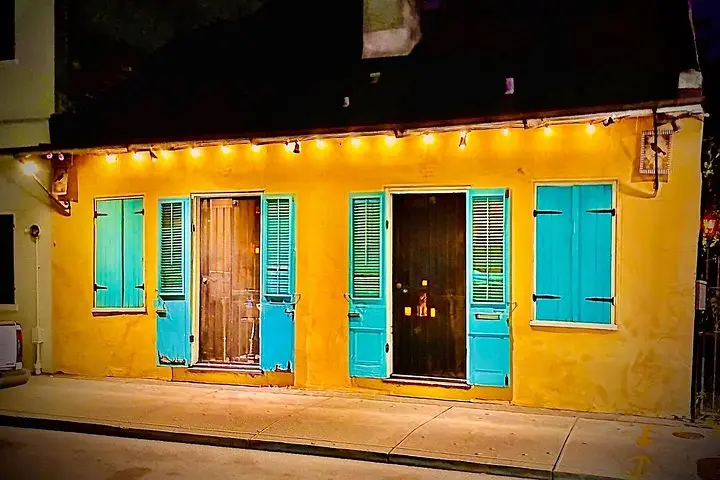
Walk through the French Market and you meet commerce as it has always been — spices, sweets, and voices bargaining under tin roofs. Pause in Jackson Square and the cathedral anchors the plaza: its façade is a record of adaptation, rebuilt after fires and storms. Pirate’s Alley keeps quieter stories, and a private Creole courtyard offers a rare pulse of domestic life preserved behind public facades. Along the river, the levee remarks on New Orleans’ ongoing relationship with water — a force that both enabled the city’s rise and constantly demands respect.
Practicality guides the pace: expect roughly two miles of mostly flat pavement with brief cobbled sections and narrow sidewalks. The tour is designed for a relaxed, accessible rhythm but brings history in layers — civic, architectural, and social — not a simple list of landmarks. Guides typically weave in local music, pointing to street performers and telling where to catch an evening brass band.
Timing matters: morning tours win cooler air and quieter streets; evenings deliver lamplight and buskers. Bring sun protection and a refillable bottle — shade is intermittent and humidity arrives fast. Wear shoes that handle both smooth flagstones and occasional uneven brick. If you want photos, aim for first light or the blue hour after sunset; Jackson Square’s perspective frames the cathedral against sky most cleanly then.
This walk is part history lesson, part urban stroll and part living neighborhood visit. It’s short enough to pair with a market breakfast or an afternoon at a museum, but full enough that, by the end, the Quarter feels less like a postcard and more like a palpably storied place you’ve begun to understand.